Tuesday, July 26, 2022

Tuesday, July 26, 2022 — DT 29944


Puzzle at a Glance
Puzzle number in The Daily Telegraph
DT 29944
Publication date in The Daily Telegraph
Friday, March 25, 2022
Setter
NY Doorknob aka Donnybrook (Paul Bringloe)
Link to full review
Big Dave's Crossword Blog [DT 29944]
Big Dave's Crossword Blog review written by
Deep Threat
BD rating
Difficulty - ★★Enjoyment - ★★★
Falcon's experience
┌────┬────┬────┬────┬────┬────┬────┐
███████████████████████████████████
└────┴────┴────┴────┴────┴────┴────┘
Legend:
- solved without assistance
- incorrect prior to use of puzzle solving tools
- solved with assistance from puzzle solving tools
- solved with aid of checking letters provided by puzzle solving tools
- solved but without fully parsing the clue
- unsolved or incorrect prior to visiting Big Dave's Crossword Blog
- solved with aid of checking letters provided by solutions from Big Dave's Crossword Blog
- reviewed by Falcon for Big Dave's Crossword Blog
- yet to be solved

Introduction

I would say Deep Threat is correct when he predicts in the intro to his review on Big Dave's Crossword Blog that this puzzle "might cause the odd problem for the overseas members of our community". I had encountered a fair number of the British references in previous puzzles but there were also some new ones for me.

I invite you to leave a comment to let us know how you fared with the puzzle.

Notes on Today's Puzzle

This commentary is intended to serve as a supplement to the review of this puzzle found at Big Dave's Crossword Blog, to which a link is provided in the table above.

Markup Conventions
  • "//" - marks the boundary between wordplay and definition when no link word or link phrase is present
  • "/[link word or phrase]/" - marks the boundary between wordplay and definition when a link word or link phrase is present
  • "solid underline" - precise definition
  • "dotted underline" - cryptic definition
  • "dashed underline" - wordplay
  • "wavy underline" - whimsical and inferred definitions
Click here for further explanation and usage examples of markup conventions used on this blog.

Across

1a Judges // united: lawmakers must restrain anger (7)

"united " = U

In the names of sports clubs, U[5] is the abbreviation for United[5] which, in Britain is a word commonly used in the names of soccer and other sports teams formed by amalgamation ⇒ Man U [Manchester United].

hide

" lawmaker(s) " = MP(S)[5] [Member(s) of Parliament]

9a Five entering rocky route on // approach (8)

10a Agreement // favouring tightwad right to be cancelled (7)

" right " = R [r or r.[2]]

11a Chuck returning in waterway /sees/ man-eater (8)

Bin[5] is an informal British term meaning to throw (something) away by putting it in a bin.

* Bin[10,14] is a British term for a garbage can or trash can.

12a With British mole shot outside // Tobermory? (6)

Tobermory[7] is one of the Wombles who are fictional pointy-nosed, furry creatures created by English writer Elisabeth Beresford and originally appearing in a series of children's novels from 1968. They live in burrows, where they aim to help the environment by collecting and recycling rubbish in creative ways.

Origin: The character is named after the capital of the Isle of Mull, in the Scottish Inner Hebrides.

13a Very tense: keen on arrest (4-6)

15a Shelley's // Inferno? (4)

In the wordplay, the 's is possessive. Thus the wordplay can be interpreted as "belonging to Shelley" or "contained in Shelly".

16a Holly for instance // always the ingénue? (9)

21a Beastly noise // reason tattooist must stop? (4)

22a Democrat among pine trees altered // decree in advance (10)

" Democrat " = D[5] [member or supporter of the US Democratic Party]

24a Milk about to be brought round -- // moggies love it (6)

Pinta[5] is an informal British term for a pint of milk.

Origin: a pronunciation of 'pint of', arising from a spelling used by the National Dairy Council from 1958 in an advertising slogan ⇒ Drinka pinta milka day.

" about " = C [c.[2]; circa (Latin)]


Moggie[5] (or moggy) is an informal British term for a cat, especially one that does not have a pedigree or is otherwise unremarkable ⇒ I have three other cats (two moggies and one Bengal/Tonkinese cross).

25aPerhaps an 18 can? (4,4)

The numeral "18" is a cross reference indicator pointing to clue 18d (show more ).

To complete the clue, a solver must replace the cross reference indicator with the solution to the clue starting in the light* identified by the cross reference indicator.

The cross reference indicator may include a directional indicator but this is customarily done only in situations where there are both Across and Down clues originating in the light that is being referenced.

* light-coloured cell in the grid

hide

The expanded clue is "Perhaps an Indianan can?" where "Indianan can" is a particular case of "American toilet".

From a British perspective, the can[5] is an informal North American term for the toilet.

In Britain, the term restroom[5] (or rest room[1]) denotes a room in a public building for people to relax or recover in as contrasted to North America where it means a toilet [in the sense of a room rather than a fixture] in a public building.

27a Thrilling // sensation cut short angry speech (7)

28a Be on diet fixed /and/ disciplined (8)

29a A new banknote should be announced, // one feels (7)

Tenner[5] is an informal British name for a ten-pound note.

The word "tenner" , when pronounced in a non-rhotic accent (show explanation ) typical of dialects found in many parts of Britain (especially southeastern England), sounds like "tenna".

Non-rhotic accents omit the sound < r > in certain situations, while rhotic accents generally pronounce < r > in all contexts. Among the several dozen British English accents which exist, many are non-rhotic while American English (US and Canadian) is mainly rhotic. This is, however, a generalisation, as there are areas of Britain that are rhotic, and areas of America that are non-rhotic. For more information, see this guide to pronouncing < r > in British English.

hide

Down

2d Monkey // doctor holding limb firm (8)

"doctor " = MO [medical officer]

A medical officer[5] (abbreviation MO[5]) is a doctor in charge of the health services of a civilian or military authority or other organization.

hide


The marmoset[5] is a small tropical American monkey with a silky coat and a long tail.

3d Still /needing/ one minute on phone (8)

" one " = I[2] [Roman numeral]

" minute " = M [m or m.[2]]

Mobile[5] (short for mobile phone) is a British term for a cell phone[5] (short for cellular phone) ⇒ we telephoned from our mobile to theirs.

4d Long-running show // possibly needs a rest (10)

EastEnders[7] is an award-winning British soap opera which has been broadcast on the BBC since 1985. (show more )

Set in Albert Square in the East End of London in the fictional Borough of Walford, the programme follows the stories of local residents and their families as they go about their daily lives. Consistently among the top-rated TV programmes in Britain, it has tackled many dilemmas that are considered to be controversial and taboo issues in British culture and social life previously unseen on United Kingdom mainstream television.

hide

5d Ultraviolet decay occasionally /seen in/ eye part (4)

" ultraviolet " = UV[5]

6d Magical character one supporting Black // Country (6)

A rune[10] is any of the characters of an ancient Germanic alphabet, derived from the Roman alphabet, in use, especially in Scandinavia, from the 3rd century AD to the end of the Middle Ages. Each character was believed to have a magical significance.

The Roman numeral from 3d makes a quick reappearance.

"black " = B [grade of pencil lead]

B[5] is an abbreviation for black, as used in describing grades of pencil lead 2B pencils.

hide


Brunei[5] (official name Brunei Darussalam) is a small oil-rich constitutional sultanate on the north-western coast of Borneo, divided by parts of Malaysia's state of Sarawak. (show more )

In the 16th century Brunei dominated Borneo and parts of the Philippines, but its power declined as that of the Portuguese and Dutch grew, and in 1888 it was placed under British protection. It became a fully independent Commonwealth state in 1984.

hide

Scratching the Surface
The Black Country[7] is an area of the West Midlands in England, West of Birmingham. In the Industrial Revolution, it became one of the most industrialised parts of Britain with coal mines, coking, iron foundries and steel mills producing a high level of air pollution.

The first trace of "The Black Country" as an expression dates from the 1840s. The name is believed to come from the soot from the heavy industries that covered the area, although the 30-foot-thick coal seam close to the surface is another possible origin.

7d Carbon and barium mixed /in/ Carlisle region (7)

" carbon " = C[5] [chemical symbol]


Cumbria[5] is a county of northwestern England; county town, Carlisle. (show more )

Cumbria was an ancient British kingdom, and the name continued to be used for the hilly north-western region of England containing the Lake District. The county of Cumbria was formed in 1974, largely from the former counties of Westmorland and Cumberland.

hide

8d Balance on board // say amongst elite US Navy personnel (3,4)

SEALs[10] are members of the Sea, Air, and Land Teams, an elite special operations unit of the United States Navy.

11d Cold fish -- picture // something to keep it fresh (9)

" cold " = C [c[1]; as in 'h and c'[1] (referring to water supply)]

Ling[5] is the name of a number of long-bodied edible marine fishes including a large eastern Atlantic fish of the genus Molva related to the cod, in particular Molva molva, which is of commercial importance.


Cling film[5] is the British name for plastic wrap, a thin transparent plastic film that adheres to surfaces and to itself, used as a wrapping or covering for food.

14d Extra large notice to be dismantled? // Vote (2-8)

In cricket, an extra[5] is a run scored other than from a hit with the bat, credited (in most cases) to the batting side rather than to a batsman. The types of extra[7] are no ball, wide, bye, leg-bye, and penalty runs.

" large " = L[5] [clothing size]

17d Dark scene -- // small number go bad in church (8)

"church " = CE [Church of England]

The Church of England[10] (abbreviation CE[10]) is the reformed established state Church in England, Catholic in order and basic doctrine, with the Sovereign as its temporal head.

hide


In art, nocturne[5] denotes a picture of a night scene.

18d Huntress coming into bar /finds/ Hoosier (8)

In Roman mythology, Diana[10] is the virginal goddess of the hunt and the moon — and is often identified in clues as a huntress, Her counterpart in Greek mythology is Artemis.


Hoosier[5] is a North American term for a native or inhabitant of the US state of Indiana.

19d Garden visitor /in/ two arguments (7)

20d Disease // sees lamb almost destroyed (7)

23dBug one way or another? (6)

An earwig[5] is a small elongated insect with a pair of terminal appendages that resemble pincers.

Earwig[5] (verb) is an informal British term meaning to secretly listen to a conversation ⇒ (i) he looked behind him to see if anyone was earwigging; (ii) A malfunction is being blamed for some callers being able to listen in to other people's calls - and presumably, other people earwigging into their conversations.

26d Concedes // nothing -- then three points! (4)

Own[5] is ued in a formal sense meaning to admit or acknowledge that something is the case or that one feels a certain way (i) she owned to a feeling of profound jealousy; (ii) he was reluctant to own that he was indebted.


References

Sources referenced in the blog are identified by the following symbols. The reference numbers themselves are hyperlinks to the entry in the source being referenced. Click on the number to view the source.

Key to Reference Sources: 

  [1]   - The Chambers Dictionary, 11th Edition
  [2]   - Search Chambers - (Chambers 21st Century Dictionary)
  [3]   - TheFreeDictionary.com (American Heritage Dictionary)
  [4]   - TheFreeDictionarycom (Collins English Dictionary)
  [5]   - Lexico (formerly Oxford Dictionaries Online) (Oxford Dictionary of English)
  [6]   - Lexico (formerly Oxford Dictionaries Online) (Oxford Advanced American Dictionary)
  [7]   - Wikipedia
  [8]   - Reverso Online Dictionary (Collins French-English Dictionary)
  [9]   - Infoplease (Random House Unabridged Dictionary)
[10]   - CollinsDictionary.com (Collins English Dictionary)
[11]   - TheFreeDictionary.com (Random House Kernerman Webster's College Dictionary)
[12]   - CollinsDictionary.com (Webster’s New World College Dictionary)
[13]   - MacmillanDictionary.com (Macmillan Dictionary)
[14]   - CollinsDictionary.com (COBUILD Advanced English Dictionary)
[15]   - CollinsDictionary.com (Penguin Random House LLC/HarperCollins Publishers Ltd )


Signing off for today — Falcon

Monday, July 25, 2022

Monday, July 25, 2022 — DT 29943 (Published Saturday, July 23, 2022)


Puzzle at a Glance
Puzzle number in The Daily Telegraph
DT 29943
Publication date in The Daily Telegraph
Thursday, March 24, 2022
Setter
silvanus
Link to full review
Big Dave's Crossword Blog [DT 29943]
Big Dave's Crossword Blog review written by
Miffypops
BD rating
Difficulty* - ★★★Enjoyment* - ★★★★★
Falcon's experience
┌────┬────┬────┬────┬────┬────┬────┐
█████████████████████████████████
└────┴────┴────┴────┴────┴────┴────┘
Legend:
- solved without assistance
- incorrect prior to use of puzzle solving tools
- solved with assistance from puzzle solving tools
- solved with aid of checking letters provided by puzzle solving tools
- solved but without fully parsing the clue
- unsolved or incorrect prior to visiting Big Dave's Crossword Blog
- solved with aid of checking letters provided by solutions from Big Dave's Crossword Blog
- reviewed by Falcon for Big Dave's Crossword Blog
- yet to be solved
Notes

This puzzle appears on the Monday Diversions page in the Saturday, July 23, 2022 edition of the National Post.

* The BD Rating for the puzzle may have been set by someone other than Miffypops unless he has abandoned his long-standing practice of not changing it from its default value (***/***).

Introduction

For UK solvers, this was a rare "Thursday" appearance for silvanus whose puzzles are usually published on "Friday".

I invite you to leave a comment to let us know how you fared with the puzzle.

Notes on Today's Puzzle

This commentary is intended to serve as a supplement to the review of this puzzle found at Big Dave's Crossword Blog, to which a link is provided in the table above.

Markup Conventions
  • "//" - marks the boundary between wordplay and definition when no link word or link phrase is present
  • "/[link word or phrase]/" - marks the boundary between wordplay and definition when a link word or link phrase is present
  • "solid underline" - precise definition
  • "dotted underline" - cryptic definition
  • "dashed underline" - wordplay
  • "wavy underline" - whimsical and inferred definitions
Click here for further explanation and usage examples of markup conventions used on this blog.

Across

7a Couple // book absorbing week overseas on vacation (7)

" week " = W [w[2]]

The phrase "on vacation" is an indication to remove the contents (interior letters) from the word "O[versea]S". Vacation[5] is used in the sense of the action of leaving something one previously occupied On the vacation of the post, the senior managers assembled and discussed eligible candidates.

8a Photo captures ultimate // source of environmental pollution (7)

10a Thought student is going /for/ meal (9)

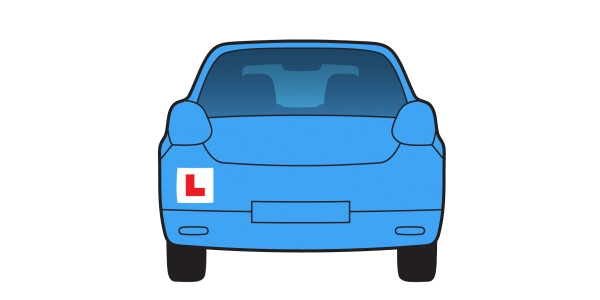
"student " = L [driver under instruction]

The cryptic crossword convention of L meaning learner or student arises from the L-plate[7], a square plate bearing a sans-serif letter L, for learner, which must be affixed to the front and back of a vehicle in various jurisdictions (including the UK) if its driver is a learner under instruction.

Automobile displaying an L-plate

hide

11a Brownish-coloured // river visited by swans regularly (5)

The Tay[5] is the longest river in Scotland, flowing 192 km (120 miles) eastwards through Loch Tay, entering the North Sea through the Firth of Tay.

12a Woven material // provided from the East? That is right (5)

So[1,10] is used in an archaic sense meaning provided (that) or in case (that). Unfortunately, the dictionaries provide no usage examples of the word employed in this sense.

" right " = R [r or r.[2]]

13a During hours of darkness, // mistake having change of heart (9)

15a Various English // beaches may be covered with it (7)

Shingle[5] is a mass of small rounded pebbles, especially on a seashore (i) a wonderful beach of fine shingle; (ii) natural features like sand dunes and shingle banks.

17a This month everything /will be/ set up (7)

Instant[5] (abbreviation inst.[5]) is a dated expression once used in business letters. It is a postpositive adjective meaning of the current month ⇒ (i) your letter of the 6th instant; (ii) we are pleased to acknowledge receipt of your letter of 14 inst.

18a Leaving hotel, star in huge Rolls /giving/ autograph (9)

" hotel " = H[5] [NATO Phonetic Alphabet[7]]

20a Round flatbread? /That's/ mine, thanks! (5)

Ta[5] is an informal British exclamation signifying thank you ‘Ta,’ said Willie gratefully.


Pitta[5] (also pitta bread) is the British spelling for pita (bread), a flat, hollow, slightly leavened bread which can be split open to hold a filling ⇒ (i) low-calorie starters include tzatziki with a little pitta; (ii) flat pitta breads make perfect sandwiches.

21a Made faux pas // picked up in London's East End (5)

The cockney*[5] dialect spoken in the East End of London is characterized by dropping the aitch (H) from the beginning of words as well as the use of rhyming slang[5].

* A cockney[5,10] is a native of East London [specifically that part of East London known as the East End[5]], traditionally one born within hearing of Bow Bells (the bells of St Mary-le-Bow[7] church).

23a Spiritual leader // from Koutiala, Mali, a lady upset (5,4)

The Dalai Lama[5] is the spiritual head of Tibetan Buddhism and, until the establishment of Chinese communist rule, the spiritual and temporal ruler of Tibet.

Scratching the Surface
Koutiala[7] is a city of some 138,000 residents in southern Mali.

24aDisappointment /in/ state of one's car tyres, perhaps? (3-4)

Although I can find no reference to support let-down being used as an adjective to describe the state of a car's tires which have been deflated, I can imagine that the term may well be used in that sense by the Brits. I have therefore followed the lead of Miffypops who, in his review on Big Dave's Crossword Blog, has marked the clue as a double definition*.

* However, I do note that the numeration in the solution he provides does not match that given in the clue.

As a noun, a let-down[5] [spelled with a hyphen] is a disappointment.

As a phrasal verb, let down[5] [with no hyphen] is a British expression meaning to deflate a tyre ⇒ Mindless vandals covered his beloved car with eggs and flour and let the tyres down.

* Tyre[5] is the British spelling of tire (in the sense of an automobile component).

25a Pop off after function /for/ an indefinite period (4,3)

In mathematics, the term sine[5] denotes the trigonometric function that is equal to the ratio of the side opposite a given angle (in a right-angled triangle) to the hypotenuse.


Sine die[5] means (with reference to business or proceedings that have been adjourned) with no appointed date for resumption ⇒ the case was adjourned sine die.

Down

1d Conceding // why bride-to-be is with dressmaker reportedly? (10)

2d Agree /in/ acting together to withhold payment (6)

3d Native American, // one miles adrift (8)

A Seminole[5] is a member of a North American people of the Creek confederacy, noted for resistance in the 19th century to encroachment on their land in Georgia and Florida. Many were resettled in Oklahoma.

4d Drunkard /from/ Kent area acquiring bad smell (6)

Kent[5] is a county on the south-eastern coast of England.

Pong[5] (adjective pongy[5]) is an informal British term meaning:
  • (noun) a strong, unpleasant smell ⇒ corked wine has a powerful pong
  • (verb) to smell strongly and unpleasantly ⇒ the place just pongs of dirty clothes
5d Possesses items second husband dropped /in/ battle (8)

" husband " = H [h[2]; genealogy]


The Battle of Hastings[5] was a decisive battle which took place in 1066 just north of the town of Hastings in southern England. William the Conqueror defeated the forces of the Anglo-Saxon king Harold II; Harold died in the battle, leaving the way open for the Norman Conquest of England.

6d Pack // Stuart's case with pained expression (4)

7d Resort hotelier's lost // cat (13)

9d Type of ball towards winger, hotshot /in/ football team (7,6)

Winger[1] is military slang for a pal, colleague or favourite.*

* I found this meaning only in The Chambers Dictionary


Crystal Palace Football Club[7] is a professional football [soccer] club based in London which competes in the Premier League, the highest level of English football.

14d Creature // adapting easily to eat half of peeled banana (5,5)

16d Relative // number extremely shocked, near rage occasionally, is rising (8)

17d Romantic // dates I arranged, embracing Liz endlessly (8)

19d Individual supporting a French duke's tip /is/ ruined (6)

" a French " = UN [un[8]; French indefinite article]

Although Miffypops in his review on Big Dave's Crossword Blog suggests we need the abbreviation for duke, the setter has actually explicitly clued the initial letter of duke with the phrase "duke's tip".

Scratching the Surface
A duke[5] (abbreviation D.[10]) is a male holding the highest hereditary title in the British and certain other peerages*.

* The peerage[5] is the nobility in Britain or Ireland as a class, comprising the ranks of duke, marquess, earl, viscount, and baron.

20d Flexible // recruitment essentially in factory (6)

22d Value // degree (4)

Rate[5,10] is an informal [almost certainly British*] term meaning to have a high opinion of ⇒ (i) Mike certainly rated her, goodness knows why; (ii) the clients do not rate the new system.

* at least when used as in the cited examples


References

Sources referenced in the blog are identified by the following symbols. The reference numbers themselves are hyperlinks to the entry in the source being referenced. Click on the number to view the source.

Key to Reference Sources: 

  [1]   - The Chambers Dictionary, 11th Edition
  [2]   - Search Chambers - (Chambers 21st Century Dictionary)
  [3]   - TheFreeDictionary.com (American Heritage Dictionary)
  [4]   - TheFreeDictionarycom (Collins English Dictionary)
  [5]   - Lexico (formerly Oxford Dictionaries Online) (Oxford Dictionary of English)
  [6]   - Lexico (formerly Oxford Dictionaries Online) (Oxford Advanced American Dictionary)
  [7]   - Wikipedia
  [8]   - Reverso Online Dictionary (Collins French-English Dictionary)
  [9]   - Infoplease (Random House Unabridged Dictionary)
[10]   - CollinsDictionary.com (Collins English Dictionary)
[11]   - TheFreeDictionary.com (Random House Kernerman Webster's College Dictionary)
[12]   - CollinsDictionary.com (Webster’s New World College Dictionary)
[13]   - MacmillanDictionary.com (Macmillan Dictionary)
[14]   - CollinsDictionary.com (COBUILD Advanced English Dictionary)
[15]   - CollinsDictionary.com (Penguin Random House LLC/HarperCollins Publishers Ltd )


Signing off for today — Falcon

Saturday, July 23, 2022

Saturday, July 23, 2022 — Flip a Coin (NP 220723)

Introduction

Today's National Post Cryptic Crossword from Cox & Rathvon (NP 220723) leaves the solver with no clear choice.

The puzzle will be posted on the blog on Saturday, July 30, 2022.

I invite you to leave a comment to let us know how you fared with the puzzle.

Solution to Today's Puzzle

Falcon's experience
┌────┬────┬────┬────┬────┬────┬────┐
███████████████████████████████████
└────┴────┴────┴────┴────┴────┴────┘
Legend:
- solved without assistance
- incorrect prior to use of puzzle solving tools
- solved with assistance from puzzle solving tools
- solved with aid of checking letters provided by puzzle solving tools
- solved but without fully parsing the clue
- yet to be solved

Symbols and Markup Conventions
  •  "*" - anagram
  • "~" - sounds like
  • "<" - indicates the preceding letters are reversed
  • "( )" - encloses contained letters
  • "_" - replaces letters that have been deleted
  •  "†" - indicates that the word is present in the clue
  • "//" - marks the boundary between wordplay and definition when no link word or link phrase is present
  • "/[link word or phrase]/" - marks the boundary between wordplay and definition when a link word or link phrase is present
  • "solid underline" - precise definition
  • "dotted underline" - cryptic definition
  • "dashed underline" - wordplay
  • "wavy underline" - whimsical and inferred definitions
Click here for further explanation and usage examples of the symbols and markup conventions used on this blog.

Across

1a Victorian carrying baloney // stick out (8)

P(ROT)RUDE — PRUDE (Victorian) containing (carrying) ROT (baloney; pointless talk or nonsense)

5a PCs are converting // distance in space (6)

PARSEC* — anagram of (converting) PCS ARE

Scratching the Surface
Perhaps someone can suggest a more appropriate interpretation of the surface reading, but it may allude to the Progressive Conservative Party of Canada (PC)[7], a centre-right federal political party in Canada that existed from 1942 to 2003 when the party merged with the Canadian Alliance to form the Conservative Party of Canada. While the national party no longer exists, PC parties still exist in many Canadian provinces.

9a Bone // left among Greek crosses (5)

TA(L)US — L(eft) contained in (among) TAUS (Greek crosses)

Tau[5] is the nineteenth letter of the Greek alphabet (Τ, τ), the upper case version of which is shaped like a cross. A tau cross[5] is a T-shaped cross.

* A tau cross is also known as the St Anthony cross (also St Anthony's cross) ⇒ The type of cross actually used by Romans for crucifixion is now known as St. Anthony's Cross, shaped like the letter "T", unlike the traditionally depicted Latin cross.

10a Limit // price drops around mid-month (9)

CO(N)ST|RAIN — {COST (price) + RAIN (drops)} containing (around)} N (mid-month; middle letter of moNth)

12a Smashed TV near a // cafe in Athens (7)

TAVERNA* — anagram of (smashed) TV NEAR A

A taverna[2] is a Greek restaurant.

13a City // revels initially airing in toto (7)

TO(R|ON)TO — {R (revels initially; initial letter of Revels) + ON (airing; being broadcast)} contained in (in) TOTO (†)

14a Earliest history // article found in French region (10)

PROVEN(AN)CE — AN ([grammatical] article) contained in (found in) PROVENCE (French region)

16a Part of a prison // sketch seen from the rear (4)

WARD< — reversal of (seen from the rear) DRAW (sketch)

A ward[10] is one of the divisions of a prison.

19a Job // put up on a blog (4)

POST — double definition

20a One who advises // new ruler in bed (10)

CO(N|SULTAN)T — {N(ew) + SULTAN ([Muslim] ruler)} contained in (in) COT (bed)

23a Piece of raft swallowed by stupid // sea serpent (7)

OARFISH — R (piece [initial letter] of Raft) contained in (swallowed by) OAFISH (stupid)

The oarfish[5] (also called ribbonfish or king of the herrings) is a very long, narrow silvery marine fish of deep water, with a deep red dorsal fin running the length of the body. One species, the giant oarfish, is the longest bony fish alive, growing up to 8 m (26 ft) in length. Their large size and eel-like appearance would make them a a probable source of many sea serpent tales.


United States Navy SEALS holding a 23-foot (7.0 m) giant oarfish, found washed up on the shore near San Diego, California, in September 1996

25a Published about a crazy // month of fasting (7)

R(A|MAD)AN — RAN (published) containing (about) {A (†) + MAD (crazy)}

26a Watched test-takers // record top bananas (9)

PROCTORED* — anagram of (bananas) RECORD TOP

27a Thrash, then leave // dance (5)

TAN|GO — TAN (thrash) followed by (then) GO (leave)

28a Pasta // container eaten by French king (6)

RO(TIN)I — TIN (container) contained in (eaten by) ROI (French king)

29a Think about // novel I scorned (8)

CONSIDER* — anagram of (novel) I SCORNED

Down

1d Break // stones with head (3,4)

PIT S|TOP — PITS (stones) + (with) TOP (head)

2d Unaware // lithium is found in plain (9)

OB(LI)VIOUS — LI ([chemical symbol for] lithium) contained in (is found in) OBVIOUS (plain)

3d Beads // various fish eggs around Indian wrap (8)

RO(SARI)ES — ROES (various fish eggs) containing (around) SARI (Indian wrap)

Usage Note
The setters are being meticulous when they insert the word "various" in the clue. Similar to the plurals fish and fishes, eggs from a single species of fish would be roe but eggs from several species of fish collectively would be roes.

4d Orders // element from periodic table (5)

_DIC|TA_ — hidden in (element from) perioDIC TAble

6d Wear // a ring of rubber in the ear (6)

ATTIRE~ — sounds like (in the ear) {A TIRE (ring of rubber)}

7d Mineral spring in // European land (5)

SPA|IN — SPA (mineral spring) + IN (†)

8d Sergeant, perhaps, involved in string // harmony (7)

CO(NCO)RD — NCO (sergeant, perhaps) contained in (involved in) CORD (string)

11d Recognizes // renovated section (7)

NOTICES* — anagram of (renovated) SECTION

15d Some different // alto, not that woman (7)

A|NOT|HER — A(lto) + NOT (†) + HER (that woman)

17d Finished inside, a group // left (9)

A|BAN(DONE)D — DONE (finished) contained in (inside) {A (†) + BAND (group)}

18d Flower // spike is gaining mass (8)

CLE(M)AT|IS — {CLEAT (spike) + IS (†)} containing (gaining) M (mass; symbol used in physics)

19d Fare well: // second in meet (7)

PRO(S)PER — S(econed) contained in (in) PROPER (meet)

Meet[5] is an archaic term meaning suitable or proper ⇒ it was not meet for us to see the king’s dishonour.

21d Oven // temperature next to one door (7)

T|AN|DOOR — T(emperature) + (next to) AN (one) + DOOR (†)

A tandoor[5] is a clay oven of a type used originally in northern India and Pakistan.

22d Handle Ontario // hotel chain (6)

HILT|ON — HILT (handle [of a sword]) + ON ([postal designator for] Ontario)

24d Cheer, given small // place to spend the night (5)

ROO(S)T — ROOT (cheer) containing (given) S(mall)

25d Western show // went on with nothing (5)

RODE|O — RODE (went on) + (with) O (nothing; letter that looks like a zero)

Epilogue

As Peter has identified in his comment below, the PROs (1a, 14a, 26a and 19d) in today's puzzle are balanced by the CONs (10a, 20a, 29a and 8d).


References

Sources referenced in the blog are identified by the following symbols. The reference numbers themselves are hyperlinks to the entry in the source being referenced. Click on the number to view the source.

Key to Reference Sources: 

  [1]   - The Chambers Dictionary, 11th Edition
  [2]   - Search Chambers - (Chambers 21st Century Dictionary)
  [3]   - TheFreeDictionary.com (American Heritage Dictionary)
  [4]   - TheFreeDictionarycom (Collins English Dictionary)
  [5]   - Lexico (formerly Oxford Dictionaries Online) (Oxford Dictionary of English)
  [6]   - Lexico (formerly Oxford Dictionaries Online) (Oxford Advanced American Dictionary)
  [7]   - Wikipedia
  [8]   - Reverso Online Dictionary (Collins French-English Dictionary)
  [9]   - Infoplease (Random House Unabridged Dictionary)
[10]   - CollinsDictionary.com (Collins English Dictionary)
[11]   - TheFreeDictionary.com (Random House Kernerman Webster's College Dictionary)
[12]   - CollinsDictionary.com (Webster’s New World College Dictionary)
[13]   - MacmillanDictionary.com (Macmillan Dictionary)
[14]   - CollinsDictionary.com (COBUILD Advanced English Dictionary)
[15]   - CollinsDictionary.com (Penguin Random House LLC/HarperCollins Publishers Ltd )


Signing off for today — Falcon