Wednesday, March 27, 2019

Wednesday, March 27, 2019 — DT 28866

Puzzle at a Glance
Puzzle Number in The Daily Telegraph
DT 28866
Publication Date in The Daily Telegraph
Wednesday, October 10, 2018
Setter
Jay (Jeremy Mutch)
Link to Full Review
Big Dave's Crossword Blog [DT 28866]
Big Dave's Crossword Blog Review Written By
Senf (subbing for the 2Kiwis)
BD Rating
Difficulty - ★ / ★★ Enjoyment - ★★★★
Falcon's Experience
┌────┬────┬────┬────┬────┬────┬────┐
██████████████████████████████████
└────┴────┴────┴────┴────┴────┴────┘
Legend:
- solved without assistance
- incorrect prior to use of puzzle solving tools
- solved with assistance from puzzle solving tools
- solved with aid of checking letters provided by puzzle solving tools
- solved but without fully parsing the clue
- unsolved or incorrect prior to visiting Big Dave's Crossword Blog
- solved with aid of checking letters provided by solutions from Big Dave's Crossword Blog
- reviewed by Falcon for Big Dave's Crossword Blog
- yet to be solved

Introduction

Sometimes even though one knows they have gone down the wrong path, it is virtually impossible to get back on the right path. Such was my experience with 16d today.

I invite you to leave a comment to let us know how you fared with the puzzle.

Notes on Today's Puzzle

This commentary is intended to serve as a supplement to the review of this puzzle found at Big Dave's Crossword Blog, to which a link is provided in the table above.

Click here for an explanation of conventions and symbols used in explaining the parsing of clues.


The purpose of this article is to explain the conventions and symbols that I use on this blog in explaining the parsing of clues.

Legend:

The following symbols are used in reviews:
  • "*" anagram
  • "~" sounds like
  • "<" indicates that the preceding letters are reversed
  • "( )" encloses contained letters
  • "_" replaces letters that have been deleted
  • "†" indicates that the word is present in the clue

The review of a clue takes the following general structure:

#a/d   Clue containing parsing markup (num*)

* num = numeration

Explanations pertaining to the wordplay (or first definition in a double definition)

(Horizontal separator)


Explanations pertaining to the definition (or second definition in a double definition) and solution.

Explanatory Box
An explanatory box provides additional information about the clue. In most cases this information will not necessarily help in solving the clue but provides information about the clue. In the case of the weekday syndicated Daily Telegraph puzzles, such information is often intended to help the North American solver appreciate how the clue may be perceived by a British solver. These boxes may also provide information on people, places, films, television programmes, works of art and literature, etc. mentioned in the clue.

Although the titles of these boxes will usually be drawn from a standard list, I do occasionally throw in a title specifically suggested by the subject at hand. The standard titles include:
  • Scratching the Surface - an explanation of the surface reading of the clue
  • Delving Deeper - in-depth information pertaining to a subject mentioned in an explanation
  • The Story Behind the Picture - for weekday puzzles, information about an illustration found on Big Dave's Crossword Blog
  • What did he/she/they say? - for weekday puzzles, an explanation of a remark made in a review or comment on Big Dave's Crossword Blog
  • What are they talking about? - for weekday puzzles, an explanation of a discussion on Big Dave's Crossword Blog
One box that may provide information that could prove helpful in solving the clue is the following:
  • Here and There - for weekday puzzles, discusses words whose British meaning differs from their North American meaning

Note that there are many types of cryptic crossword clue and it is not my intention to exhaustively go through all of them here. I will only deal with clue types to the extent necessary to explain the conventions and symbols used on the blog. Furthermore, be aware that, in the world of cryptic crosswords, there seems to be an exception to every rule.

With one exception that I can think of, cryptic crossword clues provide two routes to the solution. These are commonly referred to as the definition and wordplay. While these terms serve well for most clues, there are some cases where the more formal terms of primary indication and subsidiary indication may be more appropriate.

Most cryptic crossword clues consist of a definition (primary indication) and wordplay (subsidiary indication). The definition may be a "precise definition" (a definition that is either taken straight from a dictionary or at least phrased in a non-misleading fashion) or it may be a "cryptic definition" (a definition misleadingly phrased so as to misdirect the solver either with respect to the meaning of the definition as a whole or to an incorrect sense of a word used in the definition).

The only type of clue that I can think of where there are not two ways of finding the solution are those in which the entire clue is a cryptic definition.
I identify precise definitions by marking them with a solid underline in the clue and cryptic definitions by marking them with a dotted underline.
In clues in which both definition and wordplay are present, the two parts of the clue combine to provide an overall meaningful statement (the surface reading) which usually bears no relationship to the underlying cryptic reading of the clue. In some cases, an extra word or phrase will be inserted into the clue to create a meaningful link between the definition and wordplay. I define clues which contain such a link word or link phrase as having an explicit link and clues which contain no link word or link phrase as having an implicit link.
I mark the existence of an explicit link by enclosing the link word or link phrase between forward slashes (/link/) and mark the existence of an implicit link with double forward slashes (//) positioned between the definition and wordplay.
Examples

A few examples may help to illustrate these points more clearly.

The first example is a clue used by Jay in DT 28573:

  • 4d   Fellow left work // a failure (4)
Here the definition is "a failure" which is marked with a solid underline to show that it is a precise definition. The wordplay parses as F (fellow; abbrev.) + L (left; abbrev.) + OP (work; abbrev. used in music) which gives us the solution F|L|OP. The double forward slashes (//) between the definition and wordplay indicate the existence of an "implicit link" between the two parts of the clue (that is, no extra words are inserted into the clue to form the link).

The second example is a clue used by Giovanni in DT 28575:
  • 29a   Female going to match // travels with mother in advance (10)
Here the definition "female going to match" is cryptic (the setter is attempting to misdirect our thoughts to a sports event rather than a marriage ceremony) and thus is marked with a a dotted underline. The wordplay is {RIDES (travels) + (with) MA (mother)} contained in (in) BID (advance) giving us the solution B(RIDES|MA)ID. As in the first example, the double forward slashes indicate the presence of an implicit link.

The third example is a clue used by Rufus is DT 28583:
  • 18d   Knight caught by misplaced big blow /is/ staggering (8)
Here the definition is "staggering" which is marked with a solid underline to show that it is a precise definition. The wordplay parses as N ([chess symbol for] knight) contained in (caught in) an anagram (misplaced) of BIG BLOW producing the solution WOBBLI(N)G. Finally, forward slashes mark the link word (/is/).
I also use distinctive underlining to mark &lit.[7] and semi-&lit. clues. Note that the reviewers on Big Dave's Crossword Blog generally prefer to refer to these clue types by the less pretentious names of all-in-one or semi-all-in-one clues respectively.

In an &lit. clue[7] (or all-in-one clue) the entire clue provides not only the definition (when read one way), but under a different interpretation also serves as the wordplay.
In future, I will mark such clues with a combined solid and dashed underline. Although this is a departure from past practice, it would seem to make more sense than using a dotted underline as I have in the past). Henceforth, the dotted underline will be reserved for cryptic definitions.
In a semi-&lit. clue (or semi-all-in-one clue), either:
  • the entire clue acts as the definition while a portion of the clue provides the wordplay; or
  • the entire clue acts as the wordplay while a portion of the clue provides the definition.
For these clues, I will mark the definition with a solid underline and the wordplay with a  dashed underline. This means that a portion of the clue may have a solid underline, a portion of the clue may have a dashed underline and a portion of the clue may have a combined solid and dashed underline.
One final clue type is what I characterize as a cryptic definition comprised of a precise definition combined with cryptic elaboration. For example, in DT 28560 (setter unknown) the following clue appears:
  •  26d   Heroic exploit, whichever way you look at it (4)
As the entire clue is a cryptic definition, it is marked with a dotted underline. The 'precise definition' is "heroic exploit" and is indicated by a solid underline.

Given the numeration, the precise definition could give rise to at least two solutions, DEED or FEAT. However, the 'cryptic elaboration' ("whichever way you look at it") indicates that the solution is a palindrome thereby immediately eliminating one of the two obvious choices.

Note that the part of the clue that I have called 'cryptic elaboration' does not provide a second independent route to the solution (as the wordplay would do in most other types of clue). Rather it merely provides a piece of additional information (elaboration) related to the 'precise definition'.

Again, this approach is a departure from past practice, but like the other changes mentioned previously is intended to remove inconsistencies in the way that I have been applying parsing markup to clues. The markup rules that I have been using until now evolved bit-by-bit over a long period of time resulting in some degree of internal inconsistency.

hide

Across

1a   Turn to collect greeting cards // late (10)

6a   Check // store, needing time for hotel (4)

Hotel[5] is a code word representing the letter H, used in radio communication.

10a   Fighting in the outskirts of Stamford /for/ such an area of land (5)

Sward[5] is a literary term for an expanse of short grass or a farming term for the upper layer of soil, especially when covered with grass.

11a   Docking /and/ showing full particulars? (9)

A double definition, the first being a bit whimsical.

12a   Expand upon // scream after escape that's curtailed (5,3)

13a   Cereal /offered by/ women with passion (5)

"women" = W (show reference )

W[2] is the abbreviation for women or women's (the latter denoting a clothing size).

hide

15a   Conducted bag // search thoroughly (7)

17a   What might come after Welsh // theatre assistant? (7)

Welsh dresser[5] is a British term for a piece of wooden furniture with cupboards and drawers in the lower part and open shelves in the upper part.

Here and There
In the UK, a dresser[5] is not a chest of drawers as in North America. Rather, it is a sideboard with shelves above for storing and displaying plates and kitchen utensils.


In the theatre, a dresser[5] is a person whose job is to look after theatrical costumes and help actors to dress.

19a   Weapon /offered by/ listener in company (7)

21a   Leaves // prisoner clutching one, besieged by enemy (7)

Lag[5] is an informal British term for a person who has been frequently convicted and sent to prison ⇒ both old lags were sentenced to ten years' imprisonment.

22a   Gather // popular whistle-blower's back (5)

In his review on Big Dave's Crossword Blog, Senf shows one whistle-blower. Here is another:


In my experience, these whistle-blowers are often far from popular!

24a   Grabs // walking aids after changing sides (8)

27a   Help incorporating standard article /shows/ discrimination (9)

Historically, in South Africa, apartheid[5] was a policy or system of segregation or discrimination on grounds of race. (show more )

Adopted as a slogan in the 1948 election by the successful Afrikaner National Party, apartheid extended and institutionalized existing racial segregation. Despite rioting and terrorism at home and isolation abroad from the 1960s onwards, the white regime maintained the apartheid system with only minor relaxation until February 1991.

hide

28a   Financial arrangement // bound to be reported? (5)

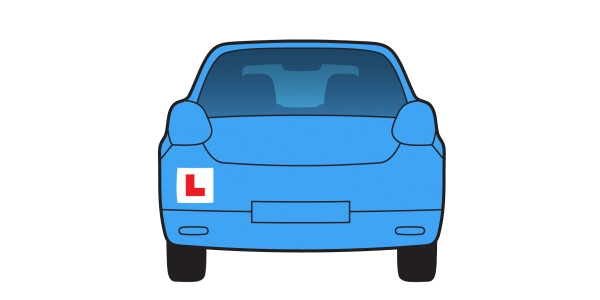
29a   Realise // student must abandon study (4)

"student" = L [driver under instruction] (show more )

The cryptic crossword convention of L meaning learner or student arises from the L-plate[7], a square plate bearing a sans-serif letter L, for learner, which must be affixed to the front and back of a vehicle in various jurisdictions (including the UK) if its driver is a learner under instruction.

hide
30a   Gave water to // soldiers before unusually dry heat finally dissipated (10)

"soldiers" = RE [Royal Engineers] (show more )

The Corps of Royal Engineers[7], usually just called the Royal Engineers (abbreviation RE), and commonly known as the Sappers[7], is a corps of the British Army that provides military engineering and other technical support to the British Armed Forces.

hide

Down

1d   Defeat // the pick of the bunch (4)

Best[10] is used as a verb meaning to gain the advantage over or defeat.

2d   The man Ireland changed /is/ top of the bill (9)

3d   Pressed, once set up, to expose // such lumps (5)

4d   Total invested in white wine /and/ fish (7)

Hock[5] is a British term for a dry white wine from the German Rhineland.


The haddock[5] is a silvery-grey bottom-dwelling fish of North Atlantic coastal waters, related to the cod. It is popular as a food fish and is of great commercial value.

5d   Academic set up outside gallery /and/ wrote music (7)

A don[10] is a member of the teaching staff at a university or college, especially at Oxford or Cambridge.


"gallery" = TATE (show more )

7d   String // theory's first success with energy (5)

"energy" = E [symbol used in physics] (show reference )

In physics, E[5] is a symbol used to represent energy in mathematical formulae ⇒ E = mc2.

hide

Scratching the Surface
String theory[5] is a cosmological theory based on the existence of cosmic strings*.

* In physics, a string[5] is a hypothetical threadlike concentration of energy within the structure of space–time.

8d   Summon artist, /producing/ an absorbing book (4-6)

J. M. W. Turner[5] (1775–1851) was an English painter; full name Joseph Mallord William Turner. (show more )

He made his name with landscapes and stormy seascapes, becoming increasingly concerned with depicting the power of light by the use of primary colours, often arranged in a swirling vortex. Notable works: Rain, Steam, Speed (1844); The Fighting Téméraire (1838).

hide

9d   Fair offering /from/ a VIP? (3,5)

Here and There
In Britain, big wheel[5] is another name for a Ferris wheel.

From a British perspective, big wheel[5] is a North American term* for an important person, especially in a particular sphere ⇒ he wanted to be a big wheel in Hollywood and New York.

* However, the term apparently must have been adopted by the Brits to the extent that there is no vociferous protest against it on Big Dave's Crossword Blog.

14d   Extravagant // tip a golfer developed (10)

16d   Haste /required/, /needing/ endless walk right through a city (8)

Here we have an interesting situation in which we not only have two words ("required" and "needing") that are not part of either the definition or wordplay but they are words with similar meaning (albeit different parts of speech).

Unlike what Senf shows in his review, I don't consider the word "required" to be part of the definition. In essence, one can consider it to be denoting "the solution to this clue is [a synonym for]".

The word "needing" is acting as a link word between the definition and wordplay.

Post Mortem
I seemed to encounter a mental block when attempting to analyze this clue.

In my initial attempt, I tried to parse the wordplay as {LAC[K] (needing) with the final letter removed (endless) + R(ight)} contained in (through) {A (from the clue) + CITY (from the clue)}.

Of course, I had failed to use the word "walk" and the letter "C" was doing double duty. I was also uncomfortable with "needing" being used to  clue LACK.

As a result, I was certain that this approach was incorrect but I just could not get on the right track.

18d   Steps used in clubs, say, /for/ what to wear when atmosphere is lacking (9)

The solution came easily as I had just read an article in today's National Post on the lack of sufficient numbers of these items in the required size on the International Space Station.

20d   Partner impounding short cook/'s/ big knife (7)

21d   Came across empty refinery /or/ factory (7)

23d   Genius // just crossing line (5)

"line" = L [publishing term] (show reference)

In textual references, the abbreviation for line [of written matter] is l.[5]l. 648.

hide

25d   Supply food for // two queens (5)

A queen[5] is an adult female cat that has not been spayed.

"queen" = ER [regnal cipher] (show more )

The regnal ciphers (monograms) of British monarchs are initials formed from the Latin version of their first name followed by either Rex or Regina (Latin for king or queen, respectively). Thus, the regnal cipher of Queen Elizabeth is ER[5] — from the Latin Elizabetha Regina.

hide


Here and There
The definition varies depending on which side of the Atlantic one finds oneself.
  • In Britain, cater[5] means to provide people with food and drink at a social event or other gathering ⇒ my mother helped to cater for the party.
  • In North America, cater[5] means to provide food and drink for (an event) ⇒ he catered a lunch for 20 people.
Thus cater means, in Britain, to "supply food" (as Senf has marked the definition in his review) and, in North America, to "supply food for" (as I have chosen to mark the definition).

26d   Stallion/'s/ set guide, wanting regulars (4)
Key to Reference Sources: 

[1]   - The Chambers Dictionary, 11th Edition
[2]   - Search Chambers - (Chambers 21st Century Dictionary)
[3]   - TheFreeDictionary.com (American Heritage Dictionary)
[4]   - TheFreeDictionary.com (Collins English Dictionary)
[5]   - Oxford Dictionaries (Oxford Dictionary of English)
[6]   - Oxford Dictionaries (Oxford American Dictionary)
[7]   - Wikipedia
[8]   - Reverso Online Dictionary (Collins French-English Dictionary)
[9]   - Infoplease (Random House Unabridged Dictionary)
[10] - CollinsDictionary.com (Collins English Dictionary)
[11] - TheFreeDictionary.com (Random House Kernerman Webster's College Dictionary)
[12] - CollinsDictionary.com (Webster’s New World College Dictionary)
[13] - MacmillanDictionary.com (Macmillan Dictionary)
[14] - CollinsDictionary.com (COBUILD Advanced English Dictionary)
Signing off for today — Falcon

Tuesday, March 26, 2019

Tuesday, March 24, 2019 — DT 28865

Puzzle at a Glance
Puzzle Number in The Daily Telegraph
DT 28865
Publication Date in The Daily Telegraph
Tuesday, October 9, 2018
Setter
Unknown
Link to Full Review
Big Dave's Crossword Blog [DT 28865]
Big Dave's Crossword Blog Review Written By
Mr K
BD Rating
Difficulty - ★★ Enjoyment - ★★★
Falcon's Experience
┌────┬────┬────┬────┬────┬────┬────┐
██████████████████████████████████
└────┴────┴────┴────┴────┴────┴────┘
Legend:
- solved without assistance
- incorrect prior to use of puzzle solving tools
- solved with assistance from puzzle solving tools
- solved with aid of checking letters provided by puzzle solving tools
- solved but without fully parsing the clue
- unsolved or incorrect prior to visiting Big Dave's Crossword Blog
- solved with aid of checking letters provided by solutions from Big Dave's Crossword Blog
- reviewed by Falcon for Big Dave's Crossword Blog
- yet to be solved

Introduction

I — like many others, I see, after reading the comments on Big Dave's Crossword Blog — struggled in the southwest corner.

I invite you to leave a comment to let us know how you fared with the puzzle.

Notes on Today's Puzzle

This commentary is intended to serve as a supplement to the review of this puzzle found at Big Dave's Crossword Blog, to which a link is provided in the table above.

Click here for an explanation of conventions and symbols used in explaining the parsing of clues.


The purpose of this article is to explain the conventions and symbols that I use on this blog in explaining the parsing of clues.

Legend:

The following symbols are used in reviews:
  • "*" anagram
  • "~" sounds like
  • "<" indicates that the preceding letters are reversed
  • "( )" encloses contained letters
  • "_" replaces letters that have been deleted
  • "†" indicates that the word is present in the clue

The review of a clue takes the following general structure:

#a/d   Clue containing parsing markup (num*)

* num = numeration

Explanations pertaining to the wordplay (or first definition in a double definition)

(Horizontal separator)


Explanations pertaining to the definition (or second definition in a double definition) and solution.

Explanatory Box
An explanatory box provides additional information about the clue. In most cases this information will not necessarily help in solving the clue but provides information about the clue. In the case of the weekday syndicated Daily Telegraph puzzles, such information is often intended to help the North American solver appreciate how the clue may be perceived by a British solver. These boxes may also provide information on people, places, films, television programmes, works of art and literature, etc. mentioned in the clue.

Although the titles of these boxes will usually be drawn from a standard list, I do occasionally throw in a title specifically suggested by the subject at hand. The standard titles include:
  • Scratching the Surface - an explanation of the surface reading of the clue
  • Delving Deeper - in-depth information pertaining to a subject mentioned in an explanation
  • The Story Behind the Picture - for weekday puzzles, information about an illustration found on Big Dave's Crossword Blog
  • What did he/she/they say? - for weekday puzzles, an explanation of a remark made in a review or comment on Big Dave's Crossword Blog
  • What are they talking about? - for weekday puzzles, an explanation of a discussion on Big Dave's Crossword Blog
One box that may provide information that could prove helpful in solving the clue is the following:
  • Here and There - for weekday puzzles, discusses words whose British meaning differs from their North American meaning

Note that there are many types of cryptic crossword clue and it is not my intention to exhaustively go through all of them here. I will only deal with clue types to the extent necessary to explain the conventions and symbols used on the blog. Furthermore, be aware that, in the world of cryptic crosswords, there seems to be an exception to every rule.

With one exception that I can think of, cryptic crossword clues provide two routes to the solution. These are commonly referred to as the definition and wordplay. While these terms serve well for most clues, there are some cases where the more formal terms of primary indication and subsidiary indication may be more appropriate.

Most cryptic crossword clues consist of a definition (primary indication) and wordplay (subsidiary indication). The definition may be a "precise definition" (a definition that is either taken straight from a dictionary or at least phrased in a non-misleading fashion) or it may be a "cryptic definition" (a definition misleadingly phrased so as to misdirect the solver either with respect to the meaning of the definition as a whole or to an incorrect sense of a word used in the definition).

The only type of clue that I can think of where there are not two ways of finding the solution are those in which the entire clue is a cryptic definition.
I identify precise definitions by marking them with a solid underline in the clue and cryptic definitions by marking them with a dotted underline.
In clues in which both definition and wordplay are present, the two parts of the clue combine to provide an overall meaningful statement (the surface reading) which usually bears no relationship to the underlying cryptic reading of the clue. In some cases, an extra word or phrase will be inserted into the clue to create a meaningful link between the definition and wordplay. I define clues which contain such a link word or link phrase as having an explicit link and clues which contain no link word or link phrase as having an implicit link.
I mark the existence of an explicit link by enclosing the link word or link phrase between forward slashes (/link/) and mark the existence of an implicit link with double forward slashes (//) positioned between the definition and wordplay.
Examples

A few examples may help to illustrate these points more clearly.

The first example is a clue used by Jay in DT 28573:

  • 4d   Fellow left work // a failure (4)
Here the definition is "a failure" which is marked with a solid underline to show that it is a precise definition. The wordplay parses as F (fellow; abbrev.) + L (left; abbrev.) + OP (work; abbrev. used in music) which gives us the solution F|L|OP. The double forward slashes (//) between the definition and wordplay indicate the existence of an "implicit link" between the two parts of the clue (that is, no extra words are inserted into the clue to form the link).

The second example is a clue used by Giovanni in DT 28575:
  • 29a   Female going to match // travels with mother in advance (10)
Here the definition "female going to match" is cryptic (the setter is attempting to misdirect our thoughts to a sports event rather than a marriage ceremony) and thus is marked with a a dotted underline. The wordplay is {RIDES (travels) + (with) MA (mother)} contained in (in) BID (advance) giving us the solution B(RIDES|MA)ID. As in the first example, the double forward slashes indicate the presence of an implicit link.

The third example is a clue used by Rufus is DT 28583:
  • 18d   Knight caught by misplaced big blow /is/ staggering (8)
Here the definition is "staggering" which is marked with a solid underline to show that it is a precise definition. The wordplay parses as N ([chess symbol for] knight) contained in (caught in) an anagram (misplaced) of BIG BLOW producing the solution WOBBLI(N)G. Finally, forward slashes mark the link word (/is/).
I also use distinctive underlining to mark &lit.[7] and semi-&lit. clues. Note that the reviewers on Big Dave's Crossword Blog generally prefer to refer to these clue types by the less pretentious names of all-in-one or semi-all-in-one clues respectively.

In an &lit. clue[7] (or all-in-one clue) the entire clue provides not only the definition (when read one way), but under a different interpretation also serves as the wordplay.
In future, I will mark such clues with a combined solid and dashed underline. Although this is a departure from past practice, it would seem to make more sense than using a dotted underline as I have in the past). Henceforth, the dotted underline will be reserved for cryptic definitions.
In a semi-&lit. clue (or semi-all-in-one clue), either:
  • the entire clue acts as the definition while a portion of the clue provides the wordplay; or
  • the entire clue acts as the wordplay while a portion of the clue provides the definition.
For these clues, I will mark the definition with a solid underline and the wordplay with a  dashed underline. This means that a portion of the clue may have a solid underline, a portion of the clue may have a dashed underline and a portion of the clue may have a combined solid and dashed underline.
One final clue type is what I characterize as a cryptic definition comprised of a precise definition combined with cryptic elaboration. For example, in DT 28560 (setter unknown) the following clue appears:
  •  26d   Heroic exploit, whichever way you look at it (4)
As the entire clue is a cryptic definition, it is marked with a dotted underline. The 'precise definition' is "heroic exploit" and is indicated by a solid underline.

Given the numeration, the precise definition could give rise to at least two solutions, DEED or FEAT. However, the 'cryptic elaboration' ("whichever way you look at it") indicates that the solution is a palindrome thereby immediately eliminating one of the two obvious choices.

Note that the part of the clue that I have called 'cryptic elaboration' does not provide a second independent route to the solution (as the wordplay would do in most other types of clue). Rather it merely provides a piece of additional information (elaboration) related to the 'precise definition'.

Again, this approach is a departure from past practice, but like the other changes mentioned previously is intended to remove inconsistencies in the way that I have been applying parsing markup to clues. The markup rules that I have been using until now evolved bit-by-bit over a long period of time resulting in some degree of internal inconsistency.

hide

Across

3a   Magnificent having lots of money /in/ hand (5,5)

In the card game poker, a royal flush[5] is astraight flush including ace, king, queen, jack, and ten all in the same suit, which is the hand of the highest possible value when wild cards are not in use.

In the card game poker, a straight[5] is a continuous sequence of five cards.

In the card games poker and brag*, a flush[5] is a hand of cards all of the same suit.

* Brag[11] is an old English card game similar to poker.

hide

8a   Power mad // buccaneer (6)

"power" = P [symbol used in physics] (show reference )

In physics, P[10] is a symbol used to represent power [among other things] in mathematical formulae.

hide

9a   Historian/'s/ musical instrument? (8)

A double definition, with the first perhaps being slightly on the cryptic side.

10a   Lots // lost weight (8)

Shedload[5] is an informal British term for a large amount or number had she decided to join a rival, she would doubtless be earning a shedload of money.

Origin: a euphemism for 'shitload'

11a   Ring and order // fruit (6)

12a   Weighty book, not English dictionary, /gives/ this cocktail (3,7)

The Collins English Dictionary[7] is a printed and online dictionary of English. It is published by HarperCollins in Glasgow, Scotland.


A Tom Collins[5] is a cocktail made from gin mixed with soda, sugar, and lemon or lime juice.

Origin: sometimes said to have been named after a 19th-century London bartender

14a   By lake, spotted pierid briefly fluttering -- that interests me? (13)

I pretty much concur with Mr K's assessment, seeing the entire clue as a cryptic definition which one could interpret as "I am someone who is interested in butterflies". The wordplay is embedded in the definition.


A pierid[5] is a butterfly of a family (Pieridae) which includes the whites, brimstones, and sulphurs.

A lepidopterist[5] is a person who studies or collects butterflies and moths.

20a   Incomplete passage concerning // fielding position (5,5)

In cricket, extra cover[5] denotes either a fielding position between cover point and mid-off but further from the wicket or a fielder at this position.

22a   Group round bar suffering reversal /in/ game (6)

23a   Wears tie loose? // In a way (2,2,4)

24a   Gas // discharged by a representative (8)

"representative" = MP (show explanation )

In Britain (as in Canada), a politician elected to the House of Commons is known as a Member of Parliament[10] (abbreviation MP[5]) or, informally, as a member[5].

hide


Firedamp[10] is a mixture of hydrocarbons, chiefly methane, formed in coal mines. It forms explosive mixtures with air.

25a   Policeman arresting husband, extremely prickly /and/ rough (6)

"husband" = H [genealogy] (show reference )

The abbreviation for husband is h[1,2] or h.[3,4,10,11,12] or H[12] or H.[4,10,11,12]) [although no context is provided, it may well come from the field of genealogy].

hide

26a   Keen observer, // European, at present enthralled by river (7,3)

E[1,2] is the abbreviation for European (as in E number*).

* An E number[1,4,10,14] (or E-number[2,5]) is any of various identification codes required by EU law, consisting of the letter E (for European) followed by a number, that are used to denote food additives such as colourings and preservatives (but excluding flavourings) that have been approved by the European Union.

The Wye[5] is a river which rises in the mountains of western Wales and flows 208 km (132 miles) generally south-eastwards, entering the Severn estuary at Chepstow. In its lower reaches it forms part of the border between Wales and England.


A weather eye[2] is an eye watchful for developments. The expression keep a weather eye on[5] means to observe very carefully, especially for changes or developments ⇒ regular bank statements let you keep a weather eye on your finances.

Down

1d   One who likes to stay up late // close to West End in capital? (5,3)

Nigh[5] is an archaic or literary term meaning near ⇒ (i) the end is nigh; (ii) a car weighing nigh on two tons.

2d   Help one cover // obstacle (8)

3d   Fly back /in/ rear of helicopter with E. Coli needing treatment (6)

4d   Wagon carrying beer turned up /in/ quadrangle (4)

A dray[2,5,10] is a low horse-drawn cart without fixed sides, for delivering beer barrels or other heavy loads.

In Britain, a yard[10] is a piece of enclosed ground, usually either paved [covered with paving stones] or laid with concrete and often adjoining or surrounded by a building or buildings.

Here and There
Note that the land adjoining a house that is known in North American as a yard, would be called a garden in the UK.


In Britain, a garden[2,10] is an area of land, usually one adjoining a house, where grass, trees, flowers and other ornamental plants, fruit, vegetables, etc, are grown.

Note that a British garden includes the lawn as well as everything else whereas a North American garden would comprise only the flower and vegetable beds and any trees or shrubs contained therein and exclude the lawn and any trees or shrubs growing there.

5d   Game // lady, not half, scores freely (8)

Lacrosse[5] is a team game, originally played by North American Indians, in which the ball is thrown, carried, and caught with a long-handled stick having a curved L-shaped or triangular frame at one end with a piece of shallow netting in the angle.

6d   Rope /appears once/ a trial is done (6)

In his review on Big Dave's Crossword Blog, Mr K identifies the anagram indicator as "appears once ... is done".

On the other hand, I viewed "appears once" as a link phrase with the anagram indicator being simply "is done".

As an anagram indicator, do[5] (past tense done) might possibly be used in an informal British sense meaning to do the cleaning for a person or household Florrie usually did for the Shermans in the mornings. Thus one can think of the cleaning lady rearranging the letters as she straightens up the house.

7d   The Parisian coming into view having lost little time /getting/ vehicle fit for use in snow (6)

"the Parisian" = LE (show explanation )

In French, the masculine singular form of the definite article is le[8].

hide

13d   Contribution /from/ home deposited (5)

15d   Get on after groom /in/ equestrian event (8)

Dress[5] is used in the sense of to arrange or style (hair) ⇒ Patrick dressed Michelle's hair in a sculptured, Japanese-type style.


Dressage[5] is the art of riding and training a horse in a manner that develops obedience, flexibility, and balance ⇒ (i) she was learning dressage on a black mare; (ii) Britain's top dressage rider.

16d   Type of timber /in/ two golf clubs (8)

In golf, an iron[2] is any of various clubs with an angled iron head, used for shorter distance shots of about 100-200 yards.

In golf, a wood[2] is a club with a head traditionally made of wood, now usually of metal, used for driving the ball long distances.


Ironwood[5] is the name of any of a number of trees that produce very hard timber, in particular a North American tree (Ostrya virginiana) related to the hornbeam and a southern African tree (Olea laurifolia) of the olive family.

17d   Male, Greek, breaking record /producing/ wine (3,5)

The grape[5] is an informal term for wine ⇒ It was through that and visiting vineyards while travelling with her husband that their love of the grape grew.

18d   A red // employed by Spencer is eyecatching (6)

Cerise[5] is a light clear red colour.

Scratching the Surface
Spencer is the surname of several British painters, including:

19d   Protest /could get/ wild if rained off (6)

Rained off[10] is the British term for rained out.

Post Mortem
Despite having the correct solution and, in general, correctly understanding the clue structure, I did not twig to the full parsing until I had read Mr K's review (which is difficult to understand as he really doesn't say anything of which I was not already aware).

21d   A bit // each (6)

23d   Primate boxing in small // part of church (4)

"small" = S [clothing size] (show reference )

S[5] is the abbreviation for small (as a clothing size).

hide


An apse[5] is a large semicircular or polygonal recess in a church, arched or with a domed roof and typically at the church's eastern end.
Key to Reference Sources: 

[1]   - The Chambers Dictionary, 11th Edition
[2]   - Search Chambers - (Chambers 21st Century Dictionary)
[3]   - TheFreeDictionary.com (American Heritage Dictionary)
[4]   - TheFreeDictionary.com (Collins English Dictionary)
[5]   - Oxford Dictionaries (Oxford Dictionary of English)
[6]   - Oxford Dictionaries (Oxford American Dictionary)
[7]   - Wikipedia
[8]   - Reverso Online Dictionary (Collins French-English Dictionary)
[9]   - Infoplease (Random House Unabridged Dictionary)
[10] - CollinsDictionary.com (Collins English Dictionary)
[11] - TheFreeDictionary.com (Random House Kernerman Webster's College Dictionary)
[12] - CollinsDictionary.com (Webster’s New World College Dictionary)
[13] - MacmillanDictionary.com (Macmillan Dictionary)
[14] - CollinsDictionary.com (COBUILD Advanced English Dictionary)
Signing off for today — Falcon

Monday, March 25, 2019

Monday, March 23, 2019 — DT 28864 (Published Saturday, March 25, 2019)

Puzzle at a Glance
Puzzle Number in The Daily Telegraph
DT 28864
Publication Date in The Daily Telegraph
Monday, October 8, 2018
Setter
Dada (John Halpern)
Link to Full Review
Big Dave's Crossword Blog [DT 28864]
Big Dave's Crossword Blog Review Written By
Miffypops
BD Rating
Difficulty - ★★ Enjoyment - ★★★
Falcon's Experience
┌────┬────┬────┬────┬────┬────┬────┐
██████████████████████████████████
└────┴────┴────┴────┴────┴────┴────┘
Legend:
- solved without assistance
- incorrect prior to use of puzzle solving tools
- solved with assistance from puzzle solving tools
- solved with aid of checking letters provided by puzzle solving tools
- solved but without fully parsing the clue
- unsolved or incorrect prior to visiting Big Dave's Crossword Blog
- solved with aid of checking letters provided by solutions from Big Dave's Crossword Blog
- reviewed by Falcon for Big Dave's Crossword Blog
- yet to be solved
Notes
This puzzle appears on the Monday Diversions page in the Saturday, March 23, 2019 edition of the National Post.

Introduction

I attribute my downfall today to my rather superficial knowledge of and lack of ability in things musical. I did get the correct solution to 12a; however, without properly understanding the wordplay.

I invite you to leave a comment to let us know how you fared with the puzzle.

Notes on Today's Puzzle

This commentary is intended to serve as a supplement to the review of this puzzle found at Big Dave's Crossword Blog, to which a link is provided in the table above.

Click here for an explanation of conventions and symbols used in explaining the parsing of clues.


The purpose of this article is to explain the conventions and symbols that I use on this blog in explaining the parsing of clues.

Legend:

The following symbols are used in reviews:
  • "*" anagram
  • "~" sounds like
  • "<" indicates that the preceding letters are reversed
  • "( )" encloses contained letters
  • "_" replaces letters that have been deleted
  • "†" indicates that the word is present in the clue

The review of a clue takes the following general structure:

#a/d   Clue containing parsing markup (num*)

* num = numeration

Explanations pertaining to the wordplay (or first definition in a double definition)

(Horizontal separator)


Explanations pertaining to the definition (or second definition in a double definition) and solution.

Explanatory Box
An explanatory box provides additional information about the clue. In most cases this information will not necessarily help in solving the clue but provides information about the clue. In the case of the weekday syndicated Daily Telegraph puzzles, such information is often intended to help the North American solver appreciate how the clue may be perceived by a British solver. These boxes may also provide information on people, places, films, television programmes, works of art and literature, etc. mentioned in the clue.

Although the titles of these boxes will usually be drawn from a standard list, I do occasionally throw in a title specifically suggested by the subject at hand. The standard titles include:
  • Scratching the Surface - an explanation of the surface reading of the clue
  • Delving Deeper - in-depth information pertaining to a subject mentioned in an explanation
  • The Story Behind the Picture - for weekday puzzles, information about an illustration found on Big Dave's Crossword Blog
  • What did he/she/they say? - for weekday puzzles, an explanation of a remark made in a review or comment on Big Dave's Crossword Blog
  • What are they talking about? - for weekday puzzles, an explanation of a discussion on Big Dave's Crossword Blog
One box that may provide information that could prove helpful in solving the clue is the following:
  • Here and There - for weekday puzzles, discusses words whose British meaning differs from their North American meaning

Note that there are many types of cryptic crossword clue and it is not my intention to exhaustively go through all of them here. I will only deal with clue types to the extent necessary to explain the conventions and symbols used on the blog. Furthermore, be aware that, in the world of cryptic crosswords, there seems to be an exception to every rule.

With one exception that I can think of, cryptic crossword clues provide two routes to the solution. These are commonly referred to as the definition and wordplay. While these terms serve well for most clues, there are some cases where the more formal terms of primary indication and subsidiary indication may be more appropriate.

Most cryptic crossword clues consist of a definition (primary indication) and wordplay (subsidiary indication). The definition may be a "precise definition" (a definition that is either taken straight from a dictionary or at least phrased in a non-misleading fashion) or it may be a "cryptic definition" (a definition misleadingly phrased so as to misdirect the solver either with respect to the meaning of the definition as a whole or to an incorrect sense of a word used in the definition).

The only type of clue that I can think of where there are not two ways of finding the solution are those in which the entire clue is a cryptic definition.
I identify precise definitions by marking them with a solid underline in the clue and cryptic definitions by marking them with a dotted underline.
In clues in which both definition and wordplay are present, the two parts of the clue combine to provide an overall meaningful statement (the surface reading) which usually bears no relationship to the underlying cryptic reading of the clue. In some cases, an extra word or phrase will be inserted into the clue to create a meaningful link between the definition and wordplay. I define clues which contain such a link word or link phrase as having an explicit link and clues which contain no link word or link phrase as having an implicit link.
I mark the existence of an explicit link by enclosing the link word or link phrase between forward slashes (/link/) and mark the existence of an implicit link with double forward slashes (//) positioned between the definition and wordplay.
Examples

A few examples may help to illustrate these points more clearly.

The first example is a clue used by Jay in DT 28573:

  • 4d   Fellow left work // a failure (4)
Here the definition is "a failure" which is marked with a solid underline to show that it is a precise definition. The wordplay parses as F (fellow; abbrev.) + L (left; abbrev.) + OP (work; abbrev. used in music) which gives us the solution F|L|OP. The double forward slashes (//) between the definition and wordplay indicate the existence of an "implicit link" between the two parts of the clue (that is, no extra words are inserted into the clue to form the link).

The second example is a clue used by Giovanni in DT 28575:
  • 29a   Female going to match // travels with mother in advance (10)
Here the definition "female going to match" is cryptic (the setter is attempting to misdirect our thoughts to a sports event rather than a marriage ceremony) and thus is marked with a a dotted underline. The wordplay is {RIDES (travels) + (with) MA (mother)} contained in (in) BID (advance) giving us the solution B(RIDES|MA)ID. As in the first example, the double forward slashes indicate the presence of an implicit link.

The third example is a clue used by Rufus is DT 28583:
  • 18d   Knight caught by misplaced big blow /is/ staggering (8)
Here the definition is "staggering" which is marked with a solid underline to show that it is a precise definition. The wordplay parses as N ([chess symbol for] knight) contained in (caught in) an anagram (misplaced) of BIG BLOW producing the solution WOBBLI(N)G. Finally, forward slashes mark the link word (/is/).
I also use distinctive underlining to mark &lit.[7] and semi-&lit. clues. Note that the reviewers on Big Dave's Crossword Blog generally prefer to refer to these clue types by the less pretentious names of all-in-one or semi-all-in-one clues respectively.

In an &lit. clue[7] (or all-in-one clue) the entire clue provides not only the definition (when read one way), but under a different interpretation also serves as the wordplay.
In future, I will mark such clues with a combined solid and dashed underline. Although this is a departure from past practice, it would seem to make more sense than using a dotted underline as I have in the past). Henceforth, the dotted underline will be reserved for cryptic definitions.
In a semi-&lit. clue (or semi-all-in-one clue), either:
  • the entire clue acts as the definition while a portion of the clue provides the wordplay; or
  • the entire clue acts as the wordplay while a portion of the clue provides the definition.
For these clues, I will mark the definition with a solid underline and the wordplay with a  dashed underline. This means that a portion of the clue may have a solid underline, a portion of the clue may have a dashed underline and a portion of the clue may have a combined solid and dashed underline.
One final clue type is what I characterize as a cryptic definition comprised of a precise definition combined with cryptic elaboration. For example, in DT 28560 (setter unknown) the following clue appears:
  •  26d   Heroic exploit, whichever way you look at it (4)
As the entire clue is a cryptic definition, it is marked with a dotted underline. The 'precise definition' is "heroic exploit" and is indicated by a solid underline.

Given the numeration, the precise definition could give rise to at least two solutions, DEED or FEAT. However, the 'cryptic elaboration' ("whichever way you look at it") indicates that the solution is a palindrome thereby immediately eliminating one of the two obvious choices.

Note that the part of the clue that I have called 'cryptic elaboration' does not provide a second independent route to the solution (as the wordplay would do in most other types of clue). Rather it merely provides a piece of additional information (elaboration) related to the 'precise definition'.

Again, this approach is a departure from past practice, but like the other changes mentioned previously is intended to remove inconsistencies in the way that I have been applying parsing markup to clues. The markup rules that I have been using until now evolved bit-by-bit over a long period of time resulting in some degree of internal inconsistency.

hide

Across

7a   Meat commercial with a // dance (7)

The lambada[5] is a fast erotic Brazilian dance which couples perform in close physical contact.

What did he say?
In his review on Big Dave's Crossword Blog, Miffypops refers to the commercial in question as an advert.
Advert[5] is an informal British term for an advertisement. North Americans would shorten it even further to merely ad[5] — as the Brits also seem to do.

10a   Spinning device that's no different in reverse (7)

I consider this clue to be a cryptic definition with an embedded precise definition. The latter part of the clue, rather than being a second independent route to the solution, instead provides cryptic elaboration on the nature of the precise definition — namely, that it is a palindrome.

11a   Check // fool is kept in dock (7)

Nit[5,10] (short for nitwit is an informal British term for a foolish person ⇒ you stupid nit!.

The Story Behind the Picture
A milk monitor[5] is a child responsible for distributing bottles of milk at school.

12a   Collapse // three notes (7)

Separating the Notes
As there are so many notes in the solution, which ones are relevant?

As KFB and Kitty mention in comments in the thread arising from Comment #11 on Big Dave's Crossword Blog, they saw five notes — D, E, F, LA, and TE.

However, the three correct notes are D, E FLAT*, and E.

* Said of musical sound, flat[5] denotes below true or normal pitch.


I am afraid that after finding two musical notes (D and F), I went off score and found a LATE note — a note of explanation that a pupil might deliver to a teacher. Somehow I managed to overlook the fact that I had not accounted for the first E in the solution.


Being musically challenged, I didn't even twig to the correct solution after reading Miffypops' explanation that the solution is the fourth and fifth of an octave separated by the black piano key between them. Of course, since E flat is also D sharp, his explanation just might have led me to DDSHARPE.

13a   Musical success // the egotist's priority? (6,3)

15a   Quick // writer (5)

Jonathan Swift[5] (1667–1745) was an Irish satirist, poet, and Anglican cleric; known as Dean Swift. He is best known for Gulliver’s Travels (1726), a satire on human society in the form of a fantastic tale of travels in imaginary lands.

16a   Elated, // having reached the North Pole? (2,3,2,3,5)

The latter part of the clue is a cryptic definition in the form of a literal interpretation of the idiomatic expression that is the solution to the clue.

21a   On the fat side? // Way off! (5)

23a   Fan/'s/ to drink dark bitter (9)

"drink" = SUP (show explanation )

As a verb, sup[5] is a dated or Northern English term meaning to take (drink or liquid food) by sips or spoonfuls ⇒ (i) she supped up her soup delightedly; (ii) he was supping straight from the bottle.

As a noun, sup[5] means
  • a sip of liquid ⇒ he took another sup of wine
  • (in Northern England or Ireland) an alcoholic drink ⇒ the latest sup from those blokes at the brewery
hide

Bitter[5] is a British name for beer that is strongly flavoured with hops and has a bitter taste ⇒ (i) a pint of bitter; (ii) the company brews a range of bitters.

Porter[5] is a dark brown bitter beer brewed from malt partly charred or browned by drying at a high temperature (originally made as a drink for porters).

25a   Country show, say, US city rejected (7)

Algeria[5] is a republic on the Mediterranean coast of North Africa. (show more )

Algeria was colonized by France in the mid 19th century and was for a time closely integrated with metropolitan France, but following civil war in the 1950s the country achieved independence in 1962. A brief period of multiparty democracy was ended by a military takeover in 1992 after the fundamentalist Islamic Salvation Front had won the first round of the national elections; violent civil strife ensued until 2000, when the armed segment of the Islamic Salvation Front was dissolved.

hide

26a   Little money /for/ the police? (7)

Copper is a British[5] or chiefly British[12] (or, perhaps, not so British[3,11]) term for brown coins of low value made of copper or bronze.


Copper is an informal British[5] or chiefly British[2] (or, perhaps, not so British[3,11,12]) term for a police officer.

27a   Translation of dialect /in/ fortress (7)

28a   Explosive device // to drop, designed to catch fire ultimately (7)

Down

1d   On the fire, perhaps, old // flier (8)

2d   Blonde // nothing special (4)

3d   Cooler // day starts to disappear, gradually ending (6)

Whether the solution starts with the fifth day of the week as Miffypops states in his review depends on where one starts counting! Some might consider it to be the fifth day of the work week.

4d   County // supplies workers (6)

Staffs.[5] is short for Staffordshire[5], a county of central England.

5d   All over the place, Emirates /could be/ hotter (8)

Scratching the Surface
The United Arab Emirates[5] (also UAE), sometimes simply called the Emirates[7], is an independent state on the south coast of the Persian Gulf, west of the Gulf of Oman. (show more )

The United Arab Emirates was formed in 1971 by the federation of the independent sheikhdoms formerly called the Trucial States: Abu Dhabi, Ajman, Dubai, Fujairah, Ras al-Khaimah (joined early 1972), Sharjah, and Umm al-Qaiwain.

hide

6d   Cleric // is meddling with opening of text (6)

8d   Note // short dress on male (5)

 Minim[5] is a British name for a half note, a note having the time value of two crotchets* or half a semibreve**, represented by a ring with a stem.

* Crotchet[5] is a British name for a quarter note.
** Semibreve[5] is a British name for a whole note.

9d   Soldier almost cried about ending of war /in/ Belgian province (7)

"soldier" = ANT (show explanation )

A soldier[5] is a wingless caste of ant or termite with a large specially modified head and jaws, involved chiefly in defence.

hide


Antwerp[5] is a province of Belgium of which the port city of Antwerp is the capital.

14d   Idiot // of astonishing foolishness, primarily (3)

17d   Opinions // still extremely tedious (8)

18d   Trendy // joint (3)

19d   Giant // beginning to whimper over flea, perhaps? (7)

20d   Lack of respect, // inside or out (8)

21d   Rare // defect on church (6)

"church" = CE [Church of England] (show explanation )

The Church of England[10] (abbreviation CE[10]) is the reformed established state Church in England, Catholic in order and basic doctrine, with the Sovereign as its temporal head.

hide

22d   Angry outburst -- // job to contain one (6)

Here "job" is used in the sense of the line of employment by which one earns a living.

23d   Regular // fix (6)

In Comment #3 on Big Dave's Crossword Blog, Jane refers to one of the synonyms in 23d casting a bit of doubt. In his review, Miffypops suggests that the second definition refers to something used to join papers together. A explanation that might ease Jane's misgivings would be a verb meaning to (af)fix a notice to a bulletin board.

24d   Time at this point /for/ a comforting word (5)

26d   Quote // attributed to Vespucci, tenuously (4)

Scratching the Surface
Amerigo Vespucci[5] (1451–1512) was an Italian merchant and explorer. He travelled to the New World, reaching the coast of Venezuela on his first voyage (1499–1500) and exploring the Brazilian coastline in 1501–2. The Latin form of his first name is believed to have given rise to the name of America.
Key to Reference Sources: 

[1]   - The Chambers Dictionary, 11th Edition
[2]   - Search Chambers - (Chambers 21st Century Dictionary)
[3]   - TheFreeDictionary.com (American Heritage Dictionary)
[4]   - TheFreeDictionary.com (Collins English Dictionary)
[5]   - Oxford Dictionaries (Oxford Dictionary of English)
[6]   - Oxford Dictionaries (Oxford American Dictionary)
[7]   - Wikipedia
[8]   - Reverso Online Dictionary (Collins French-English Dictionary)
[9]   - Infoplease (Random House Unabridged Dictionary)
[10] - CollinsDictionary.com (Collins English Dictionary)
[11] - TheFreeDictionary.com (Random House Kernerman Webster's College Dictionary)
[12] - CollinsDictionary.com (Webster’s New World College Dictionary)
[13] - MacmillanDictionary.com (Macmillan Dictionary)
[14] - CollinsDictionary.com (COBUILD Advanced English Dictionary)
Signing off for today — Falcon