Thursday, June 3, 2021

Thursday, June 3, 2021 — DT 29631


Puzzle at a Glance
Puzzle number in The Daily Telegraph
DT 29631
Publication date in The Daily Telegraph
Wednesday, March 24, 2021
Setter
Jay (Jeremy Mutch)
Link to full review
Big Dave's Crossword Blog [DT 29631]
Big Dave's Crossword Blog review written by
2Kiwis
BD rating
Difficulty - ★★Enjoyment - ★★★★
Falcon's experience
┌────┬────┬────┬────┬────┬────┬────┐
███████████████████████████████████
└────┴────┴────┴────┴────┴────┴────┘
Legend:
- solved without assistance
- incorrect prior to use of puzzle solving tools
- solved with assistance from puzzle solving tools
- solved with aid of checking letters provided by puzzle solving tools
- solved but without fully parsing the clue
- unsolved or incorrect prior to visiting Big Dave's Crossword Blog
- solved with aid of checking letters provided by solutions from Big Dave's Crossword Blog
- reviewed by Falcon for Big Dave's Crossword Blog
- yet to be solved

Introduction

Another gentle mental workout today.

I invite you to leave a comment to let us know how you fared with the puzzle.

Notes on Today's Puzzle

This commentary is intended to serve as a supplement to the review of this puzzle found at Big Dave's Crossword Blog, to which a link is provided in the table above.

Markup Conventions
  • "//" - marks the boundary between wordplay and definition when no link word or link phrase is present
  • "/[link word or phrase]/" - marks the boundary between wordplay and definition when a link word or link phrase is present
  • "solid underline" - precise definition
  • "dotted underline" - cryptic definition
  • "dashed underline" - wordplay
  • "wavy underline" - whimsical and inferred definitions
Click here for further explanation and usage examples of markup conventions used on this blog.

Across

1a Villain // caught associate surrounded by proceeds of robbery (9)

"caught " = C [cricket notation]

In cricket, one way for a batsman to be dismissed is to be caught out[5], that is for a player on the opposing team to catch a ball that has been hit by the batsman before it touches the ground.

On cricket scorecards, the abbreviation c[5] or c.[2,10] denotes caught (by).

hide

6a Family found in street // with no money (5)

Skint[5] is an informal British term denoting (of a person) having little or no money available I’m a bit skint just now.

9a Parish priests uncovered // crime (5)

In the Church of England, a parson[5,10] is a parish priest, formerly applied only to those who held ecclesiastical benefices*—that is, a rector or a vicar.

* A benefice[5] is a permanent Church appointment, typically that of a rector or vicar, for which property and income are provided in respect of pastoral duties.

10a International clients in trouble must accept answer // lacking flexibility (9)

"international " = I

I.[10] is the abbreviation for International.

hide

11a Bad feeling, /seeing/ the enemy number in here (12)

In cryptic crosswords, we often find that time is the enemy, expressed by Irish poet William Butler Yeats as The innocent and the beautiful have no enemy but time meaning that innocence and beauty are each subject to the ravages of time.


Presentiment[5] is an intuitive feeling about the future, especially one of foreboding ⇒ a presentiment of disaster.

14a Badmouthed missing leader /and/ co-ordinated (7)

16a Show of hesitation by English dog // trader (1-6)

An e-tailer[5] (trademark in the US) is a retailer selling goods via electronic transactions on the Internet.

17a This slippery type // left one alone finally going west (3)

18a Natural // love must come before caring about ... (7)

"love " = O [nil score in tennis]

In tennis, squash, and some other sports, love[5] is a score of zero or nil ⇒ love fifteen. The resemblance of a zero written as a numeral (0) to the letter O leads to the cryptic crossword convention of the word "love" being used to clue this letter.

Although folk etymology has connected the word with French l'oeuf 'egg', from the resemblance in shape between an egg and a zero, the term apparently comes from the phrase play for love (i.e. the love of the game, not for money).

hide

20a ... characteristic /of/ city pal needing reform (7)

22aThe case for a two-day visit? (9,3)

26a Casual worker /of/ Bond villain and valet (3-6)

Oddjob[7] (often written as "Odd Job") is a fictional character in the espionage novels and films featuring James Bond. He is a henchman to the villain Auric Goldfinger in the 1959 James Bond novel Goldfinger and its 1964 film adaptation.

Man[5] is a dated term for a manservant or valet ⇒ get me a cocktail, my man.


Odd-jobman[10] or odd-job man[5] (also odd-jobber) is a British term for a person who does casual work, especially domestic repairs.

27a Knowing /of/ conflict within hospital department (5)

A & E[5] is the abbreviation for accident and emergency[5] (also known as casualty department[5] or casualty ward), a hospital department concerned with the provision of immediate treatment to people who are seriously injured in an accident or who are suddenly taken seriously ill ⇒ (i) a nurse at work told me I should go to A & E; (ii) an A & E department.

North American Equivalent: emergency room[5] (ER[5])

28a Emergency call about right // types (5)

29a Dissertation on case of security and origin of nuclear // fusion (9)

Down

1d Manage to convince, // perhaps cuddling wife (4)

"wife " = W [genealogy]

The abbreviation for 'wife' is w[1,2,12] or w.[3,4,10,11] [although no context is provided, it likely comes from the field of genealogy].

hide

2d Rap session partially used /for/ recess (4)

3d The Mousetrap benefitted from this // extended ladder (4,3)

In Britain, ladder[5] denotes:
  • (noun) a vertical strip of unravelled fabric in tights or stockings ⇒ one of Sally’s stockings developed a ladder
  • (verb) with reference to tights or stockings,  to develop or cause to develop a ladder ⇒ (i) her tights were always laddered; (ii) they laddered the minute I put them on


The Mousetrap[7] is a murder mystery play by Agatha Christie. The Mousetrap opened in London's West End in 1952 and ran continuously until 16 March 2020, when the stage performances had to be discontinued due to the COVID-19 pandemic. The longest-running West End show, it has by far the longest initial run of any play in history, with its 27,500th performance taking place on 18 September 2018.

4d Defeats // political enforcers (5)

A whip[5] is an official of a political party appointed to maintain parliamentary discipline among its members, especially so as to ensure attendance and voting in debates.

5d Martial arts exponent/'s/ area that's protected (5,4)

In judo, karate, or other martial art, a green belt[5] is a person qualified to wear a green belt which denotes a level of proficiency below that of a brown belt.


Green belt[5] is a British term* for an area of open land around a city, on which building is restricted.

* At least, the term is British in the eyes of the editors of Lexico (Oxford Dictionaries) despite the fact that I live virtually within spitting distance of the Ottawa Greenbelt and there being numerous other examples of green belts[7] (or greenbelts) around the world.

6d Staying power // in a man -- it's unusual! (7)

7d Lab working with kitchen // solvent (2,3,5)

8d Quietly /showing/ discretion about one empty lorry holding up vessel (10)

Scratching the Surface
Lorry[5] is the common name in the UK for the vehicle known in North America as a truck[5]; nevertheless, the word truck is also used in the UK*.

* in fact, Lexico (Oxford Dictionaries) defines lorry[5] as a truck and truck[5] as a lorry

12d Amorous old criminal/'s/ rank (10)

13d Queen's supporting band (heavy metal) and will be instigator (10)

"Queen " = ER [regnal cipher of Queen Elizabeth]

The regnal ciphers (monograms) of British monarchs are initials formed from the Latin version of their first name followed by either Rex or Regina (Latin for king or queen, respectively). Thus, the regnal cipher of Queen Elizabeth is ER[5] — from the Latin Elizabetha Regina.

* A cipher[5] (also cypher) is a monogram[5] or motif of two or more interwoven letters, typically a person's initials, used to identify a personal possession or as a logo.

hide

15d Entertainment on board /could be/ playing cards with matches (4,5)

A deck game[1] is a game played on a ship's deck.

19d Officers /with/ negative response from French company upset sergeant-major (3-4)

The French word for 'no' is non[8].

A sergeant major[5] or sergeant-major[2] (abbreviation SM[5]) is a warrant officer in the British army whose job is to assist the adjutant* of a regiment or battalion (regimental sergeant major) or a subunit commander (company sergeant major, battery sergeant major, etc.).

* an adjutant[5] is a military officer who acts as an administrative assistant to a senior officer [does that not make the Sergeant Major an assistant to an assistant?]


Non-com[5] is an informal military term for a noncommissioned officer[10], a person—such as a sergeant or corporal—who is appointed from the ranks as a subordinate officer.

21d 'Just use the oars', as said by some // ruler once (7)

23d Projection /from/ nine players given promotion (5)

A nonet[5] is a group of nine people or things, especially musicians.


A tenon[5] is a projecting piece of wood made for insertion into a mortise in another piece ⇒ a mortise and tenon joint.

24d Crazy // graduates needing to take time (4)

25d Black Sabbath's first // shoots (4)

Jet[5] (also jet black) is a glossy black colour ⇒ her jet-black hair.

Scratching the Surface
Black Sabbath[7] were an English rock band formed in Birmingham, England in 1968 that helped define the genre of heavy metal music.


Key to Reference Sources: 

  [1]   - The Chambers Dictionary, 11th Edition
  [2]   - Search Chambers - (Chambers 21st Century Dictionary)
  [3]   - TheFreeDictionary.com (American Heritage Dictionary)
  [4]   - TheFreeDictionarycom (Collins English Dictionary)
  [5]   - Lexico (formerly Oxford Dictionaries Online) (Oxford Dictionary of English)
  [6]   - Lexico (formerly Oxford Dictionaries Online) (Oxford Advanced American Dictionary)
  [7]   - Wikipedia
  [8]   - Reverso Online Dictionary (Collins French-English Dictionary)
  [9]   - Infoplease (Random House Unabridged Dictionary)
[10]   - CollinsDictionary.com (Collins English Dictionary)
[11]   - TheFreeDictionary.com (Random House Kernerman Webster's College Dictionary)
[12]   - CollinsDictionary.com (Webster’s New World College Dictionary)
[13]   - MacmillanDictionary.com (Macmillan Dictionary)
[14]   - CollinsDictionary.com (COBUILD Advanced English Dictionary)
[15]   - CollinsDictionary.com (Penguin Random House LLC/HarperCollins Publishers Ltd )


Signing off for today — Falcon

Wednesday, June 2, 2021

Wednesday, June 2, 2021 — DT 29630


Puzzle at a Glance
Puzzle number in The Daily Telegraph
DT 29630
Publication date in The Daily Telegraph
Tuesday, March 23, 2021
Setter
Unknown
Link to full review
Big Dave's Crossword Blog [DT 29630]
Big Dave's Crossword Blog review written by
Mr K
BD rating
Difficulty - ★★Enjoyment - ★★★
Falcon's experience
┌────┬────┬────┬────┬────┬────┬────┐
███████████████████████████████████
└────┴────┴────┴────┴────┴────┴────┘
Legend:
- solved without assistance
- incorrect prior to use of puzzle solving tools
- solved with assistance from puzzle solving tools
- solved with aid of checking letters provided by puzzle solving tools
- solved but without fully parsing the clue
- unsolved or incorrect prior to visiting Big Dave's Crossword Blog
- solved with aid of checking letters provided by solutions from Big Dave's Crossword Blog
- reviewed by Falcon for Big Dave's Crossword Blog
- yet to be solved

Introduction

We are presented with a relatively gentle nental workout today. Even 28a was easy to solve despite the clue—in the opinion of most observers—not passing muster.

I invite you to leave a comment to let us know how you fared with the puzzle.

Notes on Today's Puzzle

This commentary is intended to serve as a supplement to the review of this puzzle found at Big Dave's Crossword Blog, to which a link is provided in the table above.

Markup Conventions
  • "//" - marks the boundary between wordplay and definition when no link word or link phrase is present
  • "/[link word or phrase]/" - marks the boundary between wordplay and definition when a link word or link phrase is present
  • "solid underline" - precise definition
  • "dotted underline" - cryptic definition
  • "dashed underline" - wordplay
  • "wavy underline" - whimsical and inferred definitions
Click here for further explanation and usage examples of markup conventions used on this blog.

Across

1a Talk about // second copper infiltrating Norfolk town (7)

"copper " = CU [cuprum]

The symbol for the chemical element copper is Cu[5] (from late Latin cuprum).

hide

Diss[7] is a town in Norfolk, England close to the border with the neighbouring county of Suffolk.

5a Garment missing last // pocket (7)

Trouser[5] is British slang meaning to receive or take (something, especially money) for oneself; in other words, to pocket ⇒ they claimed that he had trousered a £2 million advance.

9a Kept // trimmed? Not husband (5)

"husband " = H [genealogy]

The abbreviation for husband is h[1,2] or h.[3,4,10,11,12] or H[12] or H.[4,10,11,12]) [although no context is provided, it may well come from the field of genealogy].

hide

10a Knowledge /of/ mostly easy answer condemned (9)

11a Observe the French ship // at all events (10)

"the French " = LE [French definite article]

In French, the masculine singular form of the definite article is le[8].

hide

"ship " = SS

In Crosswordland, a ship is almost invariably a steamship, the abbreviation for which is SS[5] the SS Canberra.

hide


At all events is a variant of in any event[5,10] denoting regardless of circumstances or in any case ⇒ (i) in any event, I was not in a position to undertake such a task; (ii) Lenin may well have found the term in a newspaper, probably in a report of the South African war; the Bolsheviks, at all events, adopted it.

12a Too // advanced group of musicians (4)

" advanced " = A [advanced level academic qualification]

In the UK (with the exception of Scotland), A level[5] (advanced level[5]) is a qualification in a specific subject typically taken by school students aged 16-18, at a level above GCSE[5] (General Certificate of Secondary Education).

hide

The London Symphony Orchestra[7] (abbreviation LSO), founded in 1904, is the oldest of London's symphony orchestras.

What did he say?
In his review on Big Dave's Crossword Blog, Mr K informs us that this "group of musicians" is based in the Barbican Centre.
The Barbican Centre[5] is an extensive arts complex in the City of London, opened in 1982.

14a Devon temples demolished /making/ housing estates? (12)

Estate[5] is a British term meaning an area of land and modern buildings developed for residential, industrial, or commercial purposes ⇒ It is now one of just several residential estates in a suburban village.

Scratching the Surface
Devon[5] is a county of southwestern England.

18a Walk disregarding a learner/'s/ state of health (12)

"learner " = L [driver under instruction]

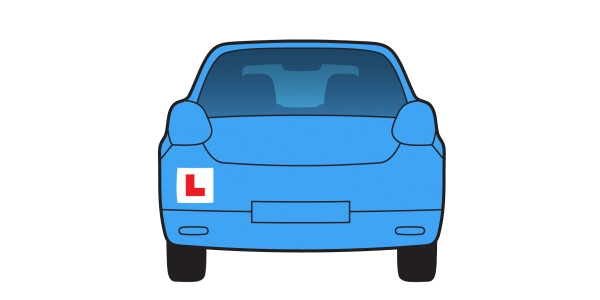
The cryptic crossword convention of L meaning learner or student arises from the L-plate[7], a square plate bearing a sans-serif letter L, for learner, which must be affixed to the front and back of a vehicle in various jurisdictions (including the UK) if its driver is a learner under instruction.

Automobile displaying an L-plate

hide

21a Detective Inspector goes over each // thought (4)

"Detective Inspector | detective | inspector | policeman " = DI [detective inspector]

A detective inspector (abbrevation DI[5]) is a senior police officer in the UK. Within the British police, inspector[7] is the second supervisory rank. It is senior to that of sergeant, but junior to that of chief inspector. Plain-clothes detective inspectors are equal in rank to their uniformed counterparts, the prefix 'detective' identifying them as having been trained in criminal investigation and being part of or attached to their force's Criminal Investigation Department (CID).

hide

22a Manufacturing // trouble east of river (10)

The Indus[5] is a river of southern Asia, about 2,900 km (1,800 miles) in length, flowing from Tibet through Kashmir and Pakistan to the Arabian Sea. (show more )

Along its valley an early civilization flourished from circa 2600 to 1760 BC. The Indus[7] is the longest river of Pakistan.

hide

25a Raving // loony in Ghent hugging American (9)

Scratching the Surface
Ghent[5] is a city in Belgium, capital of the province of East Flanders. (show more )

Founded in the 10th century, it became the capital of the medieval principality of Flanders. It was formerly known in English as Gaunt (surviving in names, e.g. John of Gaunt).

hide

26a Filipinos essentially packing // trunks (5)

27a Pond-dweller // bit European (7)

You may well have noticed that a European in Crosswordland is almost invariably a Pole.

28a Doctor, turning sweet, almost // put bandage on (7)

The Chambers Dictionary does not list D on a standalone basis as an abbreviation for Doctor. However, it is found as such in a number of compound abbreviations, including MD[2] (Medicinae Doctor) and PhD[2] (Philosophiae Doctor).

Sweet[5] is a British term for a sweet dish forming a course of a meal; in other words, a dessert.

Violating Conventions?
This clue is discussed in the thread arising from Comment #2 on Big Dave's Crossword Blog.

There are several conventions at play here, some pertaining to cryptic crosswords in general and some to The Daily Telegraph Cryptic Crossword in particular.

First, abbreviations used in The Daily Telegraph Cryptic Crossword must appear in The Chambers Dictionary.

Second, abbreviations must be recognized in their own right and not be part of some compound abbreviation.

Third, truncation indicators (such as the word "almost" in the present clue) denote the removal of a single letter unless explicitly indicated otherwise.

Some of those commenting on Big Dave's Crossword Blog argue that "doctor" clues DR and "sweet almost" clues DESSE[RT] (i.e., the removal of the final two letters). This clearly violates the third convention.

Others argue that "doctor" clues D (as per my explanation above). This is not found in The Chambers Dictionary as an abbreviation in its own right but only as part of a compound abbreviation (thereby violating the first and second conventions).

Down

1d Fancy // gentleman wearing flower (6)

Flower is being used in the whimsical cryptic crossword sense of something that flows — in other words, a river.

The Dee[5,7] could be any of several rivers in Scotland and England not to mention Ireland and Australia, the most prominent being:
  • a river in northeastern Scotland, which rises in the Grampian Mountains and flows eastwards past Balmoral Castle to the North Sea at Aberdeen
  • a river that rises in North Wales and flows into England, past Chester and on into the Irish Sea
2d Wild // herb covering third of valley (6)

3d Below // a den, hunter shot (10)

4d Wash unusually large // item of clothing (5)

"large " = L [clothing size]

L[5] is the abbreviation for large (as a clothing size).

hide

5d Ship // aims to leave international harbour (9)

As a deletion indicator, leave[5] is used in the sense of to abandon (a spouse or partner) her boyfriend left her for another woman.

"international " = I

I.[10] is the abbreviation for International.

hide

6d Some more volunteers picked up // six balls (4)

In cricket, an over[5] is a division of play consisting of a sequence of six balls bowled by a bowler from one end of the pitch, after which another bowler takes over from the other end.

7d Growing // rat eating very much (8)

Well[5] is used in an informal British sense* meaning very or extremely ⇒ (i) I asked him a few questions - it became clear that he was well out of his depth; (ii) I thought it was well dodgy and I hope they get one back against them in Turin.

* I would say this usage is found in Canada to some extent; for instance, the first usage example is definitely something I might say but the second usage example sounds totally bizarre to my ear.

8d Person's worried prior to European // reaction (8)

"European " = E [as in E number]

E[1,2] is the abbreviation for European (as in E number*).

* An E number[1,4,10,14] (or E-number[2,5]) is any of various identification codes required by EU law, consisting of the letter E (for European) followed by a number, that are used to denote food additives such as colourings and preservatives (but excluding flavourings) that have been approved by the European Union.

hide

13d Current chap consuming alcohol before church -- /that's of/ concern (10)

"current " = I [symbol for electric current used in physics]

In physics, I[5] is a symbol used to represent electric current in mathematical formulae.

hide

"chap " = MAN

Chap[3,4,11] is an informal British[5] or chiefly British[3] term for a man or boy — although a term that is certainly not uncommon in Canada. It is a shortened form of  chapman[3,4,11], an archaic term for a trader, especially an itinerant pedlar[a,b].

[a] Pedlar is the modern British spelling of peddler[14] which, in most senses, is considered by the Brits to be a US or old-fashioned British spelling. The exception is in the sense of a dealer in illegal drugs which the Brits spell as drug peddler.
[b] The current meaning of chap[2] dates from the 18th century. In the 16th century, chap meant 'a customer'. The dictionaries do not explain how a shortened form of 'chapman' (pedlar) came to mean 'customer'.

hide

"alcohol " = PORT

Port[5] (also port wine) is a strong, sweet dark red (occasionally brown or white) fortified* wine, originally from Portugal, typically drunk as a dessert wine. The name is a shortened form of Oporto, a major port from which the wine is shipped.

* having had spirits added

hide

"church " = CE [Church of England]

The Church of England[10] (abbreviation CE[10]) is the reformed established state Church in England, Catholic in order and basic doctrine, with the Sovereign as its temporal head.

hide

15d Wide, // costly piano exchanged for tuba, initially (9)

"piano " = P [music notation (piano)]

Piano[3,5] (abbreviation p[5]), is a musical direction meaning either (as an adjective) soft or quiet or (as an adverb) softly or quietly.

hide

16d Stress about one day/'s/ mishap (8)

17d Ten Verdi works // turned up (8)

Scratching the Surface
Giuseppe Verdi[5] (1813–1901) was an Italian composer. (show more )

His many operas, such as La Traviata (1853), Aida (1871), and Otello (1887), emphasize the dramatic element, treating personal stories on a heroic scale and often against backgrounds that reflect his political interests. Verdi is also famous for his Requiem (1874).

hide

19d Avoids // girls (6)

20d Finished // chapter and left, thus upsetting editor (6)

"chapter " = C [publishing term]

The abbreviation for chapter (likely in textual references) is c.[2]

hide

23d Upper-class rogue I'd regularly // prodded (5)

"upper-class " = U

In Britain, U[5] is used informally as an adjective (in respect to language or social behaviour) meaning characteristic of or appropriate to the upper social classes ⇒ U manners.

The term, an abbreviation of  upper class, was coined in 1954 by Alan S. C. Ross, professor of linguistics, and popularized by its use in Nancy Mitford's Noblesse Oblige (1956).

In Crosswordland, the letter U is frequently clued by words denoting "characteristic of the upper class" (such as posh or superior) or "appropriate to the upper class" (such as acceptable).

hide

24d Practically monstrous old // writer (4)

"old " = O [linguistics]

In linguistics, O[12] is the abbreviation for Old ⇒ (i) OFr [Old French]; (ii) OE [Old English].

However, a second entry from this same source shows o (lower case) meaning old (not capitalized) suggesting that the use of this abbreviation may not necessarily be confined to the field of linguistics.

Another possibility arises from the British abbreviation OAP[5] standing for old-age pensioner.

hide

Victor Hugo[5] (1802–1885) was a French poet, novelist, and dramatist. (show more )

A leading figure of French romanticism, he brought a new freedom to French poetry, and his belief that theatre should express both the grotesque and the sublime in human existence overturned existing conventions. His political and social concern is shown in his novels. Notable works: Hernani (drama, 1830) and Les Misérables (novel, 1862).

hide


Key to Reference Sources: 

  [1]   - The Chambers Dictionary, 11th Edition
  [2]   - Search Chambers - (Chambers 21st Century Dictionary)
  [3]   - TheFreeDictionary.com (American Heritage Dictionary)
  [4]   - TheFreeDictionarycom (Collins English Dictionary)
  [5]   - Lexico (formerly Oxford Dictionaries Online) (Oxford Dictionary of English)
  [6]   - Lexico (formerly Oxford Dictionaries Online) (Oxford Advanced American Dictionary)
  [7]   - Wikipedia
  [8]   - Reverso Online Dictionary (Collins French-English Dictionary)
  [9]   - Infoplease (Random House Unabridged Dictionary)
[10]   - CollinsDictionary.com (Collins English Dictionary)
[11]   - TheFreeDictionary.com (Random House Kernerman Webster's College Dictionary)
[12]   - CollinsDictionary.com (Webster’s New World College Dictionary)
[13]   - MacmillanDictionary.com (Macmillan Dictionary)
[14]   - CollinsDictionary.com (COBUILD Advanced English Dictionary)
[15]   - CollinsDictionary.com (Penguin Random House LLC/HarperCollins Publishers Ltd )


Signing off for today — Falcon

Tuesday, June 1, 2021

Tuesday, June 1, 2021 — DT 29629


Puzzle at a Glance
Puzzle number in The Daily Telegraph
DT 29629
Publication date in The Daily Telegraph
Monday, March 22, 2021
Setter
Campbell (Allan Scott)
Link to full review
Big Dave's Crossword Blog [DT 29629]
Big Dave's Crossword Blog review written by
pommers
BD rating
Difficulty - ★★Enjoyment - ★★★
Falcon's experience
┌────┬────┬────┬────┬────┬────┬────┐
███████████████████████████████████
└────┴────┴────┴────┴────┴────┴────┘
Legend:
- solved without assistance
- incorrect prior to use of puzzle solving tools
- solved with assistance from puzzle solving tools
- solved with aid of checking letters provided by puzzle solving tools
- solved but without fully parsing the clue
- unsolved or incorrect prior to visiting Big Dave's Crossword Blog
- solved with aid of checking letters provided by solutions from Big Dave's Crossword Blog
- reviewed by Falcon for Big Dave's Crossword Blog
- yet to be solved

Introduction

A bit of literary and cinematic knowledge would certainly ease the solve today.

I invite you to leave a comment to let us know how you fared with the puzzle.

Notes on Today's Puzzle

This commentary is intended to serve as a supplement to the review of this puzzle found at Big Dave's Crossword Blog, to which a link is provided in the table above.

Markup Conventions
  • "//" - marks the boundary between wordplay and definition when no link word or link phrase is present
  • "/[link word or phrase]/" - marks the boundary between wordplay and definition when a link word or link phrase is present
  • "solid underline" - precise definition
  • "dotted underline" - cryptic definition
  • "dashed underline" - wordplay
  • "wavy underline" - whimsical and inferred definitions
Click here for further explanation and usage examples of markup conventions used on this blog.

Across

1a Start to judge an unlikely teen, a US // author of classics (4,6)

Jane Austen[5] (1775–1817) was an English novelist. (show more )

Her major novels are Sense and Sensibility (1811), Pride and Prejudice (1813), Mansfield Park (1814), Emma (1815), Northanger Abbey (1818), and Persuasion (1818). They are notable for skilful characterization, dry wit, and penetrating social observation.

hide

6a Shock /given by/ singular tailless fish (4)

"singular " = S [grammar term]

To a grammarian, s[5] is the abbreviation for singular.

hide

10a Holiday home /has/ criminal dropping in (5)

11a & 26aFilm /of/ tragedian I cut drastically (9,4)

Note: In the National Post (as apparently was also the case in The Daily Telegraph), the numeration is presented in a split format that I am not accustomed to seeing for a split entry clue such as this. I have modified the presentation of the numeration to accord with what I believe is not only the customary format but one that I feel is far more meaningful.

12a Football club // magazine (7)

Arsenal Football Club[7] is an English professional association football [soccer] club based in Islington, London that plays in the Premier League (the top level in the English football league system).

13a Country lover // initially pointing at dazzling display (7)

14a Take article to mean // what supporting actor may do in play? (5,3,4)

18a Literary heroine, Amy, /in/ short torrid novel (6,6)

The solution to the clue is a pet name for the heroine of the novel as well as being the name of the novel.

Amy Dorrit, affectionately known as Little Dorrit, is the title character of Charles Dickens' novel Little Dorrit[7], originally published in serial form between 1855 and 1857.

21a Song about head of zoo working /in/ one of the US states (7)

An aria[5] is a long accompanied song for a solo voice, typically one in an opera or oratorio.

23a Artist in salon, unfortunately // one unplaced in competition (4-3)

"artist " = RA [Royal Academician]

A Royal Academician (abbreviation RA[10]) is a member of the Royal Academy of Arts[5] (also Royal Academy; abbreviation also RA[10]), an institution established in London in 1768, whose purpose is to cultivate painting, sculpture, and architecture in Britain.

hide


Here and There
North America, place[5] (noun) denotes the second position, especially in a horse race.

However, in Britain, place[5] (noun) means any of the first three or sometimes four positions in a race (used especially of the second, third, or fourth positions).


As a verb, place[5] means (in Britain) to be among the first three or four in a race or (in the US) the first three.

While the verb can be a collective reference to the top three or four positions:
  • Prior to the win on Sunday, Warrsan had not placed in four starts this season
it often refers (as noted in the definition for its use as a noun) only to the second, third and (where applicable) fourth position:
  • He has won four of 13 starts, placing in seven other races

Scratching the Surface
Historically, a salon[5] was a regular social gathering, especially of writers and artists, at the house of a woman prominent in high society ⇒ But socially he was entirely at home in those Third Republic salons where politicians mixed with aristocrats, diplomats, and writers.

Origin: A salon[5] is a reception room in a large house.

24a Plant, // rush, by spring (9)

Speedwell[5] is a small creeping herbaceous plant* of north temperate regions, with small blue or pink flowers.

* Not all varieties of speedwell are small by a longshot. Speedwell is the name of many species of Veronica, the largest genus in the flowering plant family Plantaginaceae (plantain family). About 500 species of Veronica exist and Wikipedia lists some four dozen that have speedwell in their name. These vary from small creeping ground covers to large, spiked plants such as the one shown by pommers in his review.

25a Saw // a daughter getting silver, second in heptathlon (5)

"daughter " = D [genealogy]

In genealogies, d[5] is the abbreviation for daughter Henry m. Georgina 1957, 1s 2d*.

* Henry married Georgina in 1957. Their marriage produced 1 son and 2 daughters.

hide

"silver " = AG

The symbol for the chemical element silver is Ag[5] from Latin argentum.

hide

26a See 11a

27a Projectile /that may make/ cathedral cleric shout out loud in the auditorium (10)

A canon[5] is a member of the clergy who is on the staff of a cathedral, especially one who is a member of the chapter* he was appointed canon of Christ Church, Oxford.

* The chapter[5] is the governing body of a religious community or knightly order.

Down

1d Jack, over bottle, /becomes/ jolly (6)

"jack " = J [playing card]

J[5] is an abbreviation for jack that is used in describing play in card games.

hide

"over " = O [cricket term]

On cricket scorecards, the abbreviation O[5] denotes over(s), an over[5] being a division of play consisting of a sequence of six balls bowled by a bowler from one end of the pitch, after which another bowler takes over from the other end.

hide

2d Not one younger, // would you believe? (2,4)

Like many who commented on Big Dave's Crossword Blog, I had a great deal of trouble wrapping my head around the wordplay in this clue. However, I have eventually conceded that it does work.

It is a charade of NO (not one; No/not one exception will be granted) + LESS (younger; Currently, no vaccine has been approved for those less/younger than twelve years of age.).

I believe the difficulty arises from the fact that the wordplay only works when the solver decomposes the charade into its component parts; the phrase "not one younger" does not equate to "no less".

3d In spite of seeming very unlikely, // American gets great chances (7,3,4)

4d Musicians /in/ nick outlawed? Sounds like that (5,4)

Nick[5] is an informal British term meaning to steal ⇒ he'd had his car nicked by joyriders.

5d Provide // witty remark after end of game (5)

7d Perhaps towards the end of the day, mean to eat with the Italian (8)

"with " = W

The abbreviation for 'with' is w[5].

hide

In Italian, the masculine singular form of the definite article is il[8].

8d One who likes working late // near to empty well (5,3)

9dIsabella and Ferdinand, for instance, had these // dreams about future success (7,2,5)

One might arrive at the first part of the clue through a literal interpretation of the solution.

Isabella I[5] (1451–1504) was queen of Castile 1474–1504 and of Aragon 1479–1504.

Ferdinand of Aragon[5] (1452–1516), king of Castile 1474–1516 and of Aragon 1479–1516; known as Ferdinand the Catholic.

Delving Deeper
Ferdinand's marriage to Isabella of Castile in 1469 helped to join together the Christian kingdoms of Castile and Aragon, marking the beginning of the unification of Spain. The marriage ensured his accession (as Ferdinand V) to the throne of Castile with Isabella. Ferdinand subsequently succeeded to the throne of Aragon (as Ferdinand II) and was joined as monarch by Isabella. They instituted the Spanish Inquisition in 1478 and supported Columbus's expedition in 1492. Their capture of Granada from the Moors in the same year effectively united Spain as one country.


Castles in Spain[5] (also castles in the air or castles in the sky) are visionary unattainable schemes; or, in other words, daydreams ⇒ my father built castles in the air about owning a boat.

Delving Deeper
I have encountered the expression "Castles in Spain" in puzzles on at least two previous occasions. The first time, I found an article on the Internet (for which the link no longer works) that had this to say:
Nowadays, ‘castles in Spain’ means something splendid but non-existent. “Fashionable adventurers in France used to impose on the credulous and get money and social advantages out of them by telling tales of their ‘castles in Spain’, which, needless to say, they did not possess,” is the explanation of Brewer’s Dictionary of Phrase and Fable.
The expression appears to have entered the English language from French where the expression is "bâtir Châteaux en Espagne" ["build castles in Spain"].

Additional information can be found in the discussion in the thread arising from Comment #9 on Big Dave's Crossword Blog.

15d Sailor boy in // waterproof stuff (9)

"sailor " = TAR

Tar[5] is an informal, dated nickname for a sailor. The term came into use in the mid 17th century and is perhaps an abbreviation of tarpaulin, also used as a nickname for a sailor at that time.

hide

16d Char holding top of strong // detergent (8)

Char[5] is an informal British term for charwoman[5] (or charlady[5]), a dated British name for a woman employed as a cleaner in a house or office.

17d Commanding attention /with/ small spear (8)

"small " = S [clothing size]

S[5] is the abbreviation for small (as a clothing size).

hide

What did he say?
In his review on Big Dave's Crossword Blog, pommers describes the second element in the charade as a three pointed spear or nuclear missile.
The Trident missile[5,7] is a US design of long-range submarine-launched ballistic missile (SLBM) equipped with multiple independently targetable reentry vehicles (MIRV).

Trident missiles are carried by fourteen US Navy Ohio-class submarines, with US warheads, and four Royal Navy Vanguard-class submarines, with British warheads.

The missile is named after the mythological trident [three-pronged spear] of Neptune.

19d Navy // member, nothing without leader (6)

From a British perspective, nada[5] (from Spanish) is an informal North American term meaning nothing.

20d Amazing // change in Lauren (6)

22d Scene of intense activity // within McLaren Automotive (5)

Scratching the Surface
McLaren Automotive[7] (formerly known as McLaren Cars) is a British automotive manufacturer based in Woking, England. The main products of the company are luxury sports cars. It is a fully-owned subsidiary of the McLaren Group whose other interests include Formula One racing.


Key to Reference Sources: 

  [1]   - The Chambers Dictionary, 11th Edition
  [2]   - Search Chambers - (Chambers 21st Century Dictionary)
  [3]   - TheFreeDictionary.com (American Heritage Dictionary)
  [4]   - TheFreeDictionarycom (Collins English Dictionary)
  [5]   - Lexico (formerly Oxford Dictionaries Online) (Oxford Dictionary of English)
  [6]   - Lexico (formerly Oxford Dictionaries Online) (Oxford Advanced American Dictionary)
  [7]   - Wikipedia
  [8]   - Reverso Online Dictionary (Collins French-English Dictionary)
  [9]   - Infoplease (Random House Unabridged Dictionary)
[10]   - CollinsDictionary.com (Collins English Dictionary)
[11]   - TheFreeDictionary.com (Random House Kernerman Webster's College Dictionary)
[12]   - CollinsDictionary.com (Webster’s New World College Dictionary)
[13]   - MacmillanDictionary.com (Macmillan Dictionary)
[14]   - CollinsDictionary.com (COBUILD Advanced English Dictionary)
[15]   - CollinsDictionary.com (Penguin Random House LLC/HarperCollins Publishers Ltd )


Signing off for today — Falcon