Friday, March 4, 2016

Friday, March 4, 2016 — DT 27929

Puzzle at a Glance
Puzzle Number in The Daily Telegraph
DT 27929
Publication Date in The Daily Telegraph
Saturday, October 10, 2015
Setter
Unknown
Link to Full Review
Big Dave's Crossword Blog [DT 27929 – Hints]
Big Dave's Crossword Blog [DT 27929 – Review]
Big Dave's Crossword Blog Review Written By
Big Dave (Hints)
gnomethang (Review)
BD Rating
Difficulty - ★★ Enjoyment - ★★★
Falcon's Experience
┌────┬────┬────┬────┬────┬────┬────┐
██████████████████████████████████
└────┴────┴────┴────┴────┴────┴────┘
Legend:
- solved without assistance
- incorrect prior to use of puzzle solving tools
- solved with assistance from puzzle solving tools
- solved with aid of checking letters provided by puzzle solving tools
- solved but without fully parsing the clue
- unsolved or incorrect prior to visiting Big Dave's Crossword Blog
- solved with aid of checking letters provided by solutions from Big Dave's Crossword Blog
- reviewed by Falcon for Big Dave's Crossword Blog
- yet to be solved
Notes
As this was a Saturday "Prize Puzzle" in Britain, there are two entries related to it on Big Dave's Crossword Blog — the first, posted on the date of publication, contains hints for selected clues while the second is a full review issued following the entry deadline for the contest. The vast majority of reader comments will generally be found attached to the "hints" posting with a minimal number — if any — accompanying the full review.

Introduction

I found this to be a bit more than two star difficulty — likely due to a few Briticisms that I had not previously encountered.

I invite you to leave a comment to let us know how you fared with the puzzle.

Notes on Today's Puzzle

This commentary is intended to serve as a supplement to the review of this puzzle found at Big Dave's Crossword Blog, to which a link is provided in the table above.

Primary indications (definitions) are marked with a solid underline in the clue; subsidiary indications (be they wordplay or other) are marked with a dashed underline in all-in-one (&lit.) clues, semi-all-in-one (semi-&lit.) clues and cryptic definitions. Explicit link words and phrases are enclosed in forward slashes (/link/) and implicit links are shown as double forward slashes (//). Definitions presented in blue text are for terms that appear frequently.

Across

1a   Measuring device // for tower (10)

6a   Bookie's offer about to // finish (4)

I mistakenly tried to explain the wordplay as a reversal (about) of POTS (bookie's offer). It did seem somewhat plausible as The Chambers Dictionary defines pot[1] as a heavily backed horse.

In fact, the wordplay is actually SP (bookie's offer) contained in (about) TO (from the clue).

SP[5] is the abbreviation for starting price[5], the final odds at the start of a horse race.

10a   Martial arts expert goes round island with a // girl (5)

In martial arts, a dan[10] is:
  1. any one of the 10 black-belt grades of proficiency; or
  2. a competitor entitled to dan grading.
11a   Attacker /from/ South America, one coming in at an angle (9)

Somehow gnomethang has ended up on the wrong continent in his review.

12a   Person who's left something // on a support (7)

In cricket, the on[5] (also known as on side) is another name for the leg[5] (also called leg side), the half of the field (as divided lengthways through the pitch) away from which the batsman’s feet are pointed when standing to receive the ball ⇒ he played a lucky stroke to leg. The other half of the field is known as the off[5] (also called off side).

13a   Bag // carried by gardeners at Chelsea (7)

Scratching the Surface
Chelsea[5,7], part of the Royal Borough of Kensington and Chelsea. is an affluent residential district of central London, on the north bank of the River Thames.

Gardens may not be what Chelsea is best known for, but it does seem to have its share.

Chelsea is home to several open spaces including Albert Bridge Gardens, Battersea Bridge Gardens, Chelsea Embankment Gardens, Royal Hospital Chelsea: the grounds of which are used by the annual Chelsea Flower Show and Chelsea Physic Garden*.
* The Chelsea Physic Garden[5] was established as the Apothecaries’ Garden in London, England, in 1673. (The word "Physic" here refers to the science of healing.) This physic garden is the second oldest botanical garden in Britain, after the University of Oxford Botanic Garden, which was founded in 1621.

14a   Become used to batting // yet seeing one beaten (3,4,3,2)

Get one's eye in[5] (or keep one's eye in) is a British expression denoting to become (or remain) able to make good judgements about a task or activity in which one is engaged ⇒ I’ve got my eye in now; I’m landing them just where I want them.

18a   Musician // performing in recitals not drinking therein (12)

"not drinking" = TT (show explanation )

Teetotal[5] (abbreviation TT[5]) means choosing or characterized by abstinence from alcohol ⇒ a teetotal lifestyle.

A teetotaller[5] (US teetotalerabbreviation TT[5]) is a person who never drinks alcohol.

The term teetotal is an emphatic extension of total, apparently first used by Richard Turner, a worker from Preston [England], in a speech (1833) urging total abstinence from all alcohol, rather than mere abstinence from spirits, as advocated by some early temperance reformers.

hide explanation

Clarinettist[5] is the British spelling of clarinetist.

21a   Means to attract attention in row -- // I'll give better advice (7)

Read the definition in the sense of "I'll give advice to a better".

Psst[2] (or pst) is an exclamation used to draw someone's attention quietly or surreptitiously.

23a   Most gentle // criminal 'Slim Ted' (7)

24a   Cutting // ditch needs worker perhaps (9)

"worker" = ANT (show explanation )

The phrase "worker" is commonly used in cryptic crossword puzzles to clue ANT.

A worker[5] is a neuter or undeveloped female bee, wasp, ant, or other social insect, large numbers of which do the basic work of the colony.

In crossword puzzles, "worker" will most frequently be used to clue ANT and occasionally BEE but I have yet to see it used to clue WASP. Of course, "worker" is sometimes also used to clue HAND or MAN.

hide explanation

25a   Regarding vehicle turning over, // it goes very fast (5)

26a   Cover // mathematical function of variable (4)

In mathematics, a cosine[5] (abbreviation cos[5]) is the trigonometric function that is equal to the ratio of the side adjacent to an acute angle (in a right-angled triangle) to the hypotenuse.

"variable" = Y (show explanation )

In mathematics, a variable[5] is a quantity which during a calculation is assumed to vary or be capable of varying in value.

In mathematical formulae, variables are typically represented symbolically by the letters x, y and z.

hide explanation

27a   Good entertainer's right person /to provide/ scary tale (5,5)

Gnomethang seems to have experienced a touch of finger trouble here. His explanation should read "A charade of G for Good then HOST’S (entertainer’s) and then a TORY or right wing political type in the UK". These right wing political types also exist in Canada.

Down

1d   Blade // theologian used in fencing (6)

Doctor of Divinity[7] (abbreviation D.D. or DD, Divinitatis Doctor in Latin) is an advanced academic degree in divinity.

2d   Old cooker /in/ Dutch house (6)

The House of Orange[5] is the Dutch royal house, originally a princely dynasty of the principality centred on the town of Orange in the 16th century.

What did he say?
In his review on Big Dave's Crossword Blog, gnomethang characterizes a "range" as a cooker/hob/Aga.
Cooker[10] is a British term for a stove, an apparatus usually of metal and heated by gas, electricity, oil, or solid fuel, for cooking food. It is . In North America, any such device would be known as a kitchen range or simply a range. In Britain, however, the term range has a much more restricted meaning. There, a range[5] is a large cooking stove with burners or hotplates and one or more ovens, all of which are kept continually hot. This latter characteristic ("kept continually hot") seems to be the determining factor in deciding whether or not an appliance is considered to be a range. Thus stoves heated by solid fuel (wood or coal) and oil would almost certainly be ranges while stoves heated by gas or electricity would generally not be ranges (provided that the burners and ovens could be turned off when not in use).

The AGA cooker[7] is a high-end gas stove popular in medium to large British country houses — not to mention British crosswords. As a heat storage stove, it works on the principle that a heavy frame made from cast iron components can absorb heat from a relatively low-intensity but continuously-burning source, and the accumulated heat can then be used when needed for cooking. Thus it is considered to be a gas burning range in Britain.

Hob[5] is a British term for a cooking appliance, or the flat top part of a cooker, with hotplates or burners.

3d   A dictator there in revolt /to make/ drastic threat (4,3,4,3)

To read (someone) the Riot Act[5] is a [supposedly] British expression meaning to give (someone) a severe warning or reprimand ⇒ he read the riot act to his players after hauling them in for extra training.

Despite being characterized by Oxford Dictionaries as British, the expression read (someone or somebody) the riot act is found in the McGraw-Hill Dictionary of American Idioms and Phrasal Verbs, the Cambridge Dictionary of American Idioms, The American Heritage® Dictionary of Idioms, and the American Heritage® Dictionary of the English Language. So although the expression may have originated in 18th century Britain, it has clearly crossed the Atlantic and established firm roots here.

Delving Deeper
The Riot Act[5] was an Act passed by the British government in 1715 and repealed in 1967, designed to prevent civil disorder. The Act made it a felony for an assembly of more than twelve people to refuse to disperse after being ordered to do so and having been read a specified section of the Act by lawful authority.

4d   Tea for every single // person giving protection (9)

Cha (or chai) is an alternative spelling for char[5], an informal British name for tea.

5d   Love unchanged // spot that's pleasant (5)

"love" = O (show explanation )

In tennis, squash, and some other sports, love[5] is a score of zero or nil ⇒ love fifteen. The resemblance of a zero written as a numeral (0) to the letter O leads to the cryptic crossword convention of the word "love" being used to clue this letter.

Although folk etymology has connected the word with French l'oeuf 'egg', from the resemblance in shape between an egg and a zero, the term apparently comes from the phrase play for love (i.e. the love of the game, not for money).

hide explanation

7d   After time, I tucked into slice of bacon // of worse quality (8)

8d   English trade union in factory // with bad attitude (8)

TU[3,4,11] is the abbreviation for Trade Union.

9d   Sit around in costume trousers from the Seventies, // things for an emergency (8,6)

Before seeking a second opinion from my electronic assistants, I was unable to see past ALARMS for the second word.

Delving Deep
In North America, distress flares are typically fired using a flare gun[7] — the most common type being a Very pistol which was named after Edward Wilson Very (1847–1910), an American naval officer who developed and popularized a single-shot breech-loading snub-nosed pistol that fired flares.

In countries where possession of firearms is strictly controlled, such as the United Kingdom, the use of Very pistols as emergency equipment on boats is less common than, for example, the United States. In such locations, distress flares are more commonly fired from single-shot tube devices which are then disposed of after use. These devices are fired by twisting or striking a pad on one end, but the contents are otherwise similar to a round from a flare gun, although the flares themselves are much larger and can burn brighter for longer.

Another gun control-heavy country, Russian Federation, has a special tube-shaped flare launching device called a "Hunter's Signal" which is reusable but is deliberately designed in a way to avoid resemblance to a gun.

Distress flares must be shot directly above, making the signal visible for a longer period of time and revealing the position of whoever is in need of assistance.

15d   Reckons // big cars will go about one mile (9)

In the UK, estate[5] is short for estate car[5], the British name for a station wagon[5].

16d   Jubilant // financial district staying put (8)

"financial district" = EC (show explanation )

In the clue, the setter uses "financial district" to stand for for the EC postcode which serves the City of London [postcode being the British counterpart of the Canadian postal code or American zip code]. The EC (Eastern Central) postcode area[7] (also known as the London EC postcode area) is a group of postcode districts in central London, England. It includes almost all of the City of London as well as parts of several other London boroughs.

The City of London[7] (not to be confused with the city of London) is a city and ceremonial county within London. It constituted most of London from its settlement by the Romans in the 1st century AD to the Middle Ages, but the conurbation has since grown far beyond the City's borders. The City of London is now only a tiny part of the metropolis of London, though it remains a notable part of central London. It is one of two districts of London to hold city status, the other being the adjacent City of Westminster.

The City of London is widely referred to simply as the City (often written as just "City" and differentiated from the phrase "the city of London" by capitalising "City") and is also colloquially known as the Square Mile, as it is 1.12 sq mi (2.90 km2), in area. Both of these terms are also often used as metonyms for the United Kingdom's trading and financial services industries, which continue a notable history of being largely based in the City. This is analogous to the use of the terms Wall Street and Bay Street to refer to the financial institutions located in New York and Toronto respectively.

hide explanation


17d   Fish /as/ start of meal adorned with chopped parsley (8)

My handicap was in wrongly supposing that the fish started with an M. However, my electronic assistants were not fooled.

The lamprey[5] is any of several species of eel-like aquatic jawless vertebrate that has a sucker mouth with horny teeth and a rasping tongue. The adult is often parasitic, attaching itself to other fish and sucking their blood.

19d   Again sound out // Greek character about forerunner of EU (2-4)

Rho[5] is the seventeenth letter of the Greek alphabet (Ρ, ρ).

The European Economic Community[10] (abbreviation EEC[10]) is the the former western European economic association created by the Treaty of Rome in 1957; in 1967 its executive and legislative bodies merged with those of the European Coal and Steel Community and the European Atomic Energy Community to form the European Community (since 1993 subsumed within the European Union (or EU)).

20d   Yard beneath shop // floor (6)

22d   Stretch /of/ river for everyone (5)

The solution could mean 'stretch of river' but, in this clue, it simply means 'stretch'.
Key to Reference Sources: 

[1]   - The Chambers Dictionary, 11th Edition
[2]   - Search Chambers - (Chambers 21st Century Dictionary)
[3]   - TheFreeDictionary.com (American Heritage Dictionary)
[4]   - TheFreeDictionary.com (Collins English Dictionary)
[5]   - Oxford Dictionaries (Oxford Dictionary of English)
[6]   - Oxford Dictionaries (Oxford American Dictionary)
[7]   - Wikipedia
[8]   - Reverso Online Dictionary (Collins French-English Dictionary)
[9]   - Infoplease (Random House Unabridged Dictionary)
[10] - CollinsDictionary.com (Collins English Dictionary)
[11] - TheFreeDictionary.com (Random House Kernerman Webster's College Dictionary)
Signing off for today — Falcon

Thursday, March 3, 2016

Thursday, March 3, 2016 — DT 27928

Puzzle at a Glance
Puzzle Number in The Daily Telegraph
DT 27928
Publication Date in The Daily Telegraph
Friday, October 9, 2015
Setter
Giovanni (Don Manley)
Link to Full Review
Big Dave's Crossword Blog [DT 27928]
Big Dave's Crossword Blog Review Written By
Deep Threat
BD Rating
Difficulty - ★★★ Enjoyment - ★★★
Falcon's Experience
┌────┬────┬────┬────┬────┬────┬────┐
███████████████████████████████████
└────┴────┴────┴────┴────┴────┴────┘
Legend:
- solved without assistance
- incorrect prior to use of puzzle solving tools
- solved with assistance from puzzle solving tools
- solved with aid of checking letters provided by puzzle solving tools
- solved but without fully parsing the clue
- unsolved or incorrect prior to visiting Big Dave's Crossword Blog
- solved with aid of checking letters provided by solutions from Big Dave's Crossword Blog
- reviewed by Falcon for Big Dave's Crossword Blog
- yet to be solved

Introduction

Deep Threat characterizes this puzzle as "quite a tricky offering". I would say that sums it up rather well.

I invite you to leave a comment to let us know how you fared with the puzzle.

Notes on Today's Puzzle

This commentary is intended to serve as a supplement to the review of this puzzle found at Big Dave's Crossword Blog, to which a link is provided in the table above.

Primary indications (definitions) are marked with a solid underline in the clue; subsidiary indications (be they wordplay or other) are marked with a dashed underline in all-in-one (&lit.) clues, semi-all-in-one (semi-&lit.) clues and cryptic definitions. Explicit link words and phrases are enclosed in forward slashes (/link/) and implicit links are shown as double forward slashes (//). Definitions presented in blue text are for terms that appear frequently.

Across

1a   Agent, having got round Home Counties, /is/ to be still (6)

The Home Counties[5] are the counties surrounding London in southeast (SE) England, into which London has extended.

Delving Deeper

No exact definition of the term exists and the composition of the Home Counties remains a matter of debate. Oxford Dictionaries restrictively lists them as being chiefly Essex, Kent, Surrey, and Hertfordshire.

On the other hand, Wikipedia tells us that the Home Counties[7] are generally considered to include Berkshire, Buckinghamshire, Essex, Hertfordshire, Kent, Surrey and Sussex (although Sussex does not border London).

Other counties more distant from London, such as Bedfordshire, Cambridgeshire, Dorset, Hampshire and Oxfordshire are also sometimes included in the list due to their close proximity to the capital and their connection to the London regional economy.

4a   Instrument // fixed with insertion of peg (6)

Historically, a spinet[5] was a small harpsichord with the strings set obliquely to the keyboard, popular in the 18th century.

8a   Joining in marriage? // Marrying outside church (8)

The question mark denotes that the definition is on the whimsical side.

10a   Stay /in/ control having brought graduate aboard (6)

11a   Sun is one // name for a tabloid (4)

The Star[7], often known as the Sheffield Star, is a daily newspaper published in Sheffield, England. Originally a broadsheet, the newspaper became a tabloid in 1989.

Scratching the Surface
The Sun[7] is a daily tabloid newspaper published in the United Kingdom and Ireland by a division of News UK, a wholly owned subsidiary of Rupert Murdoch's News Corp.

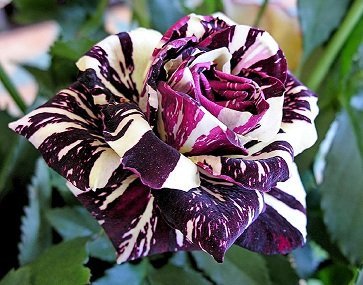
12a   Pretty piece of ground? Could be dragons 'ere (4,6)

For the longest time, I failed to spot the anagram. Consequently, I spent a lot of time and effort fruitlessly trying to figure out why there might be dragons present and what the cockney connection might be. In the process, I did discover the existence of the rather striking Black Dragon Rose.

13a   Cult member to move into // area near London maybe (8,4)

I have opted to identify the anagram indicator as "move into". Should one go with merely "move" as shown by Deep Threat in his review, then "into" would necessarily become a link word.

Commuter belt[5] is a British term for the area surrounding a city from which a large number of people travel to work each day ⇒ the London commuter belt.

16a   After short time get train /as/ an alternative (6,6)

Second string[5] (often in phrase a second string to one's bow) denotes an alternative resource or course of action in case another one fails ⇒ he was principally a batsman and bowling was the second string to his bow.

20a   County fellow /and/ charming son no good unfortunately (10)

"good" = G (show explanation )

The abbreviation G[10] for good likely relates to its use in grading school assignments or tests.

hide explanation

A Cornishman[5] is a male native or inhabitant of Cornwall[5], a county occupying the extreme southwestern peninsula of England; county town, Truro.

21a   Sort // to do manual work in office? (4)

22a   Father taking part /gives/ word of honour (6)

Historically, parole[5] was a promise or undertaking given by a prisoner of war to return to custody or act as a non-belligerent if released ⇒ (i) I took their paroles of honour; (ii) a good many French officers had been living on parole in Melrose.

23a   Thought // about a boy and what he might be called (8)

24a   Material /providing/ end of bed with a covering (6)

This seems to be the fabric of the month.

25a   Ridges /made of/ wood seen aboard ship (6)

"aboard ship" = 'contained in SS' (show explanation )

In Crosswordland, you will find that a ship is almost invariably a steamship, the abbreviation for which is SS[10]. Thus phrases such as "aboard ship" or "on board ship" (or sometimes merely "on board") are Crosswordland code for 'contained in SS'.

hide explanation

Down

1d   Chemist may study this // response (8)

2d   Hidden among sheep, a certain // sort of horse (5)

Pacer[5] is a chiefly US term [Oxford, as usual, seems to be oblivious to the existence of Canada] for a horse bred or trained to pace, used in some types of racing.

Scratching the Surface
From the entry in Oxford Dictionaries, one might conclude that pacing does not exist in the UK. However, according to Wikipedia, it does.

Oxford Dictionaries defines harness racing[5] as another term for trotting[5], racing for trotting horses pulling a two-wheeled vehicle (a sulky) and driver [which would appear to totally disregard pacing].

Harness racing[7] is a form of horse racing in which the horses race at a specific gait (a trot or a pace). They usually pull a two-wheeled cart called a sulky.

Races can be conducted in two differing gaits – trotting and pacing. The difference is that a trotter moves its legs forward in diagonal pairs (right front and left hind, then left front and right hind striking the ground simultaneously), whereas a pacer moves its legs laterally (right front and right hind together, then left front and left hind). In continental Europe, races are conducted exclusively among trotters, whereas in Australia, Canada, New Zealand, the United Kingdom and the United States races are also held for pacers.

Pacing races constitute 80% to 90% of the harness races conducted in North America. Pacing horses are faster and (most important to the bettor) less likely to break stride (a horse which starts to gallop must be slowed down and taken to the outside until it resumes trotting or pacing).

3d   Plant // starts to ruin everything in border (7)

Skirret[5] is an East Asian plant (Sium sisarum) of the parsley family, formerly cultivated in Europe for its edible carrot-like root.

5d   Craft /of/ Greek character, unprincipled person (7)

Pi[5] is the sixteenth letter of the Greek alphabet (Π, π).

A pirogue[5] is a long, narrow canoe made from a single tree trunk, especially in Central America and the Caribbean.

6d   One gets over the line in mathematics (9)

7d   Bolt secured under top of the // stand (6)

9d   Grand sort of scientist // who enjoys visits to restaurants? (11)

Gastronome or gastronomer or gastronomist[10] are less common words for gourmet.

14d   Male is member of a class /that could be/ fool (9)

In Britain, a form[5] is a class or year in a school, usually given a specifying number. Thus the fifth form would be the British linguistic counterpart (although not the academic equivalent) of the fifth grade in North America and Form One would be akin to saying Grade One (show more ).

A form[7] is a class or grouping of students in a school. The term is used predominantly in the United Kingdom, although some schools, mostly private, in other countries also use the title. Pupils are usually grouped in forms according to age and will remain with the same group for a number of years, or sometimes their entire school career.

Forms are normally identified by a number such as "first form" or "sixth form". A form number may be used for two year groups and differentiated by the terms upper and lower. The sixth form is the senior form of a school, and is usually divided into two year groups: the lower sixth and upper sixth. If there is more than one form for each year group they will normally be differentiated by letters, e.g., "upper four B", "lower two Y". Schools do not follow a consistent pattern in naming forms.

hide

15d   People who photograph // fish (8)

The snapper[5] is a marine fish that is typically reddish and is valued as food.

17d   Money report not initially available - // nuts! (7)

18d   Beaming type in the studio // upset students -- the French politician (7)

NUS[5] is the abbreviation for the National Union of Students[7], a confederation of students’ unions in the United Kingdom.

Noted in Passing
The counterpart organization for instructors in the UK is the National Union of Teachers (which goes by the acronym NUT[5]) [much to the delight of their students, I am sure].

"the French" = LA (show explanation )

In French, the feminine singular form of the definite article is la[8].

hide explanation

19d   Fellow child being looked after /is/ one lacking courage (6)

21d   Scottish town // not accommodating soldiers after upset (5)

"soldiers" = OR (show explanation )

In the British armed forces, the term other ranks[5] (abbreviation OR[5]) refers to all those who are not commissioned officers.

hide explanation

Troon[5] is a town on the west coast of Scotland, in South Ayrshire; population 14,100 (est. 2009). It is noted for its championship golf course.
Key to Reference Sources: 

[1]   - The Chambers Dictionary, 11th Edition
[2]   - Search Chambers - (Chambers 21st Century Dictionary)
[3]   - TheFreeDictionary.com (American Heritage Dictionary)
[4]   - TheFreeDictionary.com (Collins English Dictionary)
[5]   - Oxford Dictionaries (Oxford Dictionary of English)
[6]   - Oxford Dictionaries (Oxford American Dictionary)
[7]   - Wikipedia
[8]   - Reverso Online Dictionary (Collins French-English Dictionary)
[9]   - Infoplease (Random House Unabridged Dictionary)
[10] - CollinsDictionary.com (Collins English Dictionary)
[11] - TheFreeDictionary.com (Random House Kernerman Webster's College Dictionary)
Signing off for today — Falcon

Wednesday, March 2, 2016

Wednesday, March 2, 2016 — DT 27927

Puzzle at a Glance
Puzzle Number in The Daily Telegraph
DT 27927
Publication Date in The Daily Telegraph
Thursday, October 8, 2015
Setter
Unknown
Link to Full Review
Big Dave's Crossword Blog [DT 27927]
Big Dave's Crossword Blog Review Written By
Kath
BD Rating
Difficulty - ★★ / ★★★ Enjoyment - ★★★ / ★★★★
Falcon's Experience
┌────┬────┬────┬────┬────┬────┬────┐
██████████████████████████████████
└────┴────┴────┴────┴────┴────┴────┘
Legend:
- solved without assistance
- incorrect prior to use of puzzle solving tools
- solved with assistance from puzzle solving tools
- solved with aid of checking letters provided by puzzle solving tools
- solved but without fully parsing the clue
- unsolved or incorrect prior to visiting Big Dave's Crossword Blog
- solved with aid of checking letters provided by solutions from Big Dave's Crossword Blog
- reviewed by Falcon for Big Dave's Crossword Blog
- yet to be solved

Introduction

This puzzle fell into place fairly smoothly. However, it was the most Canadian of expressions which tripped me up.

I invite you to leave a comment to let us know how you fared with the puzzle.

Notes on Today's Puzzle

This commentary is intended to serve as a supplement to the review of this puzzle found at Big Dave's Crossword Blog, to which a link is provided in the table above.

Primary indications (definitions) are marked with a solid underline in the clue; subsidiary indications (be they wordplay or other) are marked with a dashed underline in all-in-one (&lit.) clues, semi-all-in-one (semi-&lit.) clues and cryptic definitions. Explicit link words and phrases are enclosed in forward slashes (/link/) and implicit links are shown as double forward slashes (//). Definitions presented in blue text are for terms that appear frequently.

Across

1a   Treat superficially books penned by Carry On actor (6)

Jim Dale[7] (given name Jimothy) is an English actor, voice artist, and singer-songwriter. He is best known in the United Kingdom for his many appearances in the Carry On series of films and in the US for narrating the Harry Potter audiobook series, for which he received two Grammy Awards, and the ABC series Pushing Daisies, as well as starring in Pete's Dragon.

4a   National institution // operating amid protest ending in rally (8)

10a   Philosopher's vocal character /proving/ a heavy burden (9)

In her review at Big Dave's Crossword Blog, Kath tells us that the clue refers to "one of two British philosophers". I think we could say "one of three ..." — all closely related.

James Mill[7], born James Milne, (1773–1836) was a Scottish historian, economist, political theorist, and philosopher. He is regarded as a founder of classical economics, together with David Ricardo and Adam Smith, and was the father of John Stuart Mill, the philosopher of liberalism.

John Stuart Mill[5] (1806–1873) was an English philosopher and economist. Mill is best known for his political and moral works, especially On Liberty (1859), which argued for the importance of individuality, and Utilitarianism (1861), which extensively developed this theory which had originally been proposed by English philosopher Jeremy Bentham.

Harriet Taylor Mill[7] (1807–1858) was a British philosopher and women's rights advocate. She is largely remembered for her influence upon her second husband, John Stuart Mill, one of the pre-eminent thinkers of the 19th century.

11a   Extra payment /that's/ good in France and America (5)

The French word for good is bon[8].

12a   Speciality shown by husband and father /in/ ME city (7)

Bag[10] is slang for a person's particular taste, field of skill, interest, activity, etc blues is his bag.

ME[1] is the abbreviation for Middle East.

Baghdad[5] is the capital of Iraq, on the River Tigris; population 6,194,800 (est. 2009). A thriving city under the Abbasid caliphs in the 8th and 9th centuries, it was taken by the Ottoman sultan Suleiman in 1534 and remained under Ottoman rule until the First World War. In 1920 it became the capital of the newly created state of Iraq.

13a   Soften a // medium for artists (7)

Tempera[11] is a water paint in which an emulsion consisting of water and pure egg yolk or a mixture of egg and oil is used as a binder or medium, characterized by its lean film-forming properties and rapid drying rate.

14a   Smallest amount // learner's put down with bridge player (5)

"learner" = L (show explanation )

The cryptic crossword convention of L meaning learner or student arises from the L-plate[7], a square plate bearing a sans-serif letter L, for learner, which must be affixed to the front and back of a vehicle in various countries (including the UK) if its driver is a learner under instruction.

hide explanation

In the card game bridge, North[5] and South[5] comprise one partnership and play against East[5] and West[5] who form the other partnership.

15a   Wholesale // responsibility of a street cleaner (8)

18a   Successful show perhaps with leading character keeping time // up to now (8)

20a   Religious follower /and/ a famous performer cycling (5)

Rasta[5] is an informal short form for Rastafarian[5], an adherent of Rastafarianism — a religious movement of Jamaican origin. Rastafarians believe that Emperor Haile Selassie of Ethiopia was the Messiah and that blacks are the chosen people and will eventually return to their African homeland. They have distinctive codes of behaviour and dress, including the wearing of dreadlocks and the smoking of cannabis, and they follow a diet that excludes pork, shellfish, and milk.

In her review at Big Dave's Crossword Blog, Kath wonders whether "cycling" might be an anagram indicator. However, for this to be the case, the clue would be an indirect anagram (one in which the anagram fodder is not explicitly provided in the clue) and, by convention, such clues are not permitted in cryptic crosswords. Thus she is correct in her original explanation, in which "cycling" indicates that the final letter of ASTAR is moved (cycled) to the beginning to form RASTA.

Some may argue that clues such as this are scarcely different from an indirect anagram. However, you will occasionally see them. I would say that it is a case of the setter walking up to the very edge of the precipice without actually stepping over.

23a   Station that's a centre of heat? (7)

American English, British English, or Criminal English
This clue involves a couple of terms, one of which may be American and one of which may be British, but both of which would seem to be well understood by members of the underworld on both sides of the pond.

As Kath points out in her review, heat[1] is US slang for the police (at least that is the view of The Chambers Dictionary). However, the term heat[1,2,10] does seem to be used colloquially in the UK in the closely related sense of a police investigation following a crime ⇒ The heat is on. Moreover, Collins English Dictionary defines the heat[10] as slang for the police without characterizing it as a non-British term.

Cop shop[5,10] (also copshop[1] or cop-shop[10]) is an informal British term for a police station. I was surprised to see this expression characterized as British as it is an expression with which I am very familiar. However, it may well be a British term as it is not found in either of the two American dictionaries that I commonly consult. On the other hand, the term cop-shop does appear in McGraw-Hill's Dictionary of American Slang and Colloquial Expressions.

25a   Hours in ground /showing/ support (7)

As an anagram indicator, ground is the past tense or past participle of the verb grind[5]. An anagram indicator is a word that denotes movement or transformation. Grind denotes transformation in the sense of wheat being ground into flour.

26a   Take on // party in suitable surroundings (5)

27a   I study note with equipment /that's/ formulaic (9)

Although Identikit would seem to be an American product, I suspect it may be better known in the UK than it is on this side of the pond.

Identikit[5] (trademark in the US) denotes a picture of a person, especially one sought by the police, reconstructed from typical facial features according to witnesses' descriptions ⇒ an identikit photograph.

The term identikit[5] is commonly used as an adjective in the often derogatory sense of  having typical features and few unique ones; in other words, formulaic or standardized ⇒ the pub was transformed by identikit ‘Victoriana’.

Noted in Passing
Identikit[7] (also known as The Driver's Seat) is a 1974 Italian film directed by Giuseppe Patroni Griffi.

Based on the novella The Driver's Seat by Muriel Spark, it is a psychological drama starring Elizabeth Taylor, Ian Bannen and featuring Andy Warhol.

In music, te[5] (also ti[2]) is the seventh note of the major scale in tonic sol-fa. Judging by a perusal of entries in American and British dictionaries, the only recognized spelling in the US would seem to be ti[3,4,11] whereas, in the UK, the principal — or only — spelling would appear to be te[2,3,4,11], with ti given as an alternative spelling in some dictionaries. Oxford Dictionaries provides less leeway, giving the spelling as te[5] with ti shown as the North American spelling.

28a   Neat help devised /for/ one with trunk (8)

29a   Relating to a post-imperial system? (6)

In response to the question posed by Kath in her review (I’m not sure how cryptic this is – am I missing something?), I would think that the cryptic element in the clue is the intended misdirection to a system of government rather than a system of measurement.

Down

1d   Stupid clanger? // It's raised in gym (4-4)

Scratching the Surface
Clanger[5] is an informal British term for an absurd or embarrassing blunder ⇒ the minister had dropped a massive political clanger*.

* To drop a clanger[10] means to make a blunder.

2d   Record number in neckwear /in/ Italian city (7)

Bologna[5] is a city in northern Italy, capital of Emilia-Romagna region; population 374,944 (2008). Its university, which dates from the 11th century, is the oldest in Europe.

3d   A good man with depression under 50 /is/ desperate (4-5)

5d   What's up among public opposing // how some drugs are sold? (4,3,7)

I failed to parse this clue and I''m Canadian, eh!

I think my problem may lie in the fact that Canadians do not use the expression eh[3,11] so much to ask for repetition of a statement but more as a general conversation filler, equivalent to “you know” or “you see” I was on my way, eh, when I realized I had forgotten to call you.

6d   A large, worthless // musical collection (5)

7d   Is youth able to // dine here? (7)

8d   Variable names devised /for/ compliant figure (3-3)

In mathematics, a variable[5] is a quantity which during a calculation is assumed to vary or be capable of varying in value. [In mathematical formulae, unknown variables are typically represented symbolically by the letters x, y and z.]

What did she say?
In her review on Big Dave's Crossword Blog, Kath describes the initial letter of the solution as a variable, unknown or yet to be ascertained quantity in maths ....
In Britain, the short form for mathematics is maths[5]her mother was a maths teacher), rather than math[5] as it is in North America ⇒ she teaches math and science.

9d   Outline of a post (3,11)

16d   Special number on course to take in alien // dance movement (9)

Pi[5] is the numerical value of the ratio of the circumference of a circle to its diameter (approximately 3.14159).

"alien" = ET (show explanation )

E.T. the Extra-Terrestrial[7] (often referred to simply as E.T.) is a 1982 American science fiction film co-produced and directed by Steven Spielberg. It tells the story of a lonely boy who befriends an extraterrestrial, dubbed "E.T.", who is stranded on Earth. He and his siblings help the extraterrestrial return home while attempting to keep it hidden from their mother and the government.

hide explanation

17d   Poor // footway with name displayed upside down (8)

19d   Dim Pole disorientated /in/ collapse (7)

Scratching the Surface
In the surface reading, I would presume that Pole[5] denotes a native or inhabitant of Poland, or a person of Polish descent. As the butt of jokes, Poles seem to be the Newfoundlanders of Europe.

21d   Label // son's found on watch (7)

22d   Bark /in/ southern river cutting through headland (6)

24d   Check under lid /for/ opening in deck (5)
Key to Reference Sources: 

[1]   - The Chambers Dictionary, 11th Edition
[2]   - Search Chambers - (Chambers 21st Century Dictionary)
[3]   - TheFreeDictionary.com (American Heritage Dictionary)
[4]   - TheFreeDictionary.com (Collins English Dictionary)
[5]   - Oxford Dictionaries (Oxford Dictionary of English)
[6]   - Oxford Dictionaries (Oxford American Dictionary)
[7]   - Wikipedia
[8]   - Reverso Online Dictionary (Collins French-English Dictionary)
[9]   - Infoplease (Random House Unabridged Dictionary)
[10] - CollinsDictionary.com (Collins English Dictionary)
[11] - TheFreeDictionary.com (Random House Kernerman Webster's College Dictionary)
Signing off for today — Falcon

Tuesday, March 1, 2016

Tuesday, March 1, 2016 — DT 27926

Puzzle at a Glance
Puzzle Number in The Daily Telegraph
DT 27926
Publication Date in The Daily Telegraph
Wednesday, October 7, 2015
Setter
Jay (Jeremy Mutch)
Link to Full Review
Big Dave's Crossword Blog [DT 27926]
Big Dave's Crossword Blog Review Written By
2Kiwis
BD Rating
Difficulty - ★★★ Enjoyment - ★★★★
Falcon's Experience
┌────┬────┬────┬────┬────┬────┬────┐
███████████████████████████████████
└────┴────┴────┴────┴────┴────┴────┘
Legend:
- solved without assistance
- incorrect prior to use of puzzle solving tools
- solved with assistance from puzzle solving tools
- solved with aid of checking letters provided by puzzle solving tools
- solved but without fully parsing the clue
- unsolved or incorrect prior to visiting Big Dave's Crossword Blog
- solved with aid of checking letters provided by solutions from Big Dave's Crossword Blog
- reviewed by Falcon for Big Dave's Crossword Blog
- yet to be solved

Introduction

I found this puzzle to be one in which it was extremely difficult to establish a foothold. As I recall, on the first read through I solved none of the across clues only one or two of the down clues. However, I was able to gradually work outward from those starting points and the pace of progress picked up as more and more of the grid was filled in.

On another note, Big Dave's Crossword Blog was down for most of yesterday. I first noticed it back on line late in the afternoon (Ottawa time). Hopefully, the teething problems of moving to a new hosting service have now been worked out.

I invite you to leave a comment to let us know how you fared with the puzzle.

Notes on Today's Puzzle

This commentary is intended to serve as a supplement to the review of this puzzle found at Big Dave's Crossword Blog, to which a link is provided in the table above.

Primary indications (definitions) are marked with a solid underline in the clue; subsidiary indications (be they wordplay or other) are marked with a dashed underline in all-in-one (&lit.) clues, semi-all-in-one (semi-&lit.) clues and cryptic definitions. Explicit link words and phrases are enclosed in forward slashes (/link/) and implicit links are shown as double forward slashes (//). Definitions presented in blue text are for terms that appear frequently.

Across

1a   Author not getting credit /for/ site worth developing in Greece (5-6)

"Greece" = GR (show explanation )

The International Vehicle Registration (IVR) code for Greece is GR[5].

hide explanation

9a   A doctor in trouble? Quite the opposite /for/ a lover! (7)

Mire[5] is a complicated or unpleasant situation from which it is difficult to extricate oneself ⇒ the service is sinking in the mire of its own regulations.

10a   Annie, perhaps, /is/ in favour of going back, writing endlessly (6)

Hand[5] denotes a person's handwriting he inscribed the statement in a bold hand.

Little Orphan Annie[7] was a daily syndicated American comic strip created by Harold Gray (1894–1968). The strip made its debut on August 5, 1924 in the New York Daily News. It ranked number one in popularity in a Fortune poll in 1937.

The plot follows the wide-ranging adventures of Annie, her dog Sandy and her benefactor Oliver "Daddy" Warbucks. The strip attracted adult readers with political commentary that targeted (among other things) organized labor, the New Deal and communism.

Following Gray's death in 1968, several artists drew the strip and, for a time, "classic" strips were rerun. Little Orphan Annie inspired a radio show in 1930, film adaptations by RKO in 1932 and Paramount in 1938 and a Broadway musical Annie in 1977 (which was adapted into a film of the same name three times, one in 1982, one in 1999 and another in 2014). The strip's popularity declined over the years; it was running in only 20 newspapers when it was cancelled on June 13, 2010.

12a   Offer, but lacking time to welcome American // consumer (3,4)

13a   Right after evidence of injury -- that is // provoking more fear (7)

14a   Character /getting/ a share of the takings? (5)

Theta[5] is the eighth letter of the Greek alphabet (Θ, θ).

15a   Air /of/ Athens, say, to be cleaned up (3,6)

This air would be of interest to a musicologist rather than a climatologist.

17a   Regard with suspicion // detective's financial status (9)

"detective" = DI (show explanation )

A detective inspector (DI[5]) is a senior police officer in the UK. Within the British police, inspector[7] is the second supervisory rank. It is senior to that of sergeant, but junior to that of chief inspector. Plain-clothes detective inspectors are equal in rank to their uniformed counterparts, the prefix 'detective' identifying them as having been trained in criminal investigation and being part of or attached to their force's Criminal Investigation Department (CID).

hide explanation

20a   Actor disheartened by key // sacrifices made here (5)

22a   Even-tempered, // just having dropped it (7)

24a   Thoroughly // at home with department before end of month (2,5)

25a   This drumming /is/ rubbish, as well (6)

Tat[5] is an informal British term for tasteless or shoddy clothes, jewellery, or ornaments ⇒ the place was decorated with all manner of gaudy tat.

26a   Heading off unable to feel anger /or/ annoyance (7)

27a   Hearing shooter, goalie /is/ one to put himself between opponents (11)

Piece[5] is an informal, chiefly North American term for a firearm.

Goalie[5] is an informal term for goalkeeper or goaltender. From a British perspective, goaltender[5] is a North American term for a goalkeeper, especially in ice hockey.

Keeper[5] is short for goalkeeper[5] (a player in soccer or field hockey whose special role is to stop the ball from entering the goal) or wicketkeeper[5] (in cricket, a fielder stationed close behind a batsman's wicket).

Down

2d   A rash is developing -- /it's/ the hot paste (7)

Harissa[5] is a hot sauce or paste used in North African cuisine, made from chilli [British spelling of chili] peppers, paprika, and olive oil.

3d   Editor chasing almost certain voting system /is/ shocked (9)

Proportional representation[5] (abbreviation PR) is an electoral system in which parties gain seats in proportion to the number of votes cast for them ⇒ PR has been a success in Germany.

4d   Court officials finally protecting Germany/'s/ trees (5)

"Germany" = D (show explanation )

The International Vehicle Registration (IVR) code for Germany is D[5] [from German Deutschland].

hide explanation

5d   Charge /that's a result of/ the setter's cheap shot (7)

"setter's" = IM (show explanation )

It is a common cryptic crossword convention for the creator of the puzzle to use terms such as (the or this) compiler, (the or this) setter, (this) author, (this) writer, or this person to refer to himself or herself. To solve such a clue, one must generally substitute a first person pronoun (I or me) for whichever of these terms has been used in the clue.

Today, the setter has made the scenario slightly more complicated by combining "setter" with the verb "to be" producing "setter's" (a contraction of "setter is") which must be replaced by "I'm" (a contraction of "I am").

hide explanation

In Britain, impeach[5] means to charge (someone) with treason or another crime against the state whereas, in the US, impeach means to charge (the holder of a public office) with misconduct.

6d   Steering clear of // no one, except on the way up (7)

7d   Patient analyses? (4,7)

8d   Spot // daughter in the embrace of self-satisfied head of ethics (6)

11d   Hope we will broadcast, /but/ in Tibet it's an article of faith (6,5)

A prayer wheel[5] is a small revolving cylinder inscribed with or containing prayers, a revolution of which symbolizes the repetition of a prayer, used by Tibetan Buddhists.

16d   Characteristic // honour given to mate -- not me! (9)

18d   Type of dog // food (7)

19d   British in origin, independent, cold /and/ mechanical (7)

"British" = B (show explanation )

Both B.[10] and Br.[10] are abbreviations for British.

hide explanation

20d   Bail due to be fixed // in hearing (7)

21d   Work in which // this covers the head (3,3)

"work" = OP (show explanation )

In music, an opus[5] (plural opuses or opera) is a separate composition or set of compositions.

The abbreviation Op.[5] (also op.), denoting opus, is used before a number given to each work of a particular composer, usually indicating the order of publication. The plural form of Op. is Opp..

Opus[5] can also be used in a more general sense to mean an artistic work, especially one on a large scale ⇒ he was writing an opus on Mexico.

hide explanation

23d   Order up fine // read? (1-4)

"order" = OBE (show explanation )

OBE[5] is the abbreviation for Officer of the Order of the British Empire.

The Order of the British Empire[5] is an order of knighthood applicable to the United Kingdom and certain Commonwealth realms which was instituted in 1917 and is divided into five classes, each with military and civilian divisions. The classes are: Knight or Dame Grand Cross of the Order of the British Empire (GBE), Knight or Dame Commander (KBE/DBE), Commander (CBE), Officer (OBE), and Member (MBE). The two highest classes entail the awarding of a knighthood.

hide explanation
Key to Reference Sources: 

[1]   - The Chambers Dictionary, 11th Edition
[2]   - Search Chambers - (Chambers 21st Century Dictionary)
[3]   - TheFreeDictionary.com (American Heritage Dictionary)
[4]   - TheFreeDictionary.com (Collins English Dictionary)
[5]   - Oxford Dictionaries (Oxford Dictionary of English)
[6]   - Oxford Dictionaries (Oxford American Dictionary)
[7]   - Wikipedia
[8]   - Reverso Online Dictionary (Collins French-English Dictionary)
[9]   - Infoplease (Random House Unabridged Dictionary)
[10] - CollinsDictionary.com (Collins English Dictionary)
[11] - TheFreeDictionary.com (Random House Kernerman Webster's College Dictionary)
Signing off for today — Falcon