Monday, April 27, 2020

Monday, April 27, 2020 — DT 29172 (Published Saturday, April 25, 2020)

Puzzle at a Glance
Puzzle Number in The Daily Telegraph
DT 29172
Publication Date in The Daily Telegraph
Thursday, October 3, 2019
Setter
proXimal (Steve Bartlett)
Link to Full Review
Big Dave's Crossword Blog [DT 29172]
Big Dave's Crossword Blog Review Written By
Falcon
BD Rating
Difficulty - ★★★★ Enjoyment - ★★★★
Falcon's Experience
┌────┬────┬────┬────┬────┬────┬────┐
███████████████████████████████████
└────┴────┴────┴────┴────┴────┴────┘
Legend:
█ - solved without assistance
█ - incorrect prior to use of puzzle solving tools
█ - solved with assistance from puzzle solving tools
█ - solved with aid of checking letters provided by puzzle solving tools
█ - solved but without fully parsing the clue
█ - unsolved or incorrect prior to visiting Big Dave's Crossword Blog
█ - solved with aid of checking letters provided by solutions from Big Dave's Crossword Blog
█ - reviewed by Falcon for Big Dave's Crossword Blog
█ - yet to be solved

Introduction

I believe I found this puzzle easier the second time around — although that is somewhat hard to judge as the first time I was solving under the pressure of the clock as I was reviewing it for Big Dave's Crossword Blog. Moreover, I didn't recall having previously seen the puzzle until I was well into it.

I invite you to leave a comment to let us know how you fared with the puzzle.

Abbreviations — Part XVII

Today, I decided to delve into the world of arts and entertainment. As you can see, the pickings are pretty slim. I can't believe that a setter actually managed to work the abbreviation for the British sitcom into a clue. However, I did find it in my archive, so it may have happened.

AbbreviationStands forAdditional Information
BOAFBirds of a FeatherBritish sitcom (from 80's & 90's)
ENOEnglish National OperaOpera company based in London, England
GHGeneral HospitalAmerican daytime soap opera
LSOLondon Symphony OrchestraAs it says on the tin
OBoutside broadcastRadio or television programme recorded or broadcast live on location
RARoyal Academy or Royal AcademicianOrganization supporting the arts in Britain; usually clued as 'artist' or 'artists'
RADARoyal Academy of Dramatic ArtDrama school in London, England

Notes on Today's Puzzle

This commentary is intended to serve as a supplement to the review of this puzzle found at Big Dave's Crossword Blog, to which a link is provided in the table above.

Markup Conventions
  • "//" - marks the boundary between wordplay and definition when no link word or link phrase is present
  • "/[link word or phrase]/" - marks the boundary between wordplay and definition when a link word or link phrase is present
  • "solid underline" - precise definition
  • "dotted underline" - cryptic definition
  • "dashed underline" - wordplay
  • "double underline" - both wordplay and definition
Click here for further explanation and usage examples of markup conventions used on this blog.

Across

1a   New York gang includes small // kids (5)

West Side Story[7] is a 1957 Broadway musical with a book by Arthur Laurents, music by Leonard Bernstein and lyrics by Stephen Sondheim. It was inspired by William Shakespeare's play Romeo and Juliet.

The story is set in the Upper West Side neighborhood in New York City in the mid 1950s, a multiracial, blue-collar neighborhood. The musical explores the rivalry between two teenage street gangs of different ethnic backgrounds, the Jets (who are white) and the Sharks (who are Puerto Rican).

"small " = S [clothing size]

S[5] is the abbreviation for small (as a clothing size).

hide

4a   Report of perfume demonstration // at focal location (9)

9a   Grant Mike dubious // promotion (9)

10a   European Union almost provided backing? /It's/ unclear (5)

"European Union " = EU

The European Union[5] (abbreviation EU) is an economic and political association of certain European countries as a unit with internal free trade and common external tariffs.

hide

11a   Find adult aged shunning all outsiders /and/ humour (7)

12a   Engineer // cross after permit is rejected (7)

I don't remember if I picked the correct cross immediately on my first solve. I certainly didn't today. I went the religious route and had TELROOD until a search of reference sources failed to turn up any engineer by that name. So, it was back to the (engineering) drawing board.

Thomas Telford[5] (1757–1834) was a Scottish civil engineer. He built hundreds of miles of roads, more than a thousand bridges (including the Menai suspension bridge* 1819–26), and a number of canals, including the Caledonian Canal across Scotland (opened 1822).

* a bridge across the Menai Strait[5], a channel separating the island of Anglesey from the mainland of north-western Wales

13a  What happens when PM begins // making reforms (6)

Split the solution (2,4) to find the answer to the question posed by the wordplay.

It was at this point that I finally twigged to having seen this puzzle before. This is likely due to the trouble this clue gave me last time around (as you can see from my review on Big Dave's Crossword Blog).

15a   Machine part // chap must regularly handle (8)

18a   Warm // trio of islands to the west (8)

Elba[5] is a small island off the west coast of Italy, famous as the place of Napoleon’s first exile (1814–15).

Cos is an alternative spelling of Kos[5], a Greek island in the southeastern Aegean, one of the Dodecanese group. It is the home of cos lettuce[5] (known to North Americans as romaine[5]).

20a   Geographical feature // seen in Tuscany only (6)

Scratching the Surface
Tuscany[5] is a region of west central Italy, on the Ligurian Sea.

23a   Expert with good month to review // app, perhaps (7)

"good " = G [academic result]

The abbreviation G[a] for good comes from its use in education as a grade awarded on school assignments or tests.

[a] Collins English to Spanish Dictionary

hide


Here and There
The Brits use the spelling program[5] only in a computing context*. Otherwise they use the spelling programme[5] and consider program to be a US spelling.

* it would appear that computer code can either be a program or a programme

24a   Sandwich /and/ wine consumed in part of golf club (7)

Asti[7] (formerly known as Asti Spumante) is a sparkling white Italian wine (show more ).

Asti is produced throughout southeastern Piedmont but production is particularly focused around the towns of Asti and Alba. Since 1993 the wine has been classified as a Denominazione di Origine Controllata e Garantita (DOCG) and as of 2004 was Italy's largest producing appellation.

show less

The toe[5] is the tip of the head of a golf club, furthest from the shaft.


Toastie[5] is an informal British term for a toasted sandwich or snack.

26a   Swimmer /is/ one taking over from ace in team (5)

"ace " = A [playing card]

A[5] is an abbreviation for ace (in card games).

hide

27a   Secretly // chummy with soldier (2,7)

28a   Too keen // again, agree to change (9)

29a   Visitor // shot short host at the end (5)

Down

1d   Islanders // endlessly paid to fill preserve containers (9)

2d   Cut // peel of squash and beetroot (5)

Beetroot[2] (adjective) is a colloquial British term used to describe someone's complexion: deep or rosy red, especially as a result of embarrassment or exertion.

Here and There

Beetroot is the British term for the edible root that North Americans would simply call a beet. To Brits, the term 'beet' encompasses beetroot together with all other types of beet. (show more )

Beetroot[5] is a chiefly British term for:
  • the edible dark-red spherical root of a kind of beet, eaten as a vegetable
  • the variety of beet (Beta vulgaris subspecies vulgaris) which produces beetroots
From a British perspective, beet[5] means:
  • any of several subspeciies of a herbaceous plant (Beta vulgaris) widely cultivated as a source of food for humans and livestock, and for processing into sugar. Some varieties are grown for their leaves and some for their swollen nutritious root.
  • North American term for beetroot

hide


3d   Inflated // wheel, oddly, to go in wheel-less conveyance (7)

4d   Herbs // beginning to cause rash (6)

5d   Near agreement to set up // retirement drink (8)

6d   Hates // concerning learner beset by struggles (7)

"learner " = L [driver under instruction]

The cryptic crossword convention of L meaning learner or student arises from the L-plate[7], a square plate bearing a sans-serif letter L, for learner, which must be affixed to the front and back of a vehicle in various jurisdictions (including the UK) if its driver is a learner under instruction.

hide
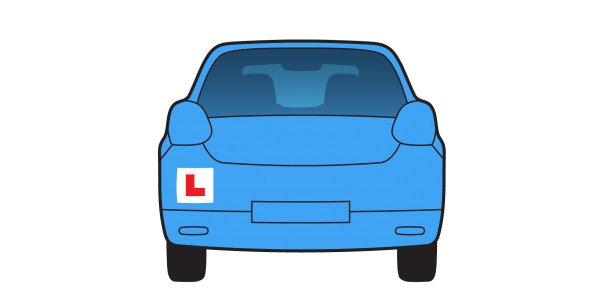
Automobile displaying an L-plate

7d   Yearlong travels around Italy /for/ soldier (9)

"Italy " = I [IVR code]

The International Vehicle Registration (IVR) code for Italy is I[5] [from Italian Italia].

hide

Italian Licence Plate
(The IVR code is on the left below the EU flag emblem)


A legionnaire[5] is a member of a legion, in particular an ancient Roman legion or the French Foreign Legion*.

* The Foreign Legion[5] is a military formation of the French army founded in the 1830s to fight France’s colonial wars. Composed, except for the higher ranks, of non-Frenchmen, the Legion was famed for its audacity and endurance. Its most famous campaigns were in French North Africa in the late 19th and early 20th centuries.

8d   Produce // that is left in yard (5)

14d   Lucerne redeveloped to house very big // arena (9)

"very big " = OS [clothing size]

The sizes of clothing that North Americans would describe as plus-size[7] (or often big and tall in the case of men's clothing) would be called outsize (abbreviation OS[5]) in Britain.

hide

Scratching the Surface
Lucerne[5] is a  resort on the western shore of Lake Lucerne, in central Switzerland.

16d   Most caring // figure starts to drop everything and relax (9)

17d   Holding // outdoor activity around lake (8)

19d   Trim // graduate climbing hill-range (7)

I'm not sure why there is a hyphen in the clue. I did not find the term "hill-range" listed in any of several dictionaries that I consulted. I concluded that it may merely be what I would have written 'hill range'; i.e., a range of hills.

21d   Mother possessed by a spirit /that's/ wicked (7)

22d   Daze /from/ port drunk with us (6)

Scratching the Surface
Port[5] (also port wine) is a strong, sweet dark red (occasionally brown or white) fortified* wine, originally from Portugal, typically drunk as a dessert wine. The name is a shortened form of Oporto, a major port from which the wine is shipped.

* having had spirits added

23d   Sauce/ is/ something unwelcome on duck (5)

"duck " = O [cricket term]

In cricket, a duck[5] (short for duck's egg) is a batsman’s score of nought [zero] ⇒ he was out for a duck. This is similar to the North American expression goose egg[5] meaning a zero score in a game.

In British puzzles, "duck" is used to indicate the letter "O" based on the resemblance of the digit "0" to this letter.

hide

25d   Craft /in/ English river capsized (5)

The River Dart[7] is a river in Devon, England which rises high on Dartmoor, and releases to the sea at Dartmouth. Its valley and surrounding area is a place of great natural beauty.
Key to Reference Sources: 

[1]   - The Chambers Dictionary, 11th Edition
[2]   - Search Chambers - (Chambers 21st Century Dictionary)
[3]   - TheFreeDictionary.com (American Heritage Dictionary)
[4]   - TheFreeDictionary.com (Collins English Dictionary)
[5]   - Oxford Dictionaries (Oxford Dictionary of English)
[6]   - Oxford Dictionaries (Oxford Advanced American Dictionary)
[7]   - Wikipedia
[8]   - Reverso Online Dictionary (Collins French-English Dictionary)
[9]   - Infoplease (Random House Unabridged Dictionary)
[10] - CollinsDictionary.com (Collins English Dictionary)
[11] - TheFreeDictionary.com (Random House Kernerman Webster's College Dictionary)
[12] - CollinsDictionary.com (Webster’s New World College Dictionary)
[13] - MacmillanDictionary.com (Macmillan Dictionary)
[14] - CollinsDictionary.com (COBUILD Advanced English Dictionary)
Signing off for today — Falcon

Saturday, April 25, 2020

Saturday, April 25, 2020 — Extremes of Temperature

Introduction

Aside from the 13a at 15d, today's puzzle from Cox & Rathvon presented no great difficulties.

If you are late coming here, be aware that there is an error in the clue at 15d (see following section).

I invite you to leave a comment to let us know how you fared with the puzzle.

Error in Today's Puzzle

There is clearly an error in the clue at 15d, which I suspect should read:

15d Flying machine, with effort, carrying one worldwide (9)

The word "one" seems to have gone missing — like an unfortunate traveller's luggage.

Solution to Today's Puzzle

Falcon's Experience
┌────┬────┬────┬────┬────┬────┬────┐
███████████████████████████████████
└────┴────┴────┴────┴────┴────┴────┘
Legend:
█ - solved without assistance
█ - incorrect prior to use of puzzle solving tools
█ - solved with assistance from puzzle solving tools
█ - solved with aid of checking letters provided by puzzle solving tools
█ - solved but without fully parsing the clue
█ - yet to be solved

Symbols and Markup Conventions
  •  "*" - anagram
  • "~" - sounds like
  • "<" - indicates the preceding letters are reversed
  • "( )" - encloses contained letters
  • "_" - replaces letters that have been deleted
  •  "†" - indicates that the word is present in the clue
  • "//" - marks the boundary between wordplay and definition when no link word or link phrase is present
  • "/[link word or phrase]/" - marks the boundary between wordplay and definition when a link word or link phrase is present
  • "solid underline" - precise definition
  • "dotted underline" - cryptic definition
  • "dashed underline" - wordplay
  • "double underline" - both wordplay and definition
Click here for further explanation and usage examples of the symbols and markup conventions used on this blog.

Across

1a   Containers for coal holding two articles, // fiery ones (8)

HO(THE|A)DS — HODS (containers for coal) containing (holding) {THE ([first of] two articles) + A ([second of] two articles)}

5a   Tap // skewer, taking leave (6)

SPI(GO)T — SPIT (skewer) containing (taking) GO (leave)

9a   “2001” classic’s beginning, framing one ape (5)

M(I)MI|C — {MMI ([Roman numeral for] 2001) + C (Classic's beginning [initial letter])} containing (framing) I ([Roman numeral for] one)

10a   Lack of action // for men with female name (9)

STAG|NANCY — STAG (for men) + (with) NANCY (female name)

12a   Neatening // ID in binding (7,2)

T(ID)YING UP — ID (†) contained in (in) TYING UP (binding)

13a   University boosters backed // foul-up (5)

{SNAF|U}< — reversal of (backed) {U(niversity) + FANS (boosters)}

14a   Answer assuming a // second showing on video (6)

REPLAY — REPLY (answer) containing (assuming) A (†)

16a   Hobbies // I’m into: socks or belts (8)

PAST(IM)ES — IM (I'm) contained in (into) PASTES (socks or belts; punches)

19a   Hard case changing // game (8)

CHARADES* — anagram of (changing) HARD CASE

20a   Conjecture about first of the // visitors (6)

GUES(T)S — GUESS (conjecture) containing (about) T (first [letter] of The)

23a   Greek character // in home game (5)

_OME|GA_ — hidden in (in) hOME GAme

25a   Happened // to endorse piano string (4,5)

TO|OK| P|LACE — TO (†) + OK (endorse) + P (piano; abbrev., piano is a musical direction to play softly) + LACE (string)

27a   Pasta // tossed at the pigs (9)

SPAGHETTI* — anagram of (tossed) AT THE PIGS

28a   Pound // found in bathrobe (5)

_TH|ROB_ — hidden in (found in) baTH ROBe

29a   Cried out about yellow // theatrical fog (3,3)

{DR(Y) ICE}* — anagram of (out) CRIED containing (about) Y(ellow)

30a   Broken code left // loss of confidence (4,4)

{COLD FEET}* — anagram of (broken) CODE LEFT

Down

1d   Rodent // mars the plastic (7)

HAMSTER* — anagram of (plastic) MARS THE

2d   Easily frightened /and/ not very bright, it turned back (5)

{TI|MID}< — reversal of (turned back) {DIM (not very bright) + IT (†)}

3d   Mexican food // left in rambling hacienda (9)

{ENCHI(L)ADA}* — L(eft) contained in (in) anagram of (rambling) HACIENDA

4d   Produce seasoning/’s/ prescribed amount (6)

DO|SAGE — DO (produce) + SAGE (seasoning)

6d   Part of a suit // is notably breathtaking? (5)

PANTS — double definition

Unlike 17d, it is our friends across the pond who may encounter some difficulty with this clue. In Britain, the word pants[5] does not mean trousers as it does in North America. Rather, it refers to underwear — specifically men's undershorts or women's panties (the latter otherwise known as knickers[5] to the Brits).

7d   Police // seem grand when given new order (9)

GENDARMES* — anagram of (when given new order) SEEM GRAND

A gendarme[5] is a paramilitary police officer in France and other French-speaking countries — including Canada. In French, the RCMP is la Gendarmerie royale du Canada (GRC) and its members are known as gendarmes. The Quebec website of the RCMP carries a tribute to "la gendarme Heidi Stevenson" who was killed in the line of duty in Nova Scotia this week.

8d   Swimmer’s holding health club // auditions (7)

TR(Y)OUT|S — {TROUT (swimmer) + S ('s)} containing (holding) Y (health club; YMCA/YWCA)

11d   A piece of pie and fruit // materialize (6)

A|P|PEAR — A (†) + P (piece [initial letter] of Pie) + (and) PEAR (fruit)

15d   Flying machine, with effort, carrying [one] // worldwide (9)

PLANE|T(A)RY — PLANE (flying machine) + (with) TRY (effort) containing (carrying) A (one; missing from the clue)

The clue, as it appears in the National Post, is clearly missing a word which, in all likelihood, was intended to be 'one'.

17d   Picked up by Ted, strange mascot // made a loud noise (9)

T(RUM|PET)ED — {RUM (strange) + PET (mascot)} contained in (picked up by) TED (†)

Our British friends (and those of us who regularly solve British puzzles) will have little difficulty here). However, North Americans who haven't been exposed to this bit of old-fashioned British slang will likely find themselves at sea.

Rum[5] is a dated informal British term meaning odd or peculiar ⇒ it’s a rum business, certainly.

18d   Make like a little bird /and/ buzz off (4,2)

BE|A|T IT — BE (make like) + A (†) + TIT (little bird)

The tits, chickadees, and titmice[7] constitute the Paridae, a large family of small passerine birds which occur in the northern hemisphere and Africa. These birds are called either "chickadees" or "titmice" in North America, and just "tits" in the rest of the English-speaking world.

A Pair of Great Tits
The great tit[10] is a large common Eurasian tit, Parus major, with yellow-and-black underparts and a black-and-white head.

19d   Went over // bad scores, nearly failing (7)

CROSSE*|D — anagram of (bad) SCORES + D (nearly failing; a D on an exam is not far from a failing grade)

21d   Something adding flavour in jelled // dessert (7)

S(HERB)ET — HERB (something adding flavour) contained in (in) SET (jelled)

22d   Make note: no // dotted tile (6)

_DO|MI|NO — DO (make) + MI ([musical] note) + NO (†)

24d   Assist doctor going around hospital // for a certain purpose (2,3)

A|D (H)OC — A (assist; abbrev., a statistic in sports such as hockey and basketball) + DOC(tor) containing (going around) H(ospital)

26d   A large lake // home up high (5)

A|ERIE — A (†) + ERIE (large lake)

Epilogue

This puzzle starts off at one extreme of temperature and finishes at the other.
Key to Reference Sources: 

[1]   - The Chambers Dictionary, 11th Edition
[2]   - Search Chambers - (Chambers 21st Century Dictionary)
[3]   - TheFreeDictionary.com (American Heritage Dictionary)
[4]   - TheFreeDictionary.com (Collins English Dictionary)
[5]   - Oxford Dictionaries (Oxford Dictionary of English)
[6]   - Oxford Dictionaries (Oxford Advanced American Dictionary)
[7]   - Wikipedia
[8]   - Reverso Online Dictionary (Collins French-English Dictionary)
[9]   - Infoplease (Random House Unabridged Dictionary)
[10] - CollinsDictionary.com (Collins English Dictionary)
[11] - TheFreeDictionary.com (Random House Kernerman Webster's College Dictionary)
[12] - CollinsDictionary.com (Webster’s New World College Dictionary)
[13] - MacmillanDictionary.com (Macmillan Dictionary)
[14] - CollinsDictionary.com (COBUILD Advanced English Dictionary)
Signing off for today — Falcon

Friday, April 24, 2020

Friday, April 24, 2020 — DT 29171

Puzzle at a Glance
Puzzle Number in The Daily Telegraph
DT 29171
Publication Date in The Daily Telegraph
Wednesday, October 2, 2019
Setter
Jay (Jeremy Mutch)
Link to Full Review
Big Dave's Crossword Blog [DT 29171]
Big Dave's Crossword Blog Review Written By
2Kiwis
BD Rating
Difficulty - ★★ Enjoyment - ★★★★
Falcon's Experience
┌────┬────┬────┬────┬────┬────┬────┐
███████████████████████████████████
└────┴────┴────┴────┴────┴────┴────┘
Legend:
█ - solved without assistance
█ - incorrect prior to use of puzzle solving tools
█ - solved with assistance from puzzle solving tools
█ - solved with aid of checking letters provided by puzzle solving tools
█ - solved but without fully parsing the clue
█ - unsolved or incorrect prior to visiting Big Dave's Crossword Blog
█ - solved with aid of checking letters provided by solutions from Big Dave's Crossword Blog
█ - reviewed by Falcon for Big Dave's Crossword Blog
█ - yet to be solved

Introduction

An enjoyable offering from Jay today — perhaps toward the lower end of his difficulty scale.

I invite you to leave a comment to let us know how you fared with the puzzle.

Abbreviations — Part XVI

Today's abbreviations are ones that are used in the publishing world. You would find them in footnotes, endnotes, and other references and citations.

AbbreviationStands forAdditional Information
f.following [page]In references ⇒ see p 784f.
ff.following [pages]In references ⇒ see p 784ff.
ibid. or ib.ibidem [Latin]
In references, in the same place ⇒ ibid. p. 57.
l.line [of written matter]In references ⇒ l. 648
ll.lines [of written matter]In references ⇒ ll. 648-650
nnote Used in a book's index to refer to a footnote ⇒ 450n
p pageIn references ⇒ see p 784
pp or pp. pagesIn references ⇒ pp. 71—73
sc. scilicet [Latin]That is to say or namely (introducing a word to be supplied or an explanation of an ambiguity) ⇒ it [sc. gouache] was also popular in France.
v or v. or vid. vide [Latin]Refer to or see, e.g. a particular page or section
viz. videlicet [Latin]
(z being a medieval Latin symbol for -et)
Namely or in other words (used to introduce a gloss or explanation) ? the first music-reproducing media, viz. the music box and the player piano.

Notes on Today's Puzzle

This commentary is intended to serve as a supplement to the review of this puzzle found at Big Dave's Crossword Blog, to which a link is provided in the table above.

Markup Conventions
  • "//" - marks the boundary between wordplay and definition when no link word or link phrase is present
  • "/[link word or phrase]/" - marks the boundary between wordplay and definition when a link word or link phrase is present
  • "solid underline" - precise definition
  • "dotted underline" - cryptic definition
  • "dashed underline" - wordplay
  • "double underline" - both wordplay and definition
Click here for further explanation and usage examples of markup conventions used on this blog.

Across

1a   Seeming // old, and level-headed about time (10)

"old " = O [linguistics]

In linguistics, O[12] is the abbreviation for Old ⇒ (i) OFr [Old French]; (ii) OE [Old English].

However, a second entry from this same source shows o (lower case) meaning old (not capitalized) suggesting that the use of this abbreviation is not necessarily confined to the field of linguistics.

hide

6a   PSV // stuff needed after the end of treatment (4)

PSV[5] is an acronym for  public service vehicle[5] (abbreviation p.s.v.)*, a British term for a vehicle (typically a passenger vehicle) used to perform a public service or intended for use by the general public.

* Yes, this term apparently rates both an  acronym and an abbreviation!

Tram[5] (also tramcar) is a British term for streetcar[5], a passenger vehicle powered by electricity conveyed by overhead cables, and running on rails laid in a public road.

10a   Dish /from/ South America -- hot one! (5)

Not a samba dancer!

The clue parses as S(outh) + US (America) + H(ot) + I ([Roman numeral for] one).

11a   Inclined to excuse // four implicated in fakery (9)

12a   Shows // maturity in trousers (8)

This clue did not generate the customary reaction in the UK that I expected. I thought it would  generate considerable controversy with howls of Americanism being uttered. Perhaps they got it out of their systems yesterday with the pants/rubbish discussion.

Here and There
In Britain, the word pants[5] does not mean trousers* as it does in North America. Rather, it refers to underwear — specifically men's undershorts or women's panties (the latter otherwise known as knickers[5] to the Brits).

* Then again, the following observation was made by Lincoln Latic in a comment on my review of DT 28909 on Big Dave's Crossword Blog:
I didn’t see this [pants used as a synonym for trousers] as an Americanism. I grew up in the northwest of England (before the big influx of Americanisms into the language) and ‘pants’ was the usual term for trousers. You had short pants as a real youngster then progressed into long pants as you got older which for most of us was when you were nearly at the end of primary school probably around aged 9 or 10. What most people consider ‘pants’ refers to now, were called underpants because they went under your pants.

13a   Force lacking uniform // apparel (5)

"uniform " = U

In what is commonly known as the NATO Phonetic Alphabet[7]*, Uniform[5] is a code word representing the letter U.

* officially the International Radiotelephony Spelling Alphabet

hide

15a   Inmate suffers injury finally /getting/ facility (7)

17a   Supporter /of/ trail across both poles (7)

19a   Loathes // exams following lower grades (7)

As the 2Kiwis interpret the clue on Big Dave's Crossword Blog, the wordplay may be referring to school grades — the surface reading certainly is.

However, it may also be referring to the NRS social grades[7], a system of demographic classification used in the United Kingdom. The categories were originally developed by the National Readership Survey to classify readers, but are now used by many other organisations for wider applications and have become a standard for market research. They were developed over 50 years ago and achieved widespread usage in 20th Century Britain. The classifications, which are based on the occupation of the head of the household, are shown in the following table.

Grade Social class Chief income earner's occupation
A upper middle class Higher managerial, administrative or professional
B middle class Intermediate managerial, administrative or professional
C1 lower middle class Supervisory or clerical and junior managerial, administrative or professional
C2 skilled working class Skilled manual workers
D working class Semi and unskilled manual workers
E Those at the lowest levels of subsistence Casual or lowest grade workers, pensioners and others who depend on the welfare state for their income

21a   Bail must be arranged in cabin /for/ swimmer (7)

22a   Problem urgently keeping // primate (5)

A lemur[5] is any of a number of species of arboreal primate with a pointed snout and typically a long tail, found only in Madagascar.

Ring-tailed lemur
24a   American found in a pretty awful // social gathering (3,5)

27a   Son, given heavy responsibility, // slept (9)

"son " = S [genealogy]

In genealogies, s[5] is the abbreviation for son(s) ⇒ m 1991; one s one d*.

* married in 1991; one son and one daughter.

hide

28a   The logic /of/ hearing, say (5)

29a   Swindles /causing/ fools to lose heart (4)

Do[5] is an informal British term meaning to swindle ⇒ a thousand pounds for one set of photos — Jacqui had been done.

30a   Caustic // chap seen on trains getting agitated (10)

"chap " = GENT

Chap[3,4,11] is an informal British[5] or chiefly British[3] term for a man or boy — although a term that is certainly not uncommon in Canada. It is a shortened form of chapman[3,4,11], an archaic term for a trader, especially an itinerant pedlar[a,b].

[a] Pedlar is the modern British spelling of peddler[14] which, in most senses, is considered by the Brits to be a US or old-fashioned British spelling. The exception is in the sense of a dealer in illegal drugs which the Brits spell as drug peddler.
[b] The current meaning of chap[2] dates from the 18th century. In the 16th century, chap meant 'a customer'. The dictionaries do not explain how a shortened form of 'chapman' (pedlar) came to mean 'customer'.

hide

Down

1d   Do a stretch keeping // such a house (4)

No, not jailed for keeping a bawdy house!

An oast[2] is either a kiln for drying hops or, formerly, malt or (also called oast house) a building, usually with a conical roof, containing such kilns.

2d   Troubled mates in temporary accommodation // will ... (9)

Scratching the Surface
In Britain, mate[5] — in addition to meaning a person’s husband, wife, or other sexual partner — can also be an informal term for a friend or companion ⇒ my best mate Steve.

3d   ... edge around one /getting/ report (5)

4d   Popular whim /of/ early childhood? (7)

5d   Primates /may see/ sins regularly in new roles (7)

The loris[5] is a small, slow-moving nocturnal Asian primate with a short or absent tail, living in dense vegetation.

7d   Put up // beams of light for the audience (5)

8d   Wise men consider crossing street /seeing/ one on bench (10)

In Christianity, the Magi[2] (plural of magus) were the three* wise men or astrologers from the east who brought gifts to the infant Jesus, guided by a star. Also called the Three Kings and the Three Wise Men (Matthew 2:1-12).


* or possibly more (show more )

Matthew is the only one of the four canonical gospels to mention the Magi[7]. Matthew reports that they came "from the east" to worship the "king of the Jews". The gospel never mentions the number of Magi, but most western Christian denominations have traditionally assumed them to have been three in number, based on the statement that they brought three gifts. In Eastern Christianity, especially the Syriac churches, the Magi often number twelve.

hide

9d   Savage wolf upset // geese, for example (8)

14d   Wrecked // and put in case on top of desk (10)

16d   Chase // popular copy in Home Counties (8)

"Home Counties " = SE

The Home Counties[5] are the counties surrounding London in the south-east (SE) part of England, into which London has extended. They comprise chiefly Essex, Kent, Surrey, and Hertfordshire.

No exact definition of the term exists and the composition of the Home Counties remains a matter of debate. While Oxford Dictionaries restrictively lists them as being chiefly Essex, Kent, Surrey, and Hertfordshire, Wikipedia tells us that the Home Counties[7] are generally considered to include Berkshire, Buckinghamshire, Essex, Hertfordshire, Kent, Surrey and Sussex (although Sussex does not border London).

Other counties more distant from London, such as Bedfordshire, Cambridgeshire, Dorset, Hampshire and Oxfordshire are also sometimes included in the list due to their close proximity to the capital and their connection to the London regional economy.

hide


Chase[5] (usually seen as an adjective chased) means to engrave (metal, or a design on metal) ⇒ a miniature container with a delicately chased floral design.

18d   Player on bench has point of view /that's/ material (9)

20d   Such literary works /may see/ anger during school tests (7)

National Curriculum assessments[7] are a series of educational assessments, colloquially known as Sats or SATs, used to assess the attainment of children attending maintained schools* in England. They comprise a mixture of teacher-led and test-based assessment depending on the age of the pupils.

* In England and Wales, a maintained school[5] is a school that is funded by a local education authority. In North America, such a school would be called a public school. However, in the UK, the term public school is used for a special class of independent school. (more )

In Britain, an independent school[10] is a school that is neither financed nor controlled by the government or local authorities; in other words, an independent school[2] is not paid for with public money and does not belong to the state school system.

A private school[2,5] is a special case of independent school, being a school run independently by an individual or group, especially for profit and supported wholly by the payment of fees.

A public school[2] is yet another class of independent school, a secondary school, especially a boarding school run independently of the state, financed by a combination of endowments and pupils' fees.

What we in North America would call a public school[2], is known in the UK as a state school[5] or a maintained school*.

hide

This test should not be confused with the SAT[7] (Scholastic Aptitude Test or Scholastic Assessment Test), a Reasoning Test taken by high school students in the United States for admission into colleges.

21d   Saver /could be/ tougher about love (7)

"love " = O [nil score in tennis]

In tennis, squash, and some other sports, love[5] is a score of zero or nil ⇒ love fifteen. The resemblance of a zero written as a numeral (0) to the letter O leads to the cryptic crossword convention of the word "love" being used to clue this letter.

Although folk etymology has connected the word with French l'oeuf 'egg', from the resemblance in shape between an egg and a zero, the term apparently comes from the phrase play for love (i.e. the love of the game, not for money).

hide

23d   Second function /for/ a very shy type (5)

"second " = MO

Mo (abbreviation for moment) is an informal term* for a short period of time ⇒ hang on a mo!.

* Identified by several British dictionaries as being a British[5,14], chiefly British[2,4],  or mainly British[10] term. However, one British and two US dictionaries do not specify it as being a British[1,11,12] term. This meaning of the word "mo" is not found in the American Heritage Dictionary of the English Language[3].

hide

25d   Offence /of/ minister losing head? (5)

26d   Natural aptitude /for/ being dishonest (4)

In Britain, the word bent[5] has the same connotation (dishonest or corrupt) as does the word crooked[5] in North America. [It would appear that Brits use both bent and crooked in this sense].
Key to Reference Sources: 

[1]   - The Chambers Dictionary, 11th Edition
[2]   - Search Chambers - (Chambers 21st Century Dictionary)
[3]   - TheFreeDictionary.com (American Heritage Dictionary)
[4]   - TheFreeDictionary.com (Collins English Dictionary)
[5]   - Oxford Dictionaries (Oxford Dictionary of English)
[6]   - Oxford Dictionaries (Oxford Advanced American Dictionary)
[7]   - Wikipedia
[8]   - Reverso Online Dictionary (Collins French-English Dictionary)
[9]   - Infoplease (Random House Unabridged Dictionary)
[10] - CollinsDictionary.com (Collins English Dictionary)
[11] - TheFreeDictionary.com (Random House Kernerman Webster's College Dictionary)
[12] - CollinsDictionary.com (Webster’s New World College Dictionary)
[13] - MacmillanDictionary.com (Macmillan Dictionary)
[14] - CollinsDictionary.com (COBUILD Advanced English Dictionary)
Signing off for today — Falcon