Tuesday, February 26, 2019

Tuesday, February 26, 2019 — DT 28845

Puzzle at a Glance
Puzzle Number in The Daily Telegraph
DT 28845
Publication Date in The Daily Telegraph
Saturday, September 15, 2018
Setter
Unknown
Link to Full Review
Big Dave's Crossword Blog [DT 28845 – Hints]
Big Dave's Crossword Blog [DT 28845 – Review]
Big Dave's Crossword Blog Review Written By
Big Dave (Hints)
crypticsue (Review)
BD Rating
Difficulty - ★★★ Enjoyment - ★★★
Falcon's Experience
┌────┬────┬────┬────┬────┬────┬────┐
███████████████████████████████████
└────┴────┴────┴────┴────┴────┴────┘
Legend:
█ - solved without assistance
█ - incorrect prior to use of puzzle solving tools
█ - solved with assistance from puzzle solving tools
█ - solved with aid of checking letters provided by puzzle solving tools
█ - solved but without fully parsing the clue
█ - unsolved or incorrect prior to visiting Big Dave's Crossword Blog
█ - solved with aid of checking letters provided by solutions from Big Dave's Crossword Blog
█ - reviewed by Falcon for Big Dave's Crossword Blog
█ - yet to be solved
Notes
As this was a Saturday "Prize Puzzle" in Britain, there are two entries related to it on Big Dave's Crossword Blog — the first, posted on the date of publication, contains hints for selected clues while the second is a full review issued following the entry deadline for the contest. The vast majority of reader comments will generally be found attached to the "hints" posting with a minimal number — if any — accompanying the full review.

Introduction

In her review on Big Dave's Crossword Blog, crypticsue gave this puzzle three stars for difficulty. I would say that it is definitely at the extreme top end of three star territory — if not edging into the four star region. It certainly gave my brain an excellent workout.

I invite you to leave a comment to let us know how you fared with the puzzle.

Notes on Today's Puzzle

This commentary is intended to serve as a supplement to the review of this puzzle found at Big Dave's Crossword Blog, to which a link is provided in the table above.

Click here for an explanation of conventions and symbols used in explaining the parsing of clues.


The purpose of this article is to explain the conventions and symbols that I use on this blog in explaining the parsing of clues.

Legend:

The following symbols are used in reviews:
  • "*" anagram
  • "~" sounds like
  • "<" indicates that the preceding letters are reversed
  • "( )" encloses contained letters
  • "_" replaces letters that have been deleted
  • "†" indicates that the word is present in the clue

The review of a clue takes the following general structure:

#a/d   Clue containing parsing markup (num*)

* num = numeration

Explanations pertaining to the wordplay (or first definition in a double definition)

(Horizontal separator)


Explanations pertaining to the definition (or second definition in a double definition) and solution.

Explanatory Box
An explanatory box provides additional information about the clue. In most cases this information will not necessarily help in solving the clue but provides information about the clue. In the case of the weekday syndicated Daily Telegraph puzzles, such information is often intended to help the North American solver appreciate how the clue may be perceived by a British solver. These boxes may also provide information on people, places, films, television programmes, works of art and literature, etc. mentioned in the clue.

Although the titles of these boxes will usually be drawn from a standard list, I do occasionally throw in a title specifically suggested by the subject at hand. The standard titles include:
  • Scratching the Surface - an explanation of the surface reading of the clue
  • Delving Deeper - in-depth information pertaining to a subject mentioned in an explanation
  • The Story Behind the Picture - for weekday puzzles, information about an illustration found on Big Dave's Crossword Blog
  • What did he/she/they say? - for weekday puzzles, an explanation of a remark made in a review or comment on Big Dave's Crossword Blog
  • What are they talking about? - for weekday puzzles, an explanation of a discussion on Big Dave's Crossword Blog
One box that may provide information that could prove helpful in solving the clue is the following:
  • Here and There - for weekday puzzles, discusses words whose British meaning differs from their North American meaning

Note that there are many types of cryptic crossword clue and it is not my intention to exhaustively go through all of them here. I will only deal with clue types to the extent necessary to explain the conventions and symbols used on the blog. Furthermore, be aware that, in the world of cryptic crosswords, there seems to be an exception to every rule.

With one exception that I can think of, cryptic crossword clues provide two routes to the solution. These are commonly referred to as the definition and wordplay. While these terms serve well for most clues, there are some cases where the more formal terms of primary indication and subsidiary indication may be more appropriate.

Most cryptic crossword clues consist of a definition (primary indication) and wordplay (subsidiary indication). The definition may be a "precise definition" (a definition that is either taken straight from a dictionary or at least phrased in a non-misleading fashion) or it may be a "cryptic definition" (a definition misleadingly phrased so as to misdirect the solver either with respect to the meaning of the definition as a whole or to an incorrect sense of a word used in the definition).

The only type of clue that I can think of where there are not two ways of finding the solution are those in which the entire clue is a cryptic definition.
I identify precise definitions by marking them with a solid underline in the clue and cryptic definitions by marking them with a dotted underline.
In clues in which both definition and wordplay are present, the two parts of the clue combine to provide an overall meaningful statement (the surface reading) which usually bears no relationship to the underlying cryptic reading of the clue. In some cases, an extra word or phrase will be inserted into the clue to create a meaningful link between the definition and wordplay. I define clues which contain such a link word or link phrase as having an explicit link and clues which contain no link word or link phrase as having an implicit link.
I mark the existence of an explicit link by enclosing the link word or link phrase between forward slashes (/link/) and mark the existence of an implicit link with double forward slashes (//) positioned between the definition and wordplay.
Examples

A few examples may help to illustrate these points more clearly.

The first example is a clue used by Jay in DT 28573:

  • 4d   Fellow left work // a failure (4)
Here the definition is "a failure" which is marked with a solid underline to show that it is a precise definition. The wordplay parses as F (fellow; abbrev.) + L (left; abbrev.) + OP (work; abbrev. used in music) which gives us the solution F|L|OP. The double forward slashes (//) between the definition and wordplay indicate the existence of an "implicit link" between the two parts of the clue (that is, no extra words are inserted into the clue to form the link).

The second example is a clue used by Giovanni in DT 28575:
  • 29a   Female going to match // travels with mother in advance (10)
Here the definition "female going to match" is cryptic (the setter is attempting to misdirect our thoughts to a sports event rather than a marriage ceremony) and thus is marked with a a dotted underline. The wordplay is {RIDES (travels) + (with) MA (mother)} contained in (in) BID (advance) giving us the solution B(RIDES|MA)ID. As in the first example, the double forward slashes indicate the presence of an implicit link.

The third example is a clue used by Rufus is DT 28583:
  • 18d   Knight caught by misplaced big blow /is/ staggering (8)
Here the definition is "staggering" which is marked with a solid underline to show that it is a precise definition. The wordplay parses as N ([chess symbol for] knight) contained in (caught in) an anagram (misplaced) of BIG BLOW producing the solution WOBBLI(N)G. Finally, forward slashes mark the link word (/is/).
I also use distinctive underlining to mark &lit.[7] and semi-&lit. clues. Note that the reviewers on Big Dave's Crossword Blog generally prefer to refer to these clue types by the less pretentious names of all-in-one or semi-all-in-one clues respectively.

In an &lit. clue[7] (or all-in-one clue) the entire clue provides not only the definition (when read one way), but under a different interpretation also serves as the wordplay.
In future, I will mark such clues with a combined solid and dashed underline. Although this is a departure from past practice, it would seem to make more sense than using a dotted underline as I have in the past). Henceforth, the dotted underline will be reserved for cryptic definitions.
In a semi-&lit. clue (or semi-all-in-one clue), either:
  • the entire clue acts as the definition while a portion of the clue provides the wordplay; or
  • the entire clue acts as the wordplay while a portion of the clue provides the definition.
For these clues, I will mark the definition with a solid underline and the wordplay with a  dashed underline. This means that a portion of the clue may have a solid underline, a portion of the clue may have a dashed underline and a portion of the clue may have a combined solid and dashed underline.
One final clue type is what I characterize as a cryptic definition comprised of a precise definition combined with cryptic elaboration. For example, in DT 28560 (setter unknown) the following clue appears:
  •  26d   Heroic exploit, whichever way you look at it (4)
As the entire clue is a cryptic definition, it is marked with a dotted underline. The 'precise definition' is "heroic exploit" and is indicated by a solid underline.

Given the numeration, the precise definition could give rise to at least two solutions, DEED or FEAT. However, the 'cryptic elaboration' ("whichever way you look at it") indicates that the solution is a palindrome thereby immediately eliminating one of the two obvious choices.

Note that the part of the clue that I have called 'cryptic elaboration' does not provide a second independent route to the solution (as the wordplay would do in most other types of clue). Rather it merely provides a piece of additional information (elaboration) related to the 'precise definition'.

Again, this approach is a departure from past practice, but like the other changes mentioned previously is intended to remove inconsistencies in the way that I have been applying parsing markup to clues. The markup rules that I have been using until now evolved bit-by-bit over a long period of time resulting in some degree of internal inconsistency.

hide explanation

Across

1a   Recording everything /produced by/ pop act, high or tripping (12)

8a   Scribbling heartlessly after love // split (7)

"love" = O [tennis term] (show explanation )

In tennis, squash, and some other sports, love[5] is a score of zero or nil ⇒ love fifteen. The resemblance of a zero written as a numeral (0) to the letter O leads to the cryptic crossword convention of the word "love" being used to clue this letter.

Although folk etymology has connected the word with French l'oeuf 'egg', from the resemblance in shape between an egg and a zero, the term apparently comes from the phrase play for love (i.e. the love of the game, not for money).

hide

9a   They steal // this, having cased day before (7)

11a   BBC or Channel 5, say? // Lad consumes rubbish one (7)

Rubbish[5] is used in the sense of material that is considered unimportant or valueless ⇒ she had to sift through the rubbish in every drawer.

* Oxford Dictionaries Online considers the word rubbish[5] (in all senses) to be British — despite it not being characterized as such by American dictionaries. I would think that, as a noun, the word has long ago become accepted in North America. That is not the case, however, when it is used as an adjective or verb. (show more )

In North America, the word rubbish[3,11] is employed only as a noun whereas, in the UK, it is also used as an adjective or verb:
  • Rubbish[5] (adjective) is an informal British term denoting very bad; worthless or useless ⇒ (i) people might say I was a rubbish manager; (ii) she was rubbish at maths*.

    * In Britain, the short form for mathematics is maths[5] ⇒ her mother was a maths teacher, rather than math[5] as is the case in North America ⇒ she teaches math and science.
  • Rubbish[4,5] (verb) is an informal British term meaning to criticize severely and reject as worthless ⇒ he rubbished the idea of a European Community-wide carbon tax.
hide

Tat[5] is an informal British term for tasteless or shoddy clothes, jewellery, or ornaments ⇒ the place was decorated with all manner of gaudy tat.


The BBC (British Broadcasting Corporation[5]) is a public corporation for radio and television broadcasting in Britain. (show more )

The BBC was established in 1927 by royal charter and held a monopoly until the introduction of the first commercial TV station in 1954. It is financed by the sale of television viewing licences rather than by revenue from advertising and has an obligation to remain impartial in its reporting.

hide

Channel 5[7] is a British free-to-air television network. It was launched in 1997, and was the fifth national terrestrial analogue network in the United Kingdom after BBC One, BBC Two, ITV, and Channel 4.

Network or Station?
To my way of thinking, the BBC and Channel 5 are networks (groups of stations) and not stations per se.

However, I suppose, were I to walk into a room where the TV was on and ask what station are you watching, the response might be BBC.

12a   Break // shower switching taps? (7)

Shower[5] is used in the sense of to cause (a mass of small things) to fall in a shower ⇒ the young Maharajah rode on his elephant, showering gold and silver coins on jubilant crowds of his subjects.

13a   In essence, mystique enfolds // her (5)

I am less than enamoured with the definition here. Perhaps the setter intended the entire clue to be a cryptic definition containing embedded wordplay:
  • 13a   In essence, mystique enfolds // her (5)
However, I'm not sure that I like that much better.

14a   Give up // on French -- translate (9)

In French, sur[8] is a preposition meaning 'on'.

16a   Cuts out about 13 // physical jerks (9)

The numeral "13" is a cross reference indicator to clue 13a (show more ).

To complete the clue, a solver must replace the cross reference indicator with the solution to the clue starting in the light* identified by the cross reference indicator.

The cross reference indicator may include a directional indicator but this is customarily done only in situations where there are both Across and Down clues originating in the light that is being referenced.

* light-coloured cell in the grid

hide

"Queen" = ER (show explanation )

The regnal ciphers (monograms) of British monarchs are initials formed from the Latin version of their first name followed by either Rex or Regina (Latin for king or queen, respectively). Thus, the regnal cipher of Queen Elizabeth is ER[5] — from the Latin Elizabetha Regina.

hide

19a   Inputs // marks (5)

Although I initially had reservations concerning the second definition, mark meaning type is found in both British and American dictionaries:
  • Mark[5] (followed by a numeral) denotes a particular model or type of a vehicle or machine ⇒ a Mark 10 Jaguar.
  • Mark[3] (usually used with a number) denotes a specific model, type, or iteration, as of a product or machine, especially when part of a series ⇒ the mark IV model of this car.
21a   Outfit // uniform this person's found beyond price (7)

Uniform[5] is a code word representing the letter U, used in radio communication.

"this person" = ME (show explanation )

It is a common cryptic crossword convention for the creator of the puzzle to use terms such as (the or this) compiler, (the or this) setter, (the or this) speaker, (this) author, (this) writer, or this person to refer to himself or herself. To solve such a clue, one must generally substitute a first person pronoun (I or ME) for whichever of these terms has been used in the clue.

hide explanation

23a   Idea that's a non-starter -- seabird // that carries a light! (7)

The tern[5] is a seabird related to the gulls, typically smaller and more slender, with long pointed wings and a forked tail.


In her review on Big Dave's Crossword Blog, crypticsue shows the definition to be merely the word "light". However, in order to account for all the words in the clue, I believe the the definition must be "[something] that carries a light" which is based on the first definition of lantern[1] given in The Chambers Dictionary:
  • a case for holding or carrying a light;
  • a lamp or light contained in such a case.
Otherwise, the words "that carries" must be interpreted as a link phrase — which, in my view, does not work well.

24a   Notice cutter/'s/ sails repeatedly up and down (7)

Here sails[5] is used — not in reference to the movement of a ship — but in the sense of to move smoothly and rapidly or in a stately or confident manner ⇒ she sailed into the conference room at 2:30 sharp.

25a   Original // sign (7)

26a   Restlessly lie in -- neglect /to give/ reason (12)

Scratching the Surface
Lie in[5] is a British term meaning to remain in bed after the normal time for getting up ⇒ if I’m not due anywhere I’ll lie in until something kick-starts the day.

Down

1d   Set up // rapper to get busted with drug (7)

"drug" = E (show explanation )

E[5] is an abbreviation for the drug Ecstasy* or a tablet of Ecstasy ⇒ (i) people have died after taking E; (ii) being busted with three Es can lead to stiff penalties.

* Ecstasy[5] is an illegal amphetamine-based synthetic drug with euphoric effects, originally produced as an appetite suppressant. Also called MDMA (Methylenedioxymethamphetamine).

hide explanation

2d   Cause of tears when knife is wielded, with unusual number arrested /getting/ conviction (7)

Pi[5] is the numerical value of the ratio of the circumference of a circle to its diameter (approximately 3.14159).

3d   More than one living being /made from/ India following keyboard text service (9)

India[5] is a code word representing the letter I, used in radio communication.

 SMS[5] (abbreviation for Short Message Service or Short Messaging Service) is a system that enables mobile phone users to send and receive text messages.

4d   Traitors, retaining European // judges (5)

5d   Tommy/'s/ secret (7)

In the UK, tommy[5,10] (also Tommy or Tommy Atkins) is an informal term for a private in the British Army.

Origin:  19th Century: originally Thomas Atkins, a fictitious name representing a typical private in British Army specimen forms.

6d   Had round // in time to meet journalist after six (7)

The definition is used in the sense of 'had (guests) round to your home'.

7d   Crime series /creates/ results (12)

10d   Grisly pun Sir Dicky /makes/ in a funny way (12)

... funny strange not funny ha-ha!

As an anagram indicator, dicky[5] (or dickey) is an informal British term meaning in bad condition; shaky, unsteady, or unreliable ⇒ I feel a bit dicky today.

Scratching the Surface
This may be a bit of a stretch, but there was once a British naval officer known as Sir Dicky.

Sir Richard Strachan, 6th Baronet[7] (1760–1828) was a British officer of the Royal Navy during the French Revolutionary and Napoleonic Wars, eventually rising to the rank of admiral. Sir Dicky, as his friends referred to him, was the last Chief of Clan Strachan. The Baronetcy became dormant in 1854 as he died without male heir.

15d   On offensive, not in at the beginning /or/ ending (9)

17d   Like Tibet /and/ Nepal, banning anything odd, authoritarian (7)

Tibet[5] is a mountainous region in Asia on the northern side of the Himalayas, since 1965 forming an autonomous region in the west of China.

Scratching the Surface
Nepal[5] is a mountainous landlocked country in southern Asia, in the Himalayas (and including Mount Everest).

18d   Pluck // our nestling in aviary? (7)

19d   Worry // no one's bag will turn up (7)

Bag[5] (verb) means:
  • to succeed in killing or catching (an animal) ⇒ Mike bagged nineteen cod;
  • to succeed in securing (something) ⇒ (i) we’ve bagged three awards for excellence; (ii) get there early to bag a seat in the front row.
Net[5] (verb) means:
  • to catch (a fish or other animal) with a net ⇒ (i) damage caused when netting the fish; (ii) rabbits can be netted all the year round;
  • to acquire or obtain in a skilful way ⇒ customs officials have netted large caches of drugs.
20d   Abbreviation -- abbreviation of 17, /to be/ exact (7)

The numeral "17" is a cross reference indicator to clue 17d (show more ).

To complete the clue, a solver must replace the cross reference indicator with the solution to the clue starting in the light* identified by the cross reference indicator.

The cross reference indicator may include a directional indicator but this is customarily done only in situations where there are both Across and Down clues originating in the light that is being referenced.

* light-coloured cell in the grid

hide

22d   Moderate undermined by Left -- // that holds up work (5)
Key to Reference Sources: 

[1]   - The Chambers Dictionary, 11th Edition
[2]   - Search Chambers - (Chambers 21st Century Dictionary)
[3]   - TheFreeDictionary.com (American Heritage Dictionary)
[4]   - TheFreeDictionary.com (Collins English Dictionary)
[5]   - Oxford Dictionaries (Oxford Dictionary of English)
[6]   - Oxford Dictionaries (Oxford American Dictionary)
[7]   - Wikipedia
[8]   - Reverso Online Dictionary (Collins French-English Dictionary)
[9]   - Infoplease (Random House Unabridged Dictionary)
[10] - CollinsDictionary.com (Collins English Dictionary)
[11] - TheFreeDictionary.com (Random House Kernerman Webster's College Dictionary)
[12] - CollinsDictionary.com (Webster’s New World College Dictionary)
[13] - MacmillanDictionary.com (Macmillan Dictionary)
[14] - CollinsDictionary.com (COBUILD Advanced English Dictionary)
Signing off for today — Falcon

Monday, February 25, 2019

Monday, February 25, 2019 — DT 28844 (Published Saturday, February 23, 2019)

Puzzle at a Glance
Puzzle Number in The Daily Telegraph
DT 28844
Publication Date in The Daily Telegraph
Friday, September 14, 2018
Setter
Giovanni (Don Manley)
Link to Full Review
Big Dave's Crossword Blog [DT 28844]
Big Dave's Crossword Blog Review Written By
Deep Threat
BD Rating
Difficulty - ★★★ Enjoyment - ★★★
Falcon's Experience
┌────┬────┬────┬────┬────┬────┬────┐
███████████████████████████████████
└────┴────┴────┴────┴────┴────┴────┘
Legend:
█ - solved without assistance
█ - incorrect prior to use of puzzle solving tools
█ - solved with assistance from puzzle solving tools
█ - solved with aid of checking letters provided by puzzle solving tools
█ - solved but without fully parsing the clue
█ - unsolved or incorrect prior to visiting Big Dave's Crossword Blog
█ - solved with aid of checking letters provided by solutions from Big Dave's Crossword Blog
█ - reviewed by Falcon for Big Dave's Crossword Blog
█ - yet to be solved
Notes
This puzzle appears on the Monday Diversions page in the Saturday, February 23, 2019 edition of the National Post.

Introduction

A knowledge of London geography — or British board games — might help in solving today's puzzle.

Should you be wondering what the discussion is all about on Big Dave's Crossword Blog, it would help to know that The Daily Telegraph carries — in addition to the Cryptic Crossword puzzle — a non-cryptic crossword known as the Quick Crossword with both of these puzzles being set by the same individual. A distinguishing feature of Giovanni's Quick Crosswords has been that they are always pangrams (puzzles which incorporate every letter of the alphabet in the solutions to the clues). In the thread arising from Comment #1 on Big Dave's Crossword Blog, Big Dave points out that the Quick Crossword is not a pangram citing this as possible evidence that it was not set by Giovanni. However, Daily Telegraph puzzles editor Chris Lancaster responds that the puzzle was, in fact, set by Giovanni and suggests that clues "23ac and 24ac in last Friday’s Quick may be relevant". These clues spell out the message "ADIEU PANGRAMS".

I invite you to leave a comment to let us know how you fared with the puzzle.

Notes on Today's Puzzle

This commentary is intended to serve as a supplement to the review of this puzzle found at Big Dave's Crossword Blog, to which a link is provided in the table above.

Click here for an explanation of conventions and symbols used in explaining the parsing of clues.


The purpose of this article is to explain the conventions and symbols that I use on this blog in explaining the parsing of clues.

Legend:

The following symbols are used in reviews:
  • "*" anagram
  • "~" sounds like
  • "<" indicates that the preceding letters are reversed
  • "( )" encloses contained letters
  • "_" replaces letters that have been deleted
  • "†" indicates that the word is present in the clue

The review of a clue takes the following general structure:

#a/d   Clue containing parsing markup (num*)

* num = numeration

Explanations pertaining to the wordplay (or first definition in a double definition)

(Horizontal separator)


Explanations pertaining to the definition (or second definition in a double definition) and solution.

Explanatory Box
An explanatory box provides additional information about the clue. In most cases this information will not necessarily help in solving the clue but provides information about the clue. In the case of the weekday syndicated Daily Telegraph puzzles, such information is often intended to help the North American solver appreciate how the clue may be perceived by a British solver. These boxes may also provide information on people, places, films, television programmes, works of art and literature, etc. mentioned in the clue.

Although the titles of these boxes will usually be drawn from a standard list, I do occasionally throw in a title specifically suggested by the subject at hand. The standard titles include:
  • Scratching the Surface - an explanation of the surface reading of the clue
  • Delving Deeper - in-depth information pertaining to a subject mentioned in an explanation
  • The Story Behind the Picture - for weekday puzzles, information about an illustration found on Big Dave's Crossword Blog
  • What did he/she/they say? - for weekday puzzles, an explanation of a remark made in a review or comment on Big Dave's Crossword Blog
  • What are they talking about? - for weekday puzzles, an explanation of a discussion on Big Dave's Crossword Blog
One box that may provide information that could prove helpful in solving the clue is the following:
  • Here and There - for weekday puzzles, discusses words whose British meaning differs from their North American meaning

Note that there are many types of cryptic crossword clue and it is not my intention to exhaustively go through all of them here. I will only deal with clue types to the extent necessary to explain the conventions and symbols used on the blog. Furthermore, be aware that, in the world of cryptic crosswords, there seems to be an exception to every rule.

With one exception that I can think of, cryptic crossword clues provide two routes to the solution. These are commonly referred to as the definition and wordplay. While these terms serve well for most clues, there are some cases where the more formal terms of primary indication and subsidiary indication may be more appropriate.

Most cryptic crossword clues consist of a definition (primary indication) and wordplay (subsidiary indication). The definition may be a "precise definition" (a definition that is either taken straight from a dictionary or at least phrased in a non-misleading fashion) or it may be a "cryptic definition" (a definition misleadingly phrased so as to misdirect the solver either with respect to the meaning of the definition as a whole or to an incorrect sense of a word used in the definition).

The only type of clue that I can think of where there are not two ways of finding the solution are those in which the entire clue is a cryptic definition.
I identify precise definitions by marking them with a solid underline in the clue and cryptic definitions by marking them with a dotted underline.
In clues in which both definition and wordplay are present, the two parts of the clue combine to provide an overall meaningful statement (the surface reading) which usually bears no relationship to the underlying cryptic reading of the clue. In some cases, an extra word or phrase will be inserted into the clue to create a meaningful link between the definition and wordplay. I define clues which contain such a link word or link phrase as having an explicit link and clues which contain no link word or link phrase as having an implicit link.
I mark the existence of an explicit link by enclosing the link word or link phrase between forward slashes (/link/) and mark the existence of an implicit link with double forward slashes (//) positioned between the definition and wordplay.
Examples

A few examples may help to illustrate these points more clearly.

The first example is a clue used by Jay in DT 28573:

  • 4d   Fellow left work // a failure (4)
Here the definition is "a failure" which is marked with a solid underline to show that it is a precise definition. The wordplay parses as F (fellow; abbrev.) + L (left; abbrev.) + OP (work; abbrev. used in music) which gives us the solution F|L|OP. The double forward slashes (//) between the definition and wordplay indicate the existence of an "implicit link" between the two parts of the clue (that is, no extra words are inserted into the clue to form the link).

The second example is a clue used by Giovanni in DT 28575:
  • 29a   Female going to match // travels with mother in advance (10)
Here the definition "female going to match" is cryptic (the setter is attempting to misdirect our thoughts to a sports event rather than a marriage ceremony) and thus is marked with a a dotted underline. The wordplay is {RIDES (travels) + (with) MA (mother)} contained in (in) BID (advance) giving us the solution B(RIDES|MA)ID. As in the first example, the double forward slashes indicate the presence of an implicit link.

The third example is a clue used by Rufus is DT 28583:
  • 18d   Knight caught by misplaced big blow /is/ staggering (8)
Here the definition is "staggering" which is marked with a solid underline to show that it is a precise definition. The wordplay parses as N ([chess symbol for] knight) contained in (caught in) an anagram (misplaced) of BIG BLOW producing the solution WOBBLI(N)G. Finally, forward slashes mark the link word (/is/).
I also use distinctive underlining to mark &lit.[7] and semi-&lit. clues. Note that the reviewers on Big Dave's Crossword Blog generally prefer to refer to these clue types by the less pretentious names of all-in-one or semi-all-in-one clues respectively.

In an &lit. clue[7] (or all-in-one clue) the entire clue provides not only the definition (when read one way), but under a different interpretation also serves as the wordplay.
In future, I will mark such clues with a combined solid and dashed underline. Although this is a departure from past practice, it would seem to make more sense than using a dotted underline as I have in the past). Henceforth, the dotted underline will be reserved for cryptic definitions.
In a semi-&lit. clue (or semi-all-in-one clue), either:
  • the entire clue acts as the definition while a portion of the clue provides the wordplay; or
  • the entire clue acts as the wordplay while a portion of the clue provides the definition.
For these clues, I will mark the definition with a solid underline and the wordplay with a  dashed underline. This means that a portion of the clue may have a solid underline, a portion of the clue may have a dashed underline and a portion of the clue may have a combined solid and dashed underline.
One final clue type is what I characterize as a cryptic definition comprised of a precise definition combined with cryptic elaboration. For example, in DT 28560 (setter unknown) the following clue appears:
  •  26d   Heroic exploit, whichever way you look at it (4)
As the entire clue is a cryptic definition, it is marked with a dotted underline. The 'precise definition' is "heroic exploit" and is indicated by a solid underline.

Given the numeration, the precise definition could give rise to at least two solutions, DEED or FEAT. However, the 'cryptic elaboration' ("whichever way you look at it") indicates that the solution is a palindrome thereby immediately eliminating one of the two obvious choices.

Note that the part of the clue that I have called 'cryptic elaboration' does not provide a second independent route to the solution (as the wordplay would do in most other types of clue). Rather it merely provides a piece of additional information (elaboration) related to the 'precise definition'.

Again, this approach is a departure from past practice, but like the other changes mentioned previously is intended to remove inconsistencies in the way that I have been applying parsing markup to clues. The markup rules that I have been using until now evolved bit-by-bit over a long period of time resulting in some degree of internal inconsistency.

hide explanation

Across

1a   Authority /makes you/ cross, regularly sick inside (6)

The link phrase "makes you" can be interpreted to mean "produces for you, the solver".

The indicator "regularly" denotes a regular sequence of letters taken from the fodder. This almost always proves to be a sequence consisting of every second letter — which might be either the odd numbered letters (the sequence starting with the first letter in the fodder) or the even numbered letters (the sequence starting with the second letter in the fodder). As is customarily the case, the setter does not specify which sequence is needed — something we must figure out by trial and error.

A mule[5] is the offspring of [or cross between] a donkey and a horse (strictly, a male donkey and a female horse), typically sterile and used as a beast of burden.

5a   One girl carrying another across river // in small country (8)

Andorran[5] is a adjective that denotes relating to or characteristic of Andorra* or its people ⇒ the oldest known church in the Andorran valleys.

* Andorra[5] is a small** autonomous principality in the southern Pyrenees, between France and Spain. Its independence dates from the late 8th century, when Charlemagne is said to have granted the Andorrans self-government for their help in defeating the Moors.

** area: 180 sq mi (about the size of Winnipeg); population: 77,000

9a   Element /having/ game in shop repeatedly troublesome (10)

"game" = RU (show explanation )

Rugby union[10] (abbreviation RU[5]) is a form of rugby football played between teams of 15 players (in contrast to rugby league[5], which is played in teams of thirteen).

Rugby union[7] is the national sport in New Zealand, Wales, Fiji, Samoa, Tonga and Madagascar.

hide explanation


Phosphorus is the chemical element of atomic number 15. (show more )

Phosphorus is a poisonous, combustible non-metal which exists in two common allotropic forms, white phosphorus, a yellowish waxy solid which ignites spontaneously in air and glows in the dark, and red phosphorus, a less reactive form used in making matches.

Phosphorus is abundant in the earth's crust in the form of phosphates. It is essential to living organisms; organic phosphates are involved in storing energy in cells, and calcium phosphate is a major component of bone. The main commercial use of phosphorus compounds is in fertilizers.

hide

10a   Support // player // playing after break from game? (4)

As a welcome change, I actually recognized this as a triple definition.

A back[5] is a player in a team game who plays in a defensive position* behind the forwards ⇒ their backs showed some impressive running and passing.

* except, of course, in North American football where there are both offensive backs and defensive backs.

11a   Provider of weaponry /in/ a group of jolly types accompanying our monarch (8)

The phrase "group of jolly types" is being used to clue RM. Jolly[10] is British slang for a member of the Royal Marines[5] (abbreviation RM[5]), a British armed service (part of the Royal Navy) founded in 1664, trained for service at sea, or on land under specific circumstances.

"monarch" = ER (show explanation )

The regnal ciphers (monograms) of British monarchs are initials formed from the Latin version of their first name followed by either Rex or Regina (Latin for king or queen, respectively). Thus, the regnal cipher of Queen Elizabeth is ER[5] — from the Latin Elizabetha Regina.

hide

12a   Really enjoy // school subject? Latin initially is hard! (6)

In the UK, religious education[10] (abbreviation RE[5]) is a subject taught in schools which educates about the different religions of the world.

"hard" = H (show explanation )

H[2,5] is an abbreviation for hard, as used in describing grades of pencil lead ⇒ a 2H pencil.

hide explanation

13a   Too // critical, sometimes putting many characters off (4)

15a   Fellow who sang funny songs // somewhere in Belgium (8)

Actor and singer Michael Flanders (1922–1975) together with composer, pianist, and lyricist Donald Swann (1923–1994) comprised the British comedy duo Flanders and Swann[7] who were known for their collaboration in writing and performing comic songs. They first worked together at a school revue in 1939 and eventually wrote over a hundred comic songs together.


Flanders[5] is a region in the south-western part of the Low Countries, now divided between Belgium (where it forms the provinces of East and West Flanders), France, and the Netherlands. It was a powerful medieval principality and the scene of prolonged fighting during the First World War.

Here and There
In the musical clip provided by Deep Threat in his review on Big Dave's Crossword Blog, you will hear the line he tore out all the skirting boards to try to find the main.

Skirting board[5] is the British term for baseboard.

18a   Be twitching with everyone joining in, // as befits some dancing (8)

19a   Army officer preceding English // king noted for merriment (4)

"Old King Cole"[7] is a British nursery rhyme first attested in 1708. (show more )

Though there is much speculation about the identity of King Cole, it is unlikely that he can be identified reliably as any historical figure. The poem describes a merry king who called for his pipe, bowl, and musicians, with the details varying among versions.

hide

21a   Fear // a bishop, sadly lacking first sign of saintliness (6)

23a   A target's hit /in/ sporting events (8)

25a   Sportingly deliver // sporting trophy? (4)

Deliver[5] is used in the sense of to launch or aim (a blow, ball, or attack).

In cricket, bowl[5] means (for a bowler) to propel (the ball) with a straight arm toward the wicket defended by a batsman, typically in such a way that the ball bounces once.

26a   Excursion by lake has Heather // gibbering (10)

Ling[5] is another name for the common heather[5], a purple-flowered Eurasian heath that grows abundantly on moorland and heathland [especially in the UK].

27a   Timely message // about bodyguard (8)

Minder[5] is a British term meaning:
  • a person whose job it is to look after someone or something ⇒ a baby-minder
  • (informal) a bodyguard employed to protect a celebrity or criminal ⇒ he was accompanied by his personal minder
What is he talking about?
In his review on Big Dave's Crossword Blog, Deep Threat indicates that we need the sort of bodyguard played by Dennis Waterman opposite George Cole on TV.
Minder[7] is a British comedy-drama TV series about the London criminal underworld. The original show ran from 1979 to 1994.

The show centred around Terry McCann (played by Dennis Waterman), an honest and likable bodyguard (minder in London slang) and Arthur Daley (played by George Cole), a socially ambitious, but highly unscrupulous importer-exporter, wholesaler, used-car salesman and purveyor of anything else from which there was money to be made, whether within the law or not.

The series was largely responsible for putting the word minder, meaning personal bodyguard, into the UK popular lexicon.

28a   No return /for/ one? (6)

The British term single[5] can mean:
  • (noun) a one-way ticket[5] — one that is valid for an outward journey only, not for the return ⇒ I could have bought a single on the train;
  • (adjective, relating to a ticket) valid for an outward journey only, not for the return ⇒ a first-class single ticket.
Thus the terms "one-way ticket", "no return ticket", and "single ticket" would be equivalent.

What did he say?
In his review on Big Dave's Crossword Blog, Deep Threat suggests that the solution is One run at cricket ....
I think that he is alluding to the fact that a single in cricket would be scored when the batsman runs from the wicket at which he had been batting to the wicket at the other end of pitch without being put out by the fielding team (of course, his batting partner would also have to successfully complete the trip in the opposite direction). If both batsmen were able to return to their original wickets, they would score two runs.

Down

2d   Guide // employer around hospital (5)

What did he say?
In his review on Big Dave's Crossword Blog, Deep Threat hints that we need an employer of a piece of kit.
In this context, I would say that kit[1] simply means equipment.

"hospital" = H
3d   Actor so out of sorts, endlessly unwell // -- medicine /needed/ (6,3)

The word "needed" is a link word that — due to the non-standard construction of the clue — gets positioned at the end of the clue. Were the clue to be written in a more standard fashion, it might read:
  • Actor so out of sorts, endlessly unwell, /needs/ medicine (6,3)


Castor oil[5] is a pale yellow oil obtained from castor beans, used as a purgative, a lubricant, and in manufacturing oil-based products.

Origin: Mid 18th century: perhaps so named because it succeeded castor (an oily reddish-brown substance secreted by beavers) in medicinal use.

4d   Call on // old lover, animated about end of affair (6)

5d   A rarer critic troubled about RAF // provision for planes (8-7)

Scratching the Surface

RAF, of course, stands for Royal Air Force (show more ).

The Royal Air Force[5] (abbreviation RAF) is the British air force, formed in 1918 by amalgamation of the Royal Flying Corps (founded 1912) and the Royal Naval Air Service (founded 1914).

hide

6d   Tapestry hung upside down in amateur operation // -- chaos! (8)

An arras[5] is a wall hanging made of a rich tapestry fabric, typically used to conceal an alcove ⇒ he pulled back the arras on the far wall and went into his secret chamber.

7d   Staggering movement to capture British // revolutionary (5)

8d   Up a sort of tree, // cat learns to jump (9)

14d   See son in domestic party /being/ horrible (9)

"see" = LO [archaic] (show explanation )

Lo[5] is an archaic exclamation used to draw attention to an interesting or amazing event ⇒ and lo, the star, which they saw in the east, went before them.

hide explanation

At home[10] is a British term for an informal party at one's own home.

16d   Learner in ridiculously hot dance // that requires much athleticism (9)

"learner" = L [driver under instruction] (show explanation )

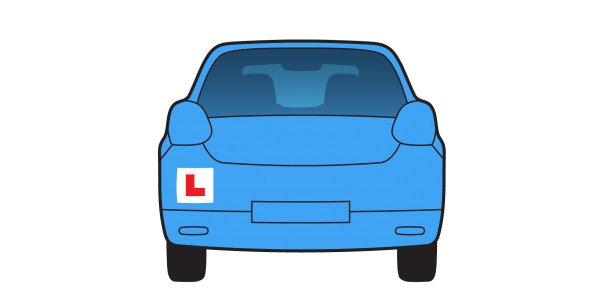
The cryptic crossword convention of L meaning learner or student arises from the L-plate[7], a square plate bearing a sans-serif letter L, for learner, which must be affixed to the front and back of a vehicle in various jurisdictions (including the UK) if its driver is a learner under instruction.

hide


A decathlon[5] is an athletic event taking place over two days, in which each competitor takes part in the same prescribed ten events (100 metres sprint, long jump, shot-put, high jump, 400 metres, 110 metres hurdles, discus, pole vault, javelin, and 1,500 metres).

17d   Somewhere near Fleet Street, editor /is/ left behind (8)

One might think that this clue calls for a knowledge of London geography. However, what is really required is a familiarity with British board games. The standard American version of Monopoly with which we are familiar uses locations from Atlantic City, New Jersey whereas the standard British version uses sites in London, England. In the British version, Kentucky Avenue and Indiana Avenue:


are replaced by The Strand and Fleet Street:


Fleet Street[5] is a street in central London in which the offices of national newspapers were located until the mid 1980s (often used as a metonym for the British Press) ⇒ the hottest story in Fleet Street.

Strand[10] (or the Strand)[10] is a street in west central London, parallel to the Thames, famous for its hotels and theatres.

As Deep Threat describes in his review on Big Dave's Crossword Blog, the Strand is a street in the City of Westminster which becomes Fleet Street at Temple Bar as it enters the City of London — not to be confused with the city of London (show explanation ). The City of Westminster and the City of London are two boroughs of the city of London each of which also possesses city status in its own right.

The City of London[7] is a city and ceremonial county within London. It constituted most of London from its settlement by the Romans in the 1st century AD to the Middle Ages, but the conurbation has since grown far beyond the City's borders. The City is now only a tiny part of the metropolis of London, though it remains a notable part of central London. It is one of two districts of London to hold city status, the other being the adjacent City of Westminster.
It is widely referred to simply as the City (often written as just "City" and differentiated from the phrase "the city of London" by capitalising "City") and is also colloquially known as the Square Mile, as it is 1.12 sq mi (2.90 km2), in area. Both of these terms are also often used as metonyms for the United Kingdom's trading and financial services industries, which continue a notable history of being largely based in the City. This is analogous to the use of the terms Wall Street and Bay Street to refer to the financial institutions located in New York and Toronto respectively.

hide

Delving Deeper
Temple Bar[7] was the principal ceremonial entrance to the City of London on its western side from the City of Westminster. In the middle ages, London expanded city jurisdiction beyond its walls to gates erected across thoroughfares called, bars*. Temple Bar is situated on the historic royal ceremonial route from the Tower of London to the Palace of Westminster, the two chief residences of the medieval English monarchs, and from the Palace of Westminster to St Paul's Cathedral. The road east of Temple Bar and within the City of London is Fleet Street, the road to the west, in Westminster, is The Strand. At Temple Bar the Corporation** of the City of London formerly erected a barrier to regulate trade into the City.

* The term Temple Bar strictly refers to a notional bar or barrier across the route, but is commonly used to refer to the 17th-century ornamental Baroque arched gateway designed by Christopher Wren which spanned the road until its removal in 1878.
** In Britain, the term corporation[5] may refer to a group of people elected to govern a city, town, or borough ⇒ the Corporation of the City of London.

20d   A grassy area cut -- first requirement for Saturday // matches (6)

22d   Time to tuck into island // dish (5)

Bali[5] is a mountainous island of Indonesia, to the east of Java.


According to The Chambers Dictionary and Chambers 21st Century Dictionary*, balti[1,2] is a term used in Indian cookery for a style of curry, originating in Britain, in which the food is cooked in and eaten out of the same wok-like dish (which is also known as a balti).

* Collins English Dictionary essentially concurs with the definition given by Chambers, defining balti[4,10] as a spicy Indian dish, stewed until most of the liquid has evaporated, and served in a woklike pot. However, Oxford Dictionaries seems to head off on another tack, telling us that balti[5] is a term used in Pakistani cooking for a spicy dish cooked in a small two-handled pan known as a karahi.

24d   Cast aside // yearbook, having ignored the second article (5)
Key to Reference Sources: 

[1]   - The Chambers Dictionary, 11th Edition
[2]   - Search Chambers - (Chambers 21st Century Dictionary)
[3]   - TheFreeDictionary.com (American Heritage Dictionary)
[4]   - TheFreeDictionary.com (Collins English Dictionary)
[5]   - Oxford Dictionaries (Oxford Dictionary of English)
[6]   - Oxford Dictionaries (Oxford American Dictionary)
[7]   - Wikipedia
[8]   - Reverso Online Dictionary (Collins French-English Dictionary)
[9]   - Infoplease (Random House Unabridged Dictionary)
[10] - CollinsDictionary.com (Collins English Dictionary)
[11] - TheFreeDictionary.com (Random House Kernerman Webster's College Dictionary)
[12] - CollinsDictionary.com (Webster’s New World College Dictionary)
[13] - MacmillanDictionary.com (Macmillan Dictionary)
[14] - CollinsDictionary.com (COBUILD Advanced English Dictionary)
Signing off for today — Falcon